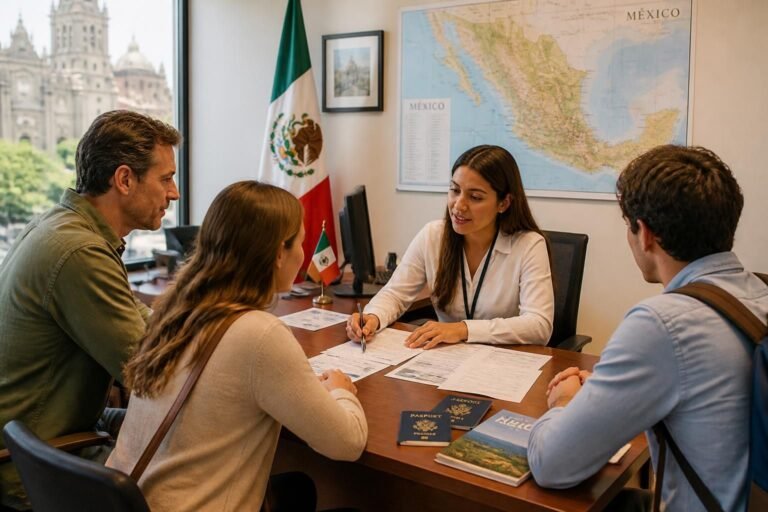
Relocating to Mexico invites expats into a vibrant lifestyle filled with cultural enrichment and new financial landscapes. Navigating the banking system here, however, requires a clear understanding of how to open a bank account and manage finances efficiently to avoid costly mistakes. Unlike many other countries, Mexico presents a unique divide between maintaining an American bank account for dollar management and establishing a local Mexican account for everyday expenses in pesos. This dual setup mitigates fees and smooths the process of paying rent, bills, and contractors who prefer local payment methods. For expats, particularly those from the US, striking the right balance between these financial tools is essential for a hassle-free experience living abroad.
In 2026, the complexity of banking for expats in Mexico remains significant but manageable with the right guidance. Key challenges include meeting account requirements such as residency documentation and navigating Mexico’s advanced payment systems like SPEI—a real-time bank transfer system deeply ingrained in Mexican financial culture. Understanding how to leverage these systems alongside international banking options such as Wise for money transfers and Charles Schwab for American dollars limits unnecessary fees and maximizes convenience. Furthermore, tax compliance and legal reporting for foreign accounts require attention to avoid pitfalls with US tax authorities. Successfully managing finances in Mexico, therefore, combines practical knowledge of local banking services, strategic international account management, and awareness of financial regulations.
By mastering the distinctions between US and Mexican financial institutions and adapting to Mexico’s modern yet distinctive payment methods, expats can build financial stability while enjoying all that life in Mexico has to offer. These insights not only protect wealth but enable smarter spending and receiving within the Mexican economy. From the first steps of opening a bank account to creating a sustainable credit history and managing cross-border money transfers, understanding the financial ecosystem in Mexico is a vital part of the expat journey.
Brief:
- Maintain dual banking structures: Keep a US bank account (like Charles Schwab) for dollar transactions and open a Mexican bank account for local peso operations to avoid high fees.
- Meet account requirements: Mexican banks typically need residency cards, CURP, proof of address, and a Mexican phone number to open an account.
- Utilize SPEI payment system: Mexico’s instantaneous interbank transfer system is essential for paying rent, bills, and local services efficiently.
- Optimize money transfers: Use Wise for affordable and transparent USD-to-MXN conversions, saving substantial costs over traditional bank transfers.
- Understand tax responsibilities: US expats must file FBAR and FATCA reports for foreign accounts exceeding thresholds, ensuring legal compliance.
Understanding the Dual Banking Setup for Expats in Mexico
Expats in Mexico face the distinct challenge of managing two parallel banking systems: their home country’s US-based accounts and a Mexican local bank account. This separation is necessary because each type of account serves different financial functions. Maintaining a US bank account is critical for handling income in dollars, avoiding foreign transaction fees, and leveraging US-based ATM fee reimbursements offered by banks like Charles Schwab. This structure ensures that everyday spending in foreign currencies does not secrete away funds through hidden fees or unfavorable exchange rates.
Conversely, a Mexican bank account is indispensable for handling the local economy’s essentials. Most landlords, employers, and service providers prefer, if not insist upon, payments through Mexican financial rails. A local account enables expats to send and receive payments in pesos without incurring excessive conversion charges or delays. Using Mexican banks also provides access to Mexico’s innovative payment platforms such as SPEI, which offers real-time transaction capabilities unavailable in many other countries.
The key to an optimal banking strategy lies in selecting the correct institutions for each role. For US-based banking, the Charles Schwab Investor Checking account is widely regarded as the gold standard, providing zero foreign transaction fees and reimbursing all ATM fees worldwide. On the Mexican side, HSBC México commonly emerges as the most expat-friendly option with English language services and familiarity with international clientele. Other viable Mexican banks include Citibanamex, Scotiabank, and Santander México, depending on the expat’s preferences and local branch accessibility.
This dual-structure approach prevents the common pitfall of depending on a single account to manage both local peso needs and international dollar transactions. Avoiding this “foreigner tax” embedded in many international transaction fees can save expats hundreds of dollars monthly. Additionally, expats benefit from integrating Wise into their financial toolkit. Wise offers an inexpensive way to convert and transfer USD to MXN at mid-market rates without hidden markups, complementing the two-account system by providing smooth currency conversion and transfers.
Understanding and maintaining this dual setup ultimately empowers expats to efficiently and economically manage their finances, blending Mexico’s unique banking environment with robust international banking tools.

Essential Document Requirements and Procedures to Open a Bank Account in Mexico
Opening a bank account as an expat in Mexico requires planning to meet specific documentation criteria that are stricter than what many may expect. Mexican banks aim to verify identity, immigration status, and residency through several official documents, ensuring compliance with financial regulations and anti-money laundering laws. Typically, the process requires presenting a valid passport, a current residency card (either temporary or permanent), the CURP (Clave Única de Registro de Población), proof of a Mexican address, and a local Mexican phone number.
The residency card is pivotal. While some banks may open accounts for expats holding tourist visas, this practice is becoming rarer and often restricted to smaller financial institutions. Most major banks including BBVA, Banorte, Santander, and Citibanamex require residency as a baseline to offer full banking services. The proof of address document, often an electricity or water bill, must be recent (usually within three months) and either under the expat’s name or linked address.
Additionally, obtaining a Mexican phone number is mandatory for online banking registrations, enabling secure SMS verifications and two-factor authentication. Without a local number, banks will generally refuse account activation for app-based services. Expats should procure a local SIM card or an eSIM with Mexican service to fulfill these requirements.
The account opening procedure involves visiting a branch in person where a banker reviews the documents and assists with form completion—usually entirely in Spanish. The session can last from 45 minutes up to two hours, culminating in the issuance of a debit card. Some banks enable immediate card activation, while others require a short waiting period for digital services to be enabled.
Understanding these requirements ahead of time prevents common frustrations such as rejections or delays. Expats are encouraged to gather and confirm all needed documentation before visiting the bank. Trying multiple branches may be necessary, as branch staff familiarity with expats can vary significantly across regions. Successfully navigating this process unlocks access to Mexico’s sophisticated financial infrastructure and the seamless management of daily expenses.
List of Commonly Required Documents to Open a Mexican Bank Account:
- Valid Passport: Original and photocopy of the bio page
- Residency Card: Temporary or Permanent, current and valid
- CURP: Mexican unique population registry code
- Proof of Address: Utility bills or bank statement dated within 3 months
- Mexican Phone Number: Necessary for app registration and security
How to Manage Finances and Effectively Transfer Money for Expats in Mexico
Managing finances while living in Mexico requires strategic choices to minimize high banking fees and optimize currency use. One of the most expensive mistakes expats make is using their US debit cards for every transaction, which can lead to accumulative foreign transaction fees, poor peso conversion rates, and ATM surcharges. A thoughtful approach balances the convenience of a US bank with the local proficiency of Mexican banking services.
International transfers between US accounts and Mexican peso accounts are often necessary to fund daily expenses such as rent and utilities. Traditional wire transfers involve high fixed fees and unfavorable exchange rates, making them costly and slow. Instead, many expats prefer Wise, an international money transfer service offering transparent fees and exchange rates close to mid-market values. Wise’s digital platform allows quick moving of funds from US dollars to Mexican pesos, saving significant money on conversion costs.
For Mexican cash withdrawals, Charles Schwab’s international checking account remains unrivaled due to its policy of reimbursing ATM fees and absence of foreign transaction fees. This benefit extends ample opportunity to withdraw local currency inexpensively without sacrificing convenience. Using this card for limited cash needs, while primarily handling expenses through a Mexican bank account, also simplifies monthly budgeting and accounting.
On the local level, expats must become familiar with SPEI (Sistema de Pagos Electrónicos Interbancarios), Mexico’s instant interbank transfer system. SPEI enables quick and cost-effective payments, including rent, bills, and merchant transactions. Learning to send payments via SPEI using CLABE numbers (an 18-digit standardized bank code) empowers expats to integrate fully into Mexican financial life without unnecessary reliance on cash.
Additionally, platforms layered on SPEI such as CoDi (QR code payments) and DiMo (phone number transfers) expand payment flexibility. Though not as ubiquitous as SPEI itself, their adoption is growing, particularly DiMo where phone number-based transfers enhance convenience for peer-to-peer transactions.
Summary table: Cost and Efficiency of Common Money Transfer Methods for Expats
| Transfer Method | Typical Fee Range | Speed | Exchange Rate Quality | Best Use |
|---|---|---|---|---|
| US Debit Card ATM Withdrawal | 2%-4% + ATM surcharge ($2-$5 + 50-75 MXN) | Immediate | Poor to Fair (Visa rate with markup) | Small cash needs, convenience |
| Traditional US-to-Mexico Wire Transfer | $25-$50 + incoming wire fee | 1-3 business days | Fair to Poor (bank markup) | Lump sums, infrequent transfers |
| Wise (USD-to-MXN Transfer) | ≈$30-$45 on $5,000 | Same day to 1 day | Excellent (mid-market rate) | Regular monthly/top-up transfers |
| Charles Schwab Checking ATM Withdrawals | No fees, ATM fees reimbursed | Immediate | Good (Visa mid-market) | Regular cash withdrawals in Mexico |
Navigating Expat Credit and Tax Responsibilities in Mexican Financial Management
Building credit in Mexico poses a significant challenge for expats because their foreign credit history does not transfer. Credit scores rely entirely on local reporting to Buró de Crédito and Círculo de Crédito bureaus, and newcomers start with a clean slate. Establishing credit is crucial for accessing larger financial products such as mortgages, car loans, and higher-limit credit cards in Mexico.
The process begins by opening a local bank account and acquiring a secured credit card, which requires a deposit equal to the credit limit. Responsible use and prompt payments are essential to establish a credible local credit history. Additional steps include obtaining department store credit cards and postpaid phone plans, both of which report positively to credit bureaus. After consistent activity over 12 to 18 months, expats become eligible for unsecured credit cards and improved loan terms.
On the tax front, US expats must remain vigilant about foreign account reporting. The FBAR mandate requires filing when total foreign financial accounts exceed $10,000 across the year, while FATCA reporting applies for assets over defined thresholds ($200,000 at year-end for single filers abroad). Mexican banks officially report American account holders to the IRS, making compliance non-negotiable for avoiding fines.
Understanding these obligations early prevents costly legal issues. Many expats pursue cross-border tax professionals to help manage these complex filings. Moreover, grasping local credit dynamics ensures financial goals, such as home purchases or business investments, become achievable within the Mexican market.
Watching detailed tutorials on navigating Mexican banks can clarify common uncertainties and deskill anxiety in managing financial transitions. Videos often provide step-by-step guides on presenting documents, using banking apps, and understanding financial products tailored to expats.
Exploring different money transfer options through expert discussions and reviews empowers expats to choose the most cost-effective way to move funds internationally, balancing speed, cost, and security factors.
Can foreigners open a bank account in Mexico without residency?
Most Mexican banks require proof of residency to open a standard bank account. While some smaller institutions may allow tourists to open accounts, this is increasingly rare due to regulatory tightening since 2025.
Which Mexican banks are most expat-friendly in 2026?
HSBC México is often recommended for its expat-focused services and English support. Other options include Citibanamex, Scotiabank, and Santander Mexico, depending on location and specific needs.
Do I still need to keep my US bank account after opening a Mexican account?
Yes. Maintaining a US account, such as Charles Schwab Investor Checking, is crucial for dollar liquidity, zero foreign fees, and ATM fee reimbursements, while the Mexican account handles local peso transactions.
How does the SPEI system benefit expats managing finances in Mexico?
SPEI enables instant, low-cost transfers between Mexican bank accounts, making bill payments, rent, and local money transfers fast and affordable. It is integral to daily financial life in Mexico.
What are the tax filing requirements for US expats with Mexican bank accounts?
US citizens must file FBAR if total foreign account balances exceed $10,000, and FATCA forms if their foreign assets pass higher thresholds. Mexican banks report US account holders to US tax authorities.