
Chichen Itza remains one of the most remarkable archaeological sites in the world, a testament to the enduring legacy of Mesoamerican civilization. Among its many treasures, the Temple of the Warriors stands out as an architectural marvel rich in cultural heritage and historical significance. This temple reflects the vibrant convergence of Mayan history and Toltec influences, expressed through its intricate warrior statues and bas-reliefs that tell stories of power, ritual, and belief. The site encapsulates the essence of ancient architecture and offers visitors an immersive experience into the prehispanic civilization’s complexity and artistry.
For travelers fascinated by archaeology and history, the Temple of the Warriors offers a unique glimpse into the military, religious, and artistic traditions that shaped Chichen Itza’s development. Its imposing stepped pyramid construction and the surrounding Thousand Columns symbolize not only architectural achievement but also the city’s cultural and political dynamics during its peak. Understanding the temple’s origins, symbolism, and role within the broader context of Chichen Itza enhances appreciation of this UNESCO World Heritage site and reveals the depth of Mesoamerican culture.
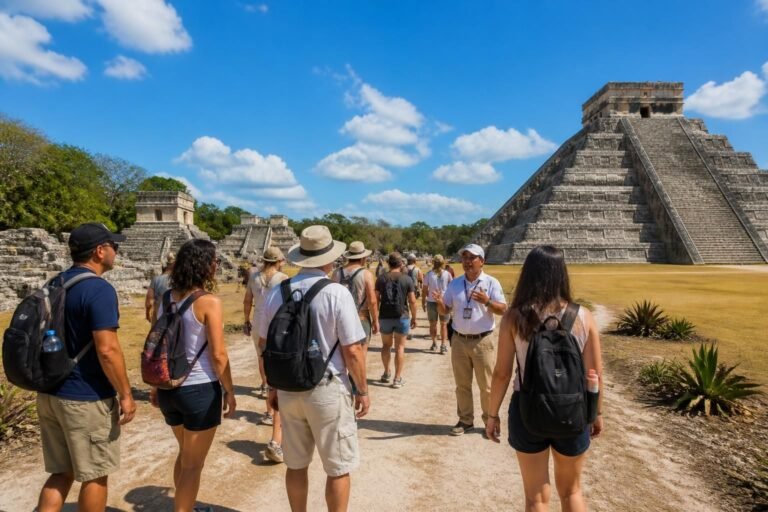
Exploring the Temple of the Warriors today provides more than just visual awe: it connects visitors with the lived experiences of a pre-European era civilization that influenced the region for centuries. Coupled with guided tours and expert insights, the temple remains a central highlight for anyone wishing to delve into the rich tapestry of Mayan history.
In brief:
- The Temple of the Warriors showcases the fusion of Mayan and Toltec architectural styles and artistic motifs.
- Bas-reliefs depict warriors, eagles, and jaguars, illustrating themes of war, sacrifice, and power central to Mesoamerican culture.
- Connected to the nearby Temple of the Thousand Columns, both structures reveal insights into ancient social organization and ceremonial life.
- The Chaac Mol statue located within the temple symbolizes sacrificial rituals and spiritual intermediaries in Mayan religious practices.
- Visitors benefit from guided tours that enhance understanding of the temple’s historical role and significance within the broader prehispanic civilization.
The Architectural Marvels and Symbolism of the Temple of the Warriors in Chichen Itza
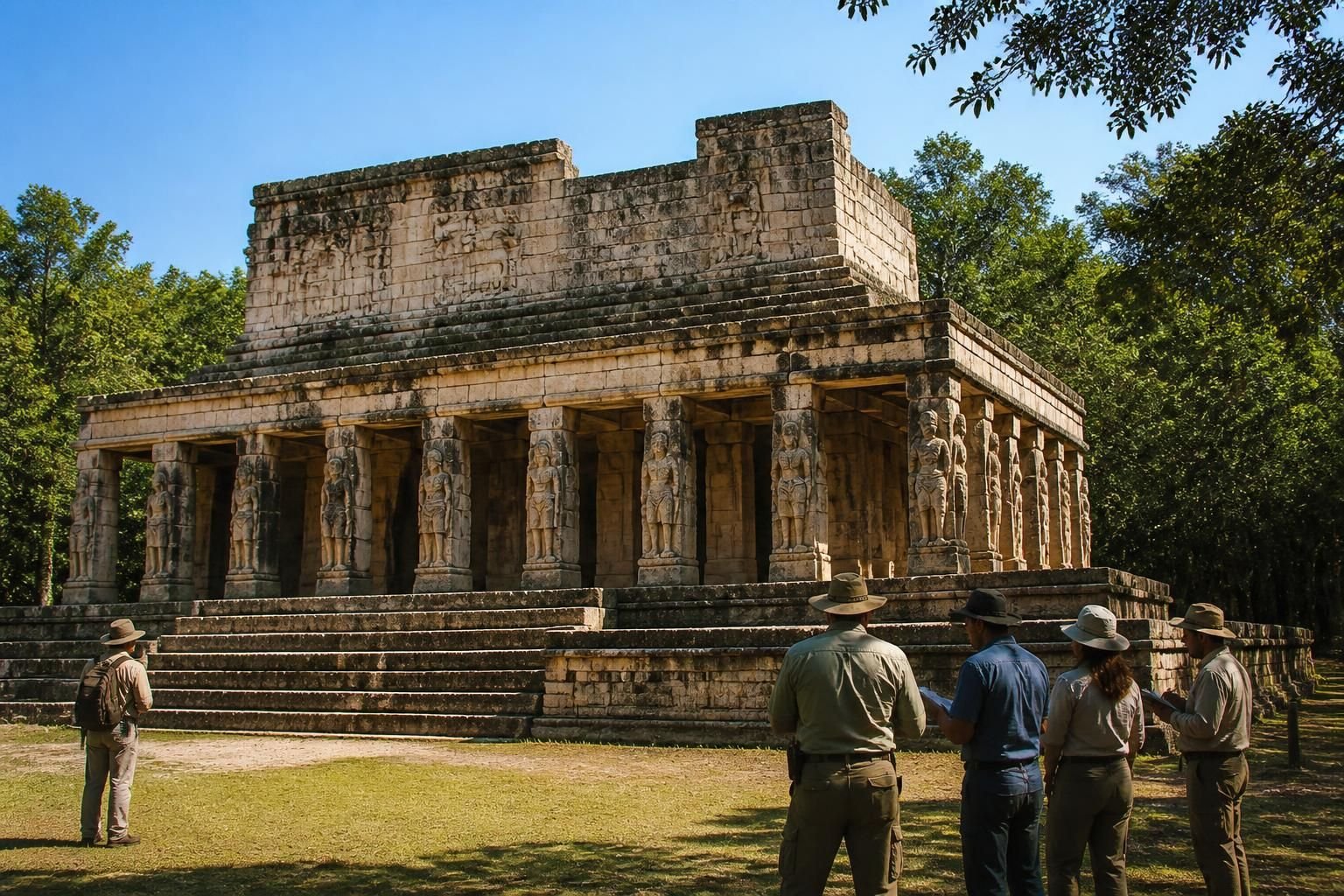
The Temple of the Warriors is a large stepped pyramid standing approximately 40 feet high and 133 feet wide, characterized by its four-tiered platforms and extensive colonnades that once supported, and perhaps sheltered, ceremonial activities. Its architecture exemplifies the unique fusion of Mayan and Toltec styles, a hallmark of Chichen Itza during the Late Classic to Terminal Classic periods. The temple’s façade, adorned with detailed bas-reliefs, presents images of warriors, eagles, and jaguars—symbols of strength, ferocity, and divine favor.
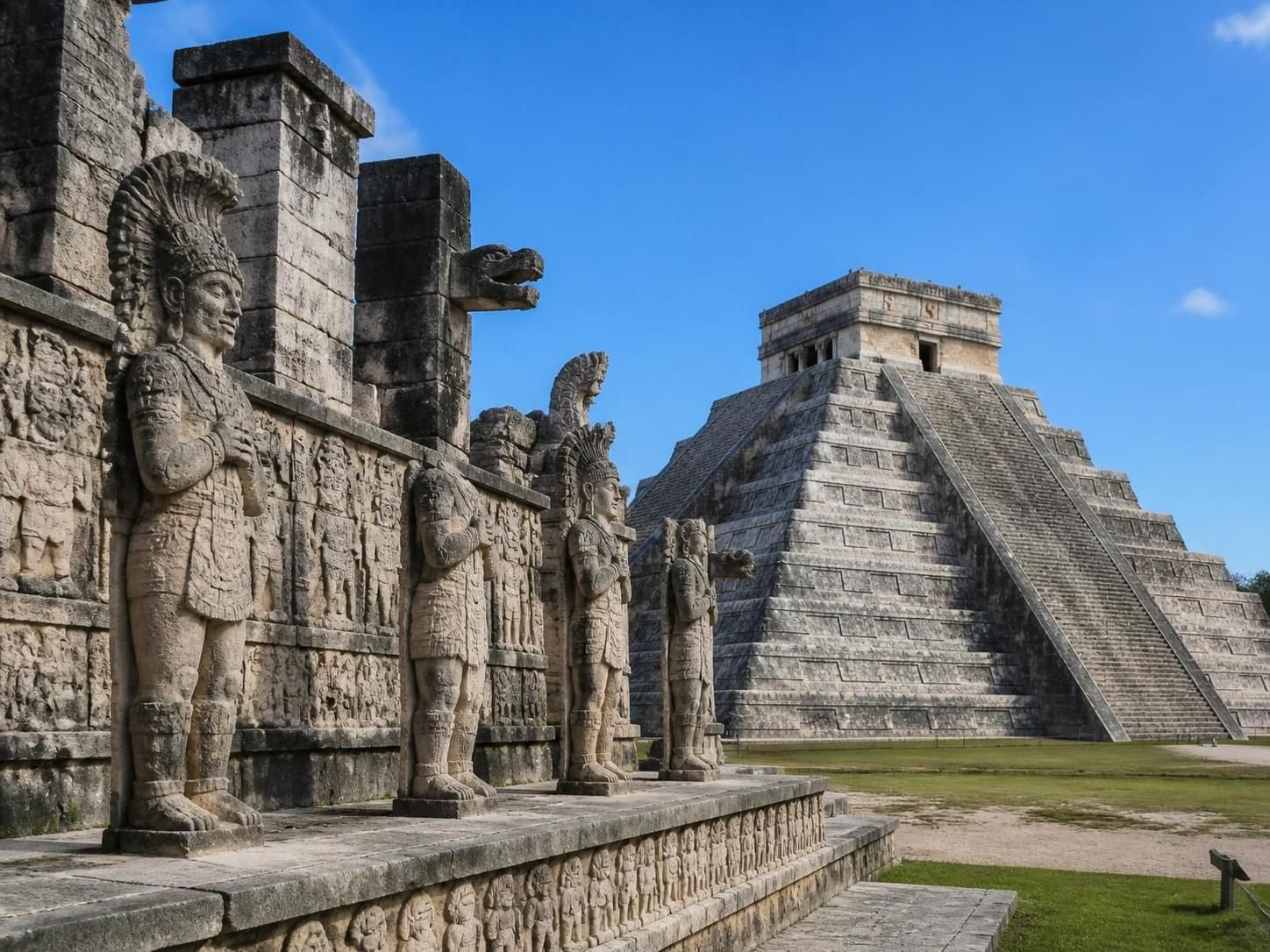
These bas-reliefs are not mere decoration; they convey narratives of conquest, ritualistic sacrifice, and invocations to gods, revealing the temple’s dual purpose as religious center and symbol of military might. The warrior statues carved on the numerous columns in front of and flanking the pyramid further emphasize the martial theme, resembling armed guardians of the sacred space. These statues hint at the importance placed on warrior culture within the Mesoamerican worldview.
The temple’s entrance is marked by a grand stairway, where visitors can see figures such as the feathered serpent along the banisters, representing Kukulkan, the principal deity. Above the entrance resides the iconic Chaac Mol statue, a reclining figure believed to serve as a messenger between mortals and the divine. This unique placement signifies the temple’s religious importance beyond its military connotations.
Notably, the temple shows architectural elements reminiscent of the Tlahuizcalpantecuhtli temple from Tula, reflecting Toltec influence. From the use of four stepped platforms to the warrior motifs and serpent columns, the building embodies the intercultural connections that enriched Chichen Itza’s design language. Such synthesis makes the Temple of the Warriors essential for understanding the broader Mesoamerican cultural exchange.
Historical Context: The Fusion of Mayan and Toltec Cultures at Chichen Itza
Chichen Itza flourished between AD 900 and 1200, a transformative period during which the Mayan city absorbed Toltec influences brought by migrating groups or cultural exchanges. The Temple of the Warriors exemplifies this synthesis, combining traditional Mayan architectural techniques with Toltec iconography and religious symbolism. This hybrid style is evident in the design of the temple, the carved warrior columns, and the presence of ritualistic figures such as Chaac Mol.
The warriors portrayed in the temple’s carvings wear distinct bell-shaped shields and feathered headdresses, typical of Toltec martial imagery, yet intertwined with Mayan artistic traditions. This fusion reflects the complexity of prehispanic civilizations in the region and their dynamic interactions. Scholars often point to this temple as a physical manifestation of a cultural and political alliance or conquest that influenced the social fabric of the Yucatán.
Additionally, the Temple of the Thousand Columns adjacent to the Temple of the Warriors was likely a gathering place for trade or council meetings, underscoring the site’s role in political and economic life. This vast colonnaded hall, once bustling with merchants and officials, conveys the urban sophistication and connectivity of Chichen Itza within Mesoamerican culture.
The temple also connects visibly with other important Chichen Itza monuments such as the Kukulkan Pyramid and the Sacred Cenote, integrating the city’s architectural plan with spiritual and civic functions. As a result, visitors walking through this ancient city gain a unique insight into how prehispanic societies orchestrated religion, governance, and warfare in a cohesive urban space.
Artistic Details and the Warrior Statues: Narratives Carved in Stone
The bas-reliefs and warrior statues surrounding the Temple of the Warriors provide a vivid narrative of military prowess and sacred rites. The columns, numbering around 200, are each carved to represent armed warriors, their expressions and stances frozen in stone as if guarding the sacred precinct. These pillars would have supported a now-lost roof, indicating a complex construction with both functional and symbolic significance.
Images of jaguars and eagles devouring human hearts appear on the temple’s stairways and exterior, illustrating the ritual sacrifices integral to Mesoamerican religious belief. Such elaborate depiction emphasizes the deep connection between warfare and spirituality, where human sacrifice was believed to sustain cosmic balance and please the gods.
The reclining Chaac Mol statue inside the temple is another focal point. This figure, shown with a tilted head and resting on elbows, holds a plate potentially used to catch sacrificial offerings. Its presence at the temple’s entrance underscores the belief in intermediaries facilitating contact between the human and divine realms. This statue is also found in other Mesoamerican sites, highlighting its widespread religious function.
These artistic elements offer scholars and visitors alike a window into the prehispanic worldview. The iconography invites interpretations about Maya beliefs in power, protection, and the cyclical nature of life and death. Beyond aesthetics, these carvings serve as documentation of historical values and societal structures.
Visiting the Temple of the Warriors: Practical Insights for Travelers
For those planning a visit to Chichen Itza in 2026, the Temple of the Warriors remains a must-see monument that combines educational value with breathtaking visual appeal. The site welcomes visitors daily from 8:00 AM to 5:00 PM, with last entry at 4:00 PM. While climbing the temple’s steps is no longer permitted to preserve the structure, the extensive grounds and surrounding pillars provide ample space for exploration and photography.
Given the size and historical richness of Chichen Itza, guided tours are highly recommended. Professional guides can provide context about the temple’s construction, significance, and related sites like the Temple of the Thousand Columns and the Sacred Cenote. Many tours also include visits from Cancun or Playa del Carmen, offering convenient options for travelers staying in these regions (what to expect on a Chichen Itza day trip from Playa del Carmen).
Seasonal considerations are important as well; the cooler months from November to February are ideal for exploring the archeological site comfortably. Engaging in a combo tour with nearby attractions such as Tulum or Ek Balam can enrich the experience, rounding out one’s understanding of the Yucatán’s archaeological and cultural landscape (discover the best combo tour of Tulum and Chichen Itza).
Accommodations nearby range from luxury resorts to charming ecolodges, ensuring that visitors have diverse options to match their travel style. For travelers emphasizing a deep dive into Mesoamerican culture, choosing a well-reviewed all-inclusive Chichen Itza tour can maximize the educational and logistical benefits of the visit.
The Tomb of the Chaac Mol and Ritual Significance Within the Temple
In the basement of the Temple of the Warriors was discovered the tomb housing a significant Chaac Mol statue that provides insight into Maya religious practices. Unlike the common perception of Chaac Mol as merely a deity, this figure functioned as a mediator between the gods and worshipers, facilitating offerings and sacrifices. The statue’s placement inside a tomb highlights the sacred rites that took place within the temple walls.
The Chaac Mol found here is depicted wearing a helmet and a belt adorned with human heads—an evocative image emphasizing themes of sacrifice and divine authority. Its reclining posture, combined with the plate resting on the stomach, symbolically represents the altar where life-giving offerings were presented. This artifact is one among several similar statues located across Mesoamerica, including prominent sites in Tula, indicating shared ritualistic traditions.
Understanding the Chaac Mol’s role enriches the narrative of Chichen Itza as more than an architectural wonder; it was a living center of spiritual activity, where religion and power were deeply interconnected. The temple’s function thus extended into both the earthly and divine realms, embodying the Mayan beliefs about sacrifice, renewal, and the cosmic order.
| Feature | Description | Symbolic Meaning |
|---|---|---|
| Stepped Pyramid Structure | Four-tier structure with stairways and platforms | Connection between earth and sky, sacred ascension |
| Bas-Reliefs | Depictions of warriors, eagles, jaguars, and sacrificial scenes | Warrior culture, spiritual sacrifice, divine protection |
| Warrior Statues on Columns | Approximately 200 carved stone pillars surrounding temple | Guardianship, military strength, ritual guardians |
| Chaac Mol Statue | Reclining figure in entrance, holding a plate | Mediation between gods and humans, sacrificial altar |
| Temple of the Thousand Columns | Connected colonnaded hall adjacent to the temple | Civic assembly, marketplace, architectural complement |
What is the historical importance of the Temple of the Warriors at Chichen Itza?
The Temple of the Warriors is a key monument demonstrating cultural fusion between the Mayan and Toltec civilizations, showcasing religious, military, and architectural significance within Chichen Itza.
Can visitors climb the Temple of the Warriors?
As of 2026, climbing the temple steps is not allowed to preserve the structure, but visitors can explore the surroundings and enjoy guided tours providing detailed insights.
Who or what is the Chaac Mol statue found in the temple?
The Chaac Mol is a reclining statue that served as a mediator between gods and humans, often associated with sacrificial rituals within the Mayan religious system.
What is the connection between the Temple of the Warriors and the Temple of the Thousand Columns?
The Temple of the Warriors is connected to the adjacent Temple of the Thousand Columns, which was likely a civic and ceremonial space supported by numerous carved columns representing warriors.
What is the best time to visit Chichen Itza for a tour including the Temple of the Warriors?
The cooler months between November and February are most comfortable for visiting, and booking a combo tour with other nearby sites can enhance the cultural experience.