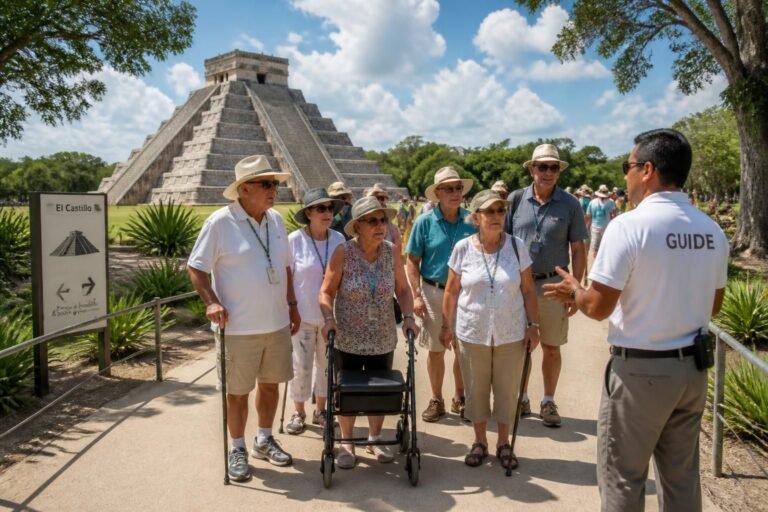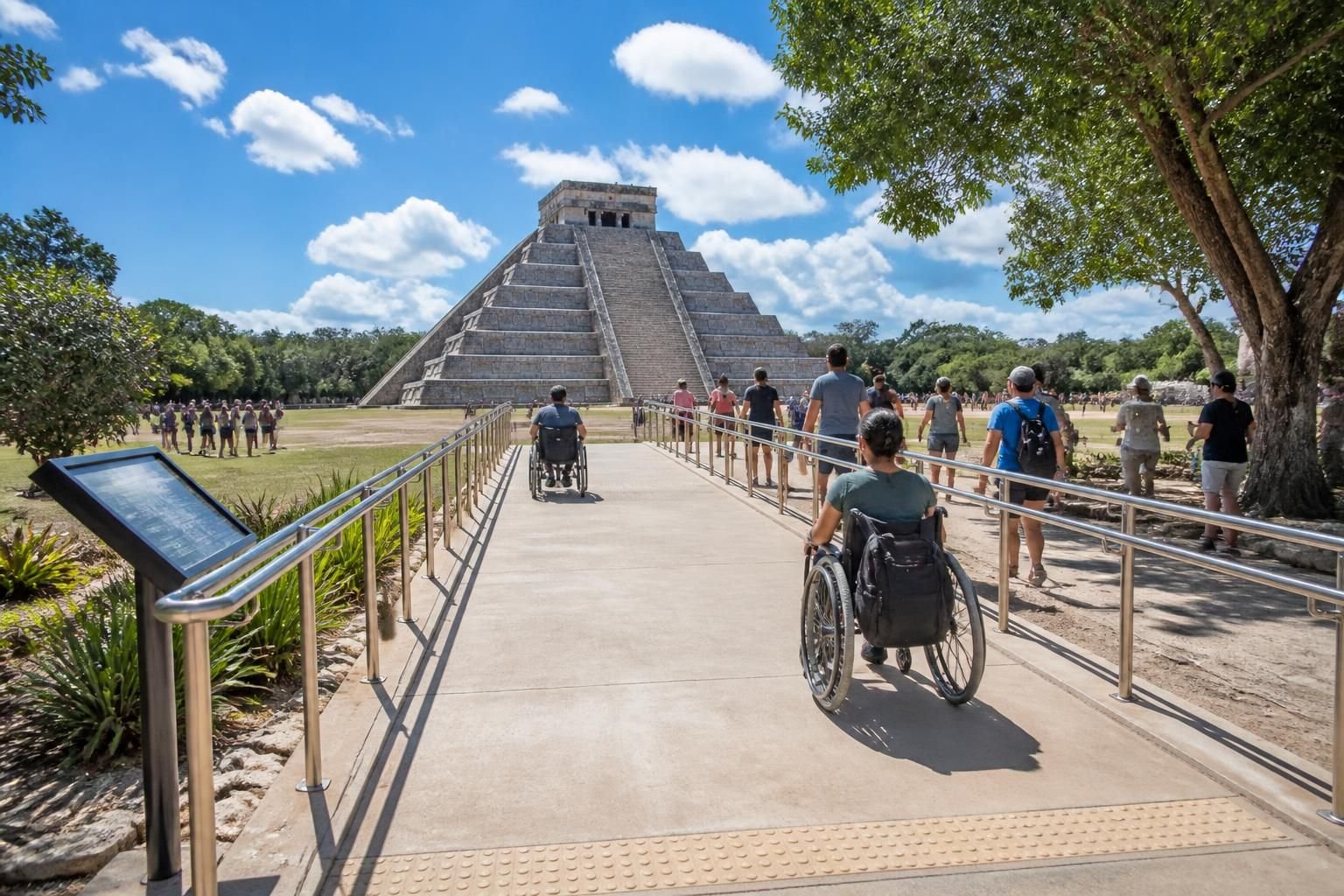

Exploring the ancient Mayan city of Chichen Itza is a breathtaking experience attracting visitors worldwide. In 2026, the emphasis on wheelchair access and mobility assistance allows countless travelers, including those with disabilities, to partake in this UNESCO World Heritage site. However, navigating this vast archaeological area requires thoughtful planning and knowledge about available accessible travel options. Balancing site preservation with visitor comfort, tours now integrate inclusive pathways and tailored itineraries that suit various mobility levels. Early departures, reliable transport, and steady pacing are among the effective strategies helping visitors make the most of their Chichen Itza tour.
For those seeking a comprehensive and rich encounter with Mayan history, specialized tour guides provide expert insights while ensuring accessibility needs are met. From the intricate stepped pyramids to extensive plazas, understanding the site’s layout aids in anticipating challenges related to uneven terrain and heat exposure. This guide highlights practical steps and useful tips, aiming to empower travelers who use wheelchairs or have limited mobility, offering them a memorable visit to one of Mexico’s most iconic historical sites.
- Wheelchair and mobility aids friendly paths integrated into the tour routes
- Bilingual guides trained in accessibility considerations
- Adaptive vehicles ensuring comfortable transportation from hotels to the site
- Rest and hydration stops strategically placed to combat fatigue and heat
- Accessible restrooms available near key areas
Planning Your Wheelchair Accessible Visit to Chichen Itza: Key Preparations and Considerations
When planning a visit to Chichen Itza with mobility challenges in mind, preparation is paramount to ensure a smooth experience. The site’s terrain, rich in history but naturally rugged, presents certain obstacles such as uneven surfaces and exposed areas lacking shade. It is advisable to initiate communication with your tour operator well in advance to obtain the latest information on historical site access and to request the most practical route loops. Many tour operators offer tailored tours featuring the shortest possible circuits around the major monuments, prioritizing ease of movement for wheelchair users.
Drop-off and pick-up points near the main entrance and accessible pathways play a critical role in reducing travel strain. Confirming these details helps minimize walking distance and facilitates timely rest opportunities. Visitors are encouraged to adopt supportive footwear and to move at a comfortable, reduced pace to navigate surface variability effectively. Since the weather can be hot and humid, scheduling the visit for the earliest part of the day helps avoid peak heat and crowded conditions.
Visitors who rely on medication that increases sensitivity to heat should consult healthcare professionals before traveling. Planning for earlier exposure and ensuring adequate hydration can prevent heat-related discomfort. Carrying sunscreen, wearing light, breathable clothing, and using hats or caps are practical preventive measures that enhance the overall experience.
Knowing that accessibility at Chichen Itza is partial rather than absolute is important; this sets realistic expectations and encourages flexible planning. Many find that with careful pacing and attention to physical cues, the tour is highly rewarding and manageable even for those with significant mobility constraints.
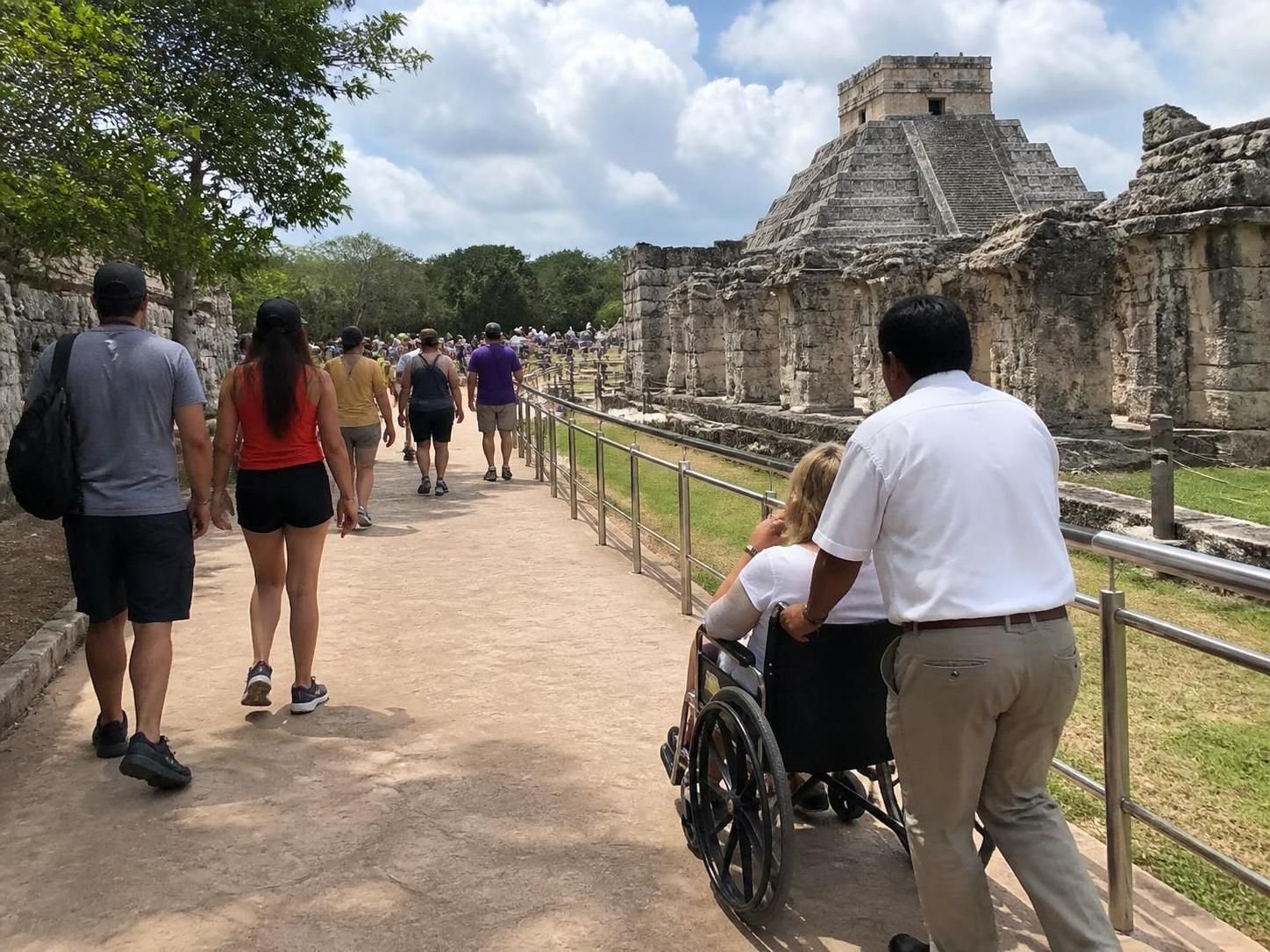
Accessible Transportation and Services Enhancing the Chichen Itza Tour Experience
Modern tours designed for guests with disabilities are equipped with accessible vans capable of transporting both manual and power wheelchairs with ease. These vehicles typically facilitate hotel pickups early in the morning, around 7 or 8 AM, allowing visitors to benefit from cooler temperatures before the crowds arrive. Equipped with experienced drivers knowledgeable in handling accessibility equipment, the transportation element of the journey is seamless and stress-free.
Once on site, a bilingual tour guide well-versed in accessibility issues conducts the tour, providing historical context while adapting to the group’s mobility needs. This level of adaptability is crucial, ensuring that all participants can enjoy the city’s remarkable structures including the Temple of Kukulkan and the Great Ball Court, without compromising safety or comfort.
Post-visit amenities include a stop at a regional restaurant offering a buffet with local dishes in facilities that support wheelchair access. Nearby cenotes offer optional visits, though swimming accessibility varies depending on physical ability. For those unable to descend to the cenote, the area remains scenic and restful.
Visitors receive comprehensive services including:
| Service | Description |
|---|---|
| Accessible Van | Equipped for wheelchairs including power chairs with easy boarding |
| Bilingual Tour Guide | Fluent in English and Spanish, trained in disability tourism awareness |
| Entrance Tickets | Pre-booked to avoid lines and ensure smooth entry |
| Regional Food Buffet | Wheelchair accessible dining area with traditional Yucatecan cuisine |
| Manual Wheelchair | Available upon request for those who need it during the tour |
Accessibility Challenges at Chichen Itza and Effective Mitigation Strategies
While wonderful accessibility initiatives are in place, it’s important to anticipate certain challenges so guests can remain comfortable throughout their visit. The key difficulties arise due to the site’s natural historic state: uneven stone pathways, long stretches without shade, and extended walking during the tour segments. These conditions, without appropriate mitigation, might cause fatigue and discomfort.
The table below outlines common challenges alongside recommended mitigation measures:
| Challenge | Mitigation Strategy |
|---|---|
| Heat Load | Early morning entry plus frequent hydration during the tour |
| Uneven Surface | Use of supportive footwear and slow, steady pace throughout the visit |
| Fatigue | Incorporation of scheduled rest breaks every 20-30 minutes of walking |
Rest stops are ideally located in shaded or sheltered areas such as plazas or near accessible restroom facilities, enabling visitors to regain strength before continuing. Visitors are advised to maintain clear communication with their guide to adjust pacing and resting periods according to individual comfort levels. This flexible on-site rhythm significantly enhances the enjoyment and safety of the tour, making the grand scale of Chichen Itza accessible without strain.
Inclusive Tours and Cultural Experiences Tailored for Mobility-Conscious Travelers
In addition to physical access, an inclusive Chichen Itza tour emphasizes cultural immersion and understanding of Mayan civilization in ways suited to all abilities. Experienced tour guides provide rich storytelling that brings the historical site to life while ensuring participants remain engaged without overexertion.
Many tours now incorporate stops at culturally significant locations such as Valladolid’s Main Square, a charming colonial town recognized as one of the Magic Towns of Yucatan. This stop provides an opportunity to admire Spanish colonial architecture and enjoy accessible shopping, dining, and sightseeing in wheelchair-friendly environments. Such experiences complement the historical site visit by blending ancient and colonial histories.
For those interested in natural wonders, a visit to nearby cenotes—including some with partial accessibility—is often included. Though not all cenotes have fully accessible entrances, visitors can appreciate the serene beauty and unique geology from accessible vantage points. Carrying swimwear can be an option for those able and interested in taking a dip.
Practical advice for making the most of inclusive tours includes:
- Schedule tours for early mornings to avoid midday heat and crowds.
- Wear comfortable, breathable clothing, sunscreen, and a hat.
- Bring extra cash for souvenirs or refreshments along the way.
- Confirm accessibility options with tour operators before booking.
- Use the information available in detailed guides such as comprehensive accessible tour guides tailored for seniors and those with mobility needs.
Essential Resources for Booking and Enjoying Wheelchair Accessible Chichen Itza Tours
Booking a wheelchair-accessible tour to Chichen Itza requires access to accurate and up-to-date information. Tourists should rely on specialized resources that clarify ticket purchase processes, allow for the selection of specific accessibility features, and present comprehensive overviews of transportation and route options. For a fluid, hassle-free visit, securing entrance passes early is critical. Well-informed travelers often turn to trusted online resources such as ticketing guides for Chichen Itza that lead visitors through the buying process smoothly.
Further exploration of nearby attractions, including tips about Playa del Carmen’s 5th Avenue, complements the cultural itinerary. This neighborhood is noted for its pedestrian-friendly streets and accessibility-focused venues, enhancing the overall travel experience for those concerned with mobility.
Understanding that Chichen Itza cannot be completely accessible due to its ancient and protected nature empowers travelers to adjust expectations and embrace adaptations offered. With the right preparation, tourists encounter a meaningful journey through history with all practicalities thoughtfully addressed.
Are all areas of Chichen Itza wheelchair accessible?
While many key areas are equipped with accessible pathways, some sections involve uneven terrain that requires careful navigation; early planning and consultation with a tour guide are essential to maximize comfort.
What is the best time of day to visit Chichen Itza for those using wheelchairs?
Early morning tours starting around 7:00 or 8:00 AM offer cooler conditions and fewer crowds, making the visit more comfortable and enjoyable for wheelchair users.
Are there rental wheelchairs available at Chichen Itza?
Some tours provide manual wheelchairs upon request to assist visitors during the visit; it is advisable to check in advance to secure this option.
Can visitors with mobility issues access the cenotes near Chichen Itza?
Access varies depending on the cenote; certain locations offer accessible viewpoints but descending into the water may be restricted or require assistance.
How can I find a tour guide specialized in disability tourism at Chichen Itza?
Booking with companies that focus on inclusive tours and mobility assistance ensures a guide experienced in accommodating diverse needs and providing detailed historical context suitable for all visitors.