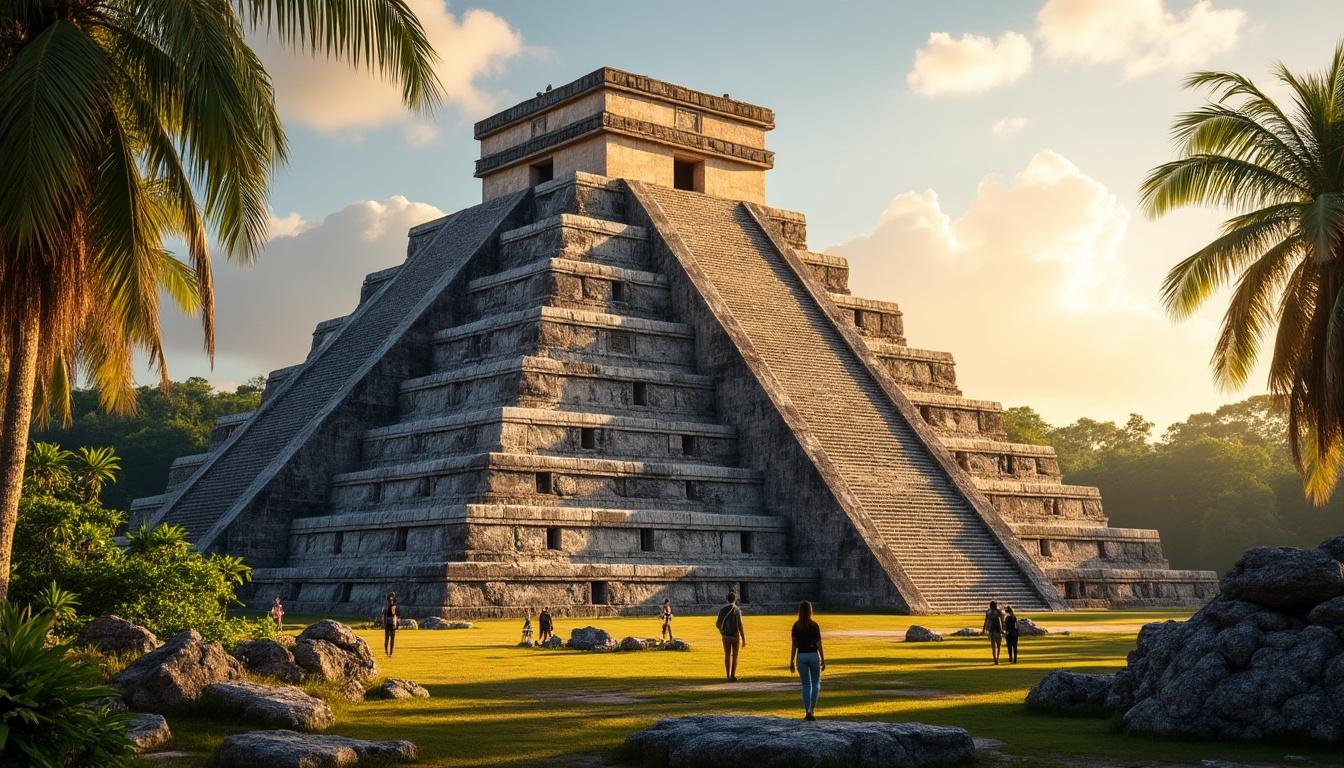
Chichen Itza remains one of the most captivating archaeological sites in the world, weaving a complex tapestry of the ancient secrets harbored by the Mayan civilization. Rising majestically within Mexico’s Yucatán Peninsula, this extraordinary city offers unparalleled insight into a culture that excelled in science, artistry, and spirituality, with monumental pyramids and temples that still inspire awe. Recognized as a symbol of Mexican heritage and a key destination for tourism, Chichen Itza invites exploration beyond its architectural wonders to uncover its profound historical significance and enduring cultural legacy.
Visitors and scholars alike are drawn to Chichen Itza not simply for its grand structures but for the stories etched into every stone—a chronicle revealing its role as a political powerhouse, a religious center, and a scientific observatory. While the Pyramid of Kukulcan captures the imagination with its celestial choreography during equinoxes, the Great Ball Court narrates tales of ritualistic sport and societal dynamics. The confluence of Mayan knowledge and artistry seen here still resonates, bridging ancient wisdom with modern fascination.
In 2026, archaeological advances continue to shed light on hidden chambers and extend our understanding of the city’s complex urban fabric. These discoveries not only enrich the historical narrative but also underscore the importance of ongoing preservation efforts as tourism flourishes. This comprehensive examination delves deeply into the multifaceted layers of Chichen Itza’s historical background, architectural genius, and the visitor experience, offering a richly detailed perspective on this cornerstone of ancient civilization.
Key Points:
- Chichen Itza acts as a central emblem of the Mayan civilization’s scientific and architectural achievements.
- The city’s pyramid and temples demonstrate advanced understanding of astronomy and religious cosmology.
- Recent archaeological discoveries continue to reveal the site’s complexity and its elite societal structures.
- Visiting Chichen Itza requires thoughtful preparation, respecting both the site’s historical significance and cultural protocols.
- The site represents an ongoing cultural legacy linking past Mayan descendants with global heritage.
Unveiling the Historical Significance of Chichen Itza in the Mayan Civilization
Chichen Itza stands as a profound witness to the expansive history of the ancient Maya, whose civilization thrived thousands of years ago in the Yucatán Peninsula. It originated during the Late Classic period of Mayan history, around the 7th century AD, emerging as a prominent political and religious center by the 10th century. Its location was pivotal, situated amid major trade routes that allowed cultural exchange across regions, signifying Chichen Itza’s influence far beyond its immediate surroundings.
The city’s foundation is thought to coincide with migrations from southern Mayan cities like Tikal, possibly driven by environmental challenges and social upheaval. This migration contributed to a cultural synthesis evident in the city’s unique architecture, blending traditional Maya styles with Toltec influences from central Mexico. This rich amalgamation created a diverse urban landscape reflecting shifting political dynamics and spiritual beliefs.
Chichen Itza’s history is inseparable from its role as a religious hub. Its temples and pyramids—especially the Pyramid of Kukulcan—were meticulously aligned with astronomical events, symbolizing the Maya’s intricate understanding of time and the cosmos. The pyramid, for instance, functions as an enormous calendar, with its steps representing the 365 days of the solar year, while the descent of the serpent shadow during equinoxes embodies the fusion of mythology and celestial observation.
The integration of social, political, and religious elements at Chichen Itza is further voiced through structures like the Great Ball Court. This massive arena was the stage for ritual ballgames whose outcomes held significant cultural weight, sometimes determining warfare results or the fate of rulers and communities. These games were more than sport; they were performances imbued with deep spiritual meaning, often culminating in sacrifices that strengthened the community’s bond with the gods.
The city’s cultural importance has garnered international recognition, with UNESCO declaring it a World Heritage Site in 1988. This status not only acknowledges Chichen Itza’s incredible past but also prioritizes its preservation amidst increasing tourism pressures. The continuing cultural legacy is palpable today, as many Maya descendants retain ancestral practices, embodying a living history within the modern Mexican heritage.
The Architectural Marvels of Chichen Itza: Pyramids and Temples as Ancient Scientific Masterpieces
Chichen Itza’s architectural achievements reflect the Maya civilization’s ingenuity, blending spiritual symbolism with technical precision. Among the crown jewels of this ancient city, the pyramid of Kukulcan, also called El Castillo, stands out not only as a temple but as a celestial calendar. Its four staircases, each with 91 steps plus a platform totaling 365 steps, correspond to the days in a solar year, marking it as a remarkable intersection of mathematics, astronomy, and religious purpose.
The pyramid’s most spectacular feature occurs during the spring and autumn equinoxes, when light and shadow play along its northern staircase to reveal the undulating form of a serpent descending the monument. This carefully engineered effect showcases the Maya’s advanced knowledge of solar cycles and their ability to harmonize their architecture with natural phenomena.
Adjacent to it lies the Great Ball Court, an architectural marvel designed explicitly for the ritualistic ballgame. Measuring roughly 168 meters by 70 meters, this court is the largest in Mesoamerica and is lined by sloping walls with stone rings positioned high, through which players aimed to propel a heavy rubber ball using their hips. Besides its immense size, the court’s acoustics are unparalleled—sounds carry clearly across the structure, suggesting its dual use as a ceremonial arena and a gathering place.
The Temple of the Warriors exemplifies both military might and religious devotion. Supported by hundreds of carved columns depicting armed figures, this temple merges Mayan and Toltec design elements. The presence of Chac Mool statues, which held offerings to rain gods, reflects the temple’s role in sustaining agricultural cycles and societal well-being through spiritual rituals.
Chichen Itza’s Observatory, known as El Caracol for its spiral shape, reveals the Maya’s celestial sophistication. This round tower featured strategically positioned windows aligned with solstices and equinoxes, allowing observers to track solar and lunar events with remarkable precision. This knowledge was essential for the Mayan calendar and for planning agricultural and religious activities.
| Architectural Site | Purpose | Significance | Unique Feature |
|---|---|---|---|
| El Castillo (Pyramid of Kukulcan) | Religious temple and calendar | Symbolizes the Mayan solar year and serpent god Kukulcan | Serpent shadow during equinoxes |
| Great Ball Court | Ritual ballgame arena | Ceremonial sports with political and religious significance | Exceptional acoustics and large scale |
| Temple of the Warriors | Ceremonial and military | Combines Mayan and Toltec influences; Chac Mool sculptures | Hundreds of carved columns |
| El Caracol (Observatory) | Astronomical observations | Tracks solstices, equinoxes, and eclipses | Distinct spiral shape with aligned windows |
Every stone at Chichen Itza tells a story, not just of religious devotion but also of the sophisticated knowledge the Maya held in architecture and astronomy. These structures embody a civilization that integrated science and spirituality seamlessly, leaving us with an enduring legacy to explore.
Exploring the Cultural Legacy and Ongoing Archaeology of Chichen Itza
Chichen Itza’s significance extends beyond the past, as it remains a vibrant symbol of Mayan cultural legacy and an active site for archaeological discovery. Continuing excavation efforts by Mexico’s National Institute of Anthropology and History (INAH) have revealed new areas of the city, such as the recently opened “initial group” of elite residences, studied for over three decades. These uncovered spaces enrich our understanding of the daily life and governance of the city’s rulers and noble classes, piecing together how political power was exercised within the urban landscape.
The archaeological findings illustrate a complex society with layers of social hierarchy, religious influence, and cross-cultural interactions. The intricate carvings and preserved artifacts unearthed in these sectors provide context to the fusion of Mayan and Toltec traditions. Each discovery adds texture to the story of Chichen Itza’s rise and fall, framing it as a dynamic metropolis rather than a static relic.
This ongoing research is critical to safeguarding the site against the wear of time and tourism. Modern methods are being used to monitor structural stability and protect delicate carvings without compromising the visitor experience. Simultaneously, these efforts emphasize the importance of respecting cultural heritage amidst growing international interest.
The living link between the ancient and contemporary Maya is also central to Chichen Itza’s cultural legacy. Many Maya descendants engage in rituals and festivals near the site, affirming their identity and ancestral ties. This continuity has helped preserve languages, traditions, and spiritual practices, making Chichen Itza an active cultural center rather than simply an archaeological destination.
Such enduring significance underscores why visiting Chichen Itza requires more than curiosity; it calls for a mindset that values preservation, education, and cultural respect. For travelers planning their journey, resources like this detailed travel guide offer invaluable insights into both the historical context and practicalities of the visit, ensuring a richer connection to the site.
Practical Tips for Visitors to Experience the Ancient Secrets of Chichen Itza Fully
To truly immerse in the wonders of Chichen Itza, strategic planning enhances the visitor experience. Timing is crucial: while the dry season from December to April offers ideal weather, it also attracts the largest crowds. For those wishing to avoid congestion and still enjoy favorable conditions, the off-peak months between late April and June or September through November are recommended, acknowledging the region’s occasional rainy spells.
The cultural etiquette at Chichen Itza is equally important. Respect for the ancient structures is paramount; climbing on pyramids or touching fragile carvings is prohibited to preserve these irreplaceable monuments. Photography is welcomed but should be conducted without disturbing others or damaging the environment. Engaging local guides not only enriches the understanding of the ruins but supports the local economy and promotes cultural exchange.
Exploring beyond the main site amplifies the experience. Nearby attractions enrich the narrative of Mayan civilization and Mexican heritage:
- Cenote Ik Kil: A natural sinkhole offering crystal-clear waters perfect for swimming and reflection near the sacred sites.
- Valladolid: A colonial town with vibrant markets and rich local cuisine, offering cultural immersion just a short drive away.
- Coba: An archaeological site with the tallest pyramid in the Yucatán, allowing visitors to physically engage with Mayan structural grandeur.
- Ek’ Balam: Home to well-preserved stucco sculptures and climbable ruins, providing a more intimate viewing of Mayan art and architecture.
These destinations complement a Chichen Itza itinerary and provide a broader understanding of the region’s cultural and historical layers.
Finally, preparation involves practical measures—comfortable shoes, sun protection, hydration, and readiness for uneven terrain. Combining these with a respectful approach to the site ensures a meaningful connection with the ancient secrets enshrined within Chichen Itza’s walls.
Preserving Chichen Itza’s Legacy Amidst Growing Global Tourism
Chichen Itza’s popularity as one of the New Seven Wonders of the World has brought immense attention to this archaeological jewel. With millions of visitors annually, the site faces challenges of balancing tourism with preservation of its delicate structures and cultural heritage. Preservation efforts are increasingly prioritized by local authorities and international organizations to maintain the integrity of the site for future generations.
Technological advancements are playing a pivotal role in this endeavor. Remote sensing and digital mapping allow archaeologists to study the city with minimal physical impact. Conservation teams are employing innovative techniques to stabilize stonework and prevent erosion caused by weather and foot traffic. Efforts to educate visitors about the importance of respecting the site are integrated into tour programs and onsite signage.
Protecting Chichen Itza requires cooperation between heritage managers, local communities, and global visitors. Local Maya descendants are active participants in conservation, shedding light on traditional practices and cultural meanings that deepen appreciation for the site’s significance. This collaboration ensures that Chichen Itza remains not just a monument frozen in time, but a dynamic testament to Mexican heritage and human achievement.
Furthermore, government initiatives have instituted visitor caps and restricted access to certain areas to reduce wear and preserve archaeological contexts. Tourists are encouraged to plan visits thoughtfully, utilizing official guides and adhering to visitor guidelines to help sustain this invaluable connection to the past.
By understanding Chichen Itza’s combination of ancient secrets and modern stewardship, visitors can become part of an ongoing story that honors the brilliance of the Mayan civilization while safeguarding its treasures.
What is the best time of year to visit Chichen Itza to avoid crowds?
The best times to visit are during the shoulder seasons, such as late April to June and from September to November, when tourist numbers are lower and weather is still pleasant.
Can visitors climb the Pyramid of Kukulcan?
Climbing the Pyramid of Kukulcan is currently prohibited to protect the ancient structure from damage and to ensure visitor safety.
How does Chichen Itza reflect the astronomical knowledge of the Maya?
Many structures, including the Pyramid of Kukulcan and the Observatory, align with celestial events like equinoxes and solstices, demonstrating the Maya’s sophisticated astronomical understanding.
Are there guided tours available at Chichen Itza?
Yes, guided tours are available and recommended to gain deeper insight into the site’s history, architecture, and cultural legacy.
What nearby sites can be visited in conjunction with Chichen Itza?
Nearby attractions include Cenote Ik Kil, Valladolid, Coba, and Ek’ Balam, each offering additional perspectives on Mayan civilization and Mexican heritage.