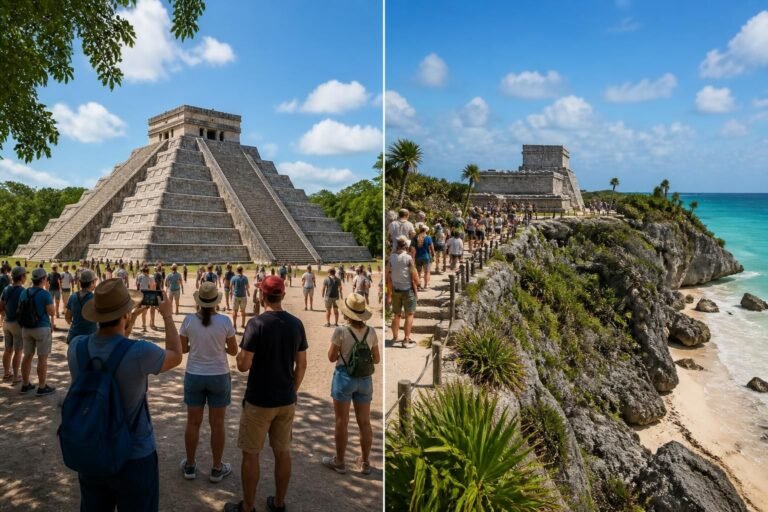
Chichen Itza, one of the most renowned archaeological treasures of Mexico, continues to captivate millions of travelers yearly, blending the rich legacy of the Mayan civilization with the breathtaking natural beauty of the Yucatan Peninsula. As 2026 approaches, visiting this historical site requires up-to-date knowledge about entry regulations, must-see features, and logistical essentials. From new ticket fees to climatic considerations and guided tour options, enthusiasts and curious travelers alike should prepare to navigate every aspect of their trip for an immersive and comfortable experience at this ancient city. Understanding the intricate architectural wonders, appreciating the cultural context, and planning visits around peak periods are key to unlocking Chichen Itza’s unparalleled allure.
Brief:
- New entry fees and ticketing policies in 2026 must be absorbed ahead of your visit.
- Early arrival at 8:00 AM helps avoid overwhelming crowds and intense sun exposure.
- Climbing bans on pyramids persist for preservation and safety, shifting focus to appreciation from ground perspective.
- Guided tours offer deep archaeological insights and convenient transit options, especially from Cancun or Merida.
- The spring and autumn equinox serpent shadow displays attract large crowds, requiring strategic timing.
- Complement your trip with visits to local cenotes and other Mayan ruins for a richer cultural experience.
Essential Travel Tips and Ticketing Details for Chichen Itza in 2026
Travelers aiming to explore Chichen Itza must first familiarize themselves with the updated entry fees in 2026. The standard fee for international tourists sits around 676 Mexican pesos, reflecting slight increases due to preservation efforts and enhanced site management. Mexican nationals and Yucatán residents continue to enjoy discounted rates, fostering local engagement in this heritage site. Upon purchase, visitors receive tickets that often include access to the main archaeological zone; however, special events like the evening light and sound show require additional tickets, which are best reserved online during peak seasons to avoid last-minute queues.
Visitors should arrive promptly at the site’s opening time—8:00 AM sharp—to make the most of the day while crowds are minimal. The influx of tour buses from Cancun and neighboring cities typically begins between 9:30 and 10:00 AM, vastly increasing foot traffic around iconic monuments. Early bird visitors benefit not only from fewer people but also from cooler temperatures in the otherwise sun-drenched Yucatan climate. Preparing with sunscreen, hats, and water is essential, as shade within the ruins is minimal.
In 2026, hiring licensed guides remains highly recommended to uncover the layered narratives embedded in Chichen Itza’s stone structures. Official guides wear identifiable badges and provide insightful explanations on topics such as Mayan astronomy, sacrificial rituals, and the complex socio-political history of the city. Expect private guided tours to range from $40 to $60 USD for a couple of hours, a worthwhile investment for travelers seeking depth beyond the common tourist viewpoints.
For those driving, toll roads linking Cancun and Merida to Chichen Itza are well-maintained and easily navigable. Rental services average from $40 to $70 per day, but travelers must secure Mexico-specific liability insurance as required by law. Alternatively, reputable bus services like ADO run comfortable and affordable scheduled routes that terminate near the entrance at Piste, the gateway town to the ruins—yet timing these arrivals to coincide with the best visiting hours requires proactive planning.
Best Times to Visit Chichen Itza: Navigating Crowds and Weather Conditions
Understanding the optimal moments to visit Chichen Itza can enhance the overall experience significantly. The historical site’s popularity surges during the dry season, which spans from November through April, offering temperatures commonly hovering around an agreeable 85°F (29°C). The months of December through February present the most comfortable climate but also the highest visitor volume. January often draws large international tour groups, including several from Asia, further increasing congestion.
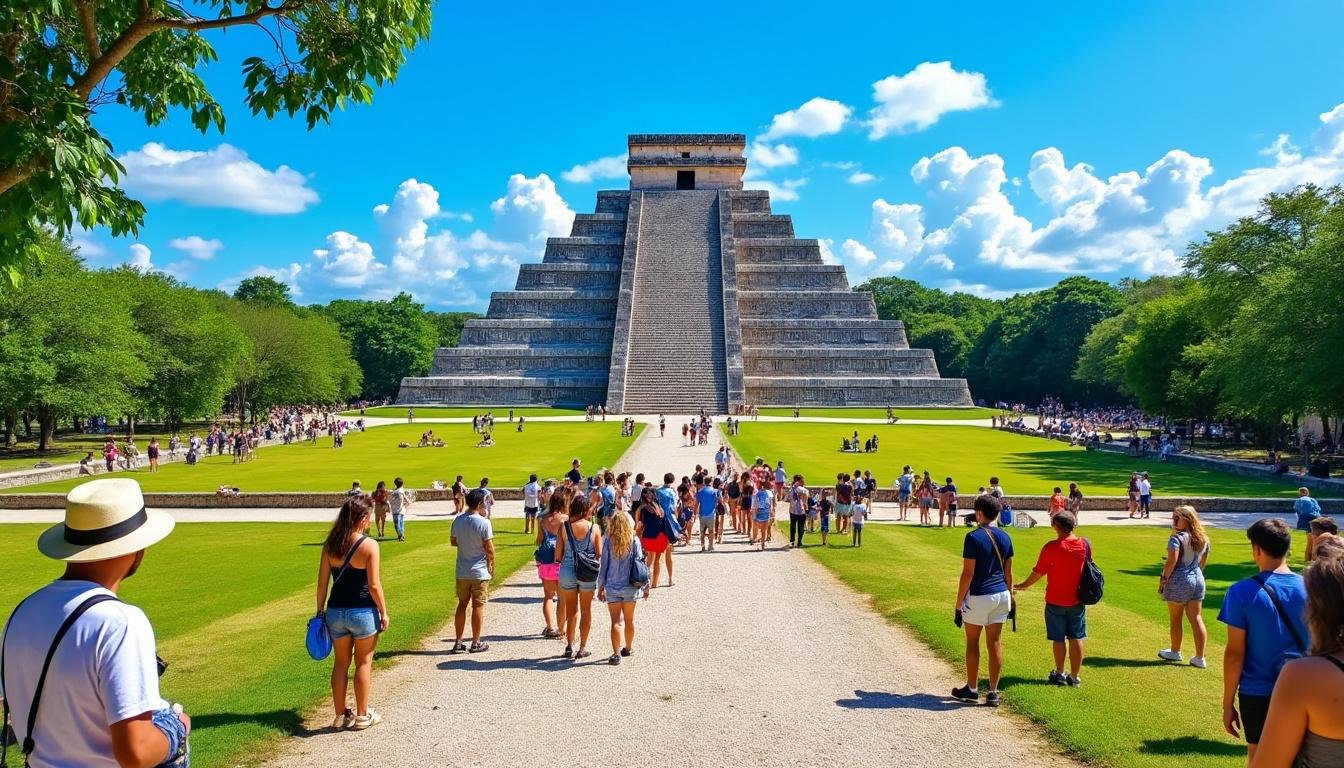
The opening hour at 8:00 AM provides a temporary calm before the peak influx, allowing visitors a rare opportunity to appreciate the monument complexes in relative solitude. For photographers and history buffs, these quieter morning hours present the best vantage points to capture El Castillo’s impressive stepped form against the clear sky.
During the rainy season, from May to October, afternoon thunderstorms are frequent but generally brief. While the weather might appear less predictable, the vibrancy of the jungle’s flora increases, making visiting outside the dry season a visually rewarding choice with fewer tourists crowding the paths. However, suitable rain gear like waterproof sandals and ponchos are advisable since many sections of the ruins have limited cover.
One of Chichen Itza’s most spectacular seasonal events—the “Descent of Kukulkan” serpent shadow—occurs around the spring and autumn equinoxes (March 20-21 and September 22-23). During these periods, visitors arrive in the thousands to witness the interplay of light and stone as the setting sun casts shadows down the northern staircase of El Castillo, forming the illusion of a massive serpent slithering downward. To secure an optimal viewing spot, tourists should arrive around midday, as the spectacle typically occurs between 3:00 and 5:00 PM depending on the date. Despite the crowds, the equinox remains uncontestably one of the richest cultural experiences atop this historical site.
Architectural Wonders and Historical Significance of Chichen Itza You Must Explore
Chichen Itza offers a profound glimpse into the Mayan civilization’s architectural ingenuity and cosmological knowledge. Dominated by El Castillo, the Pyramid of Kukulkan, the city presents a literal and metaphorical calendar in stone. Each of its four staircases contains 91 steps, adding to the temple’s summit, totaling 365 steps to represent each day of the solar year. The terraces number 52, evoking the Maya’s celebrated ‘calendar round’. This fusion of art, science, and religious symbolism illuminates why Spanish conquistadors and contemporary archaeologists alike regard Chichen Itza with awe.
Explorers should not overlook the Great Ball Court, the largest known in Mesoamerica at 545 feet long and 225 feet wide. It blends sporting tradition, political influence, and ritual with breathtaking acoustic properties—a sharp clap in the center returns as a birdlike chirp, thought to mimic the sacred quetzal. The dual stone rings, mounted high on opposite walls, mark the scoring targets in a game that could culminate in ritual sacrifice, underscoring the game’s deep cultural weight.
Close by, the Temple of the Warriors and the Thousand Columns exemplify Toltec and Maya artistic fusion, with detailed carvings of jaguars, eagles, and warriors symbolizing power and divine favor. Adjacent is El Caracol, the circular observatory whose strategically placed windows align with Venus’s extreme positions in the sky. This astronomical facility reflects the Maya’s keen celestial observations, essential for agricultural cycles and political events.
The Sacred Cenote, a vast naturally occurring sinkhole, punctuates the spiritual proportions of the city. Deep and forbidding, it contains archaeological finds including gold, jade, and human remains, all part of a sacrificial ritual to the rain god Chaac. Visitors in 2026 are reminded that, unlike popular swimming cenotes nearby such as Ik Kil, the Sacred Cenote remains a protected archaeological feature where swimming is not permitted.
Planning Your Itinerary: Efficient Ways to Experience Chichen Itza and Nearby Attractions
Crafting a sensible itinerary can transform the Chichen Itza visit from a rushed sightseeing checkpoint into a uniquely memorable journey. For travelers constrained by time, the Half-Day Express plan, which starts at opening, focuses on the core ruins like El Castillo, the Ball Court, and the Temple of Warriors, returning by midday to avoid peak heat and crowds.
A richer option involves full-day immersion—beginning early among the ruins, followed by a lunch stop and cultural stroll in Valladolid, the nearby colonial town known for its colorful streets and traditional Yucatecan cuisine. The afternoon can be reserved for a refreshing swim at Cenote Ik Kil, perfect for unwinding while soaking in pristine natural beauty.
During the equinox season, the full-day itinerary adjusts to accommodate the unique celestial event, giving visitors ample time for site exploration, lunch breaks, and returning to the ruins in the afternoon for the serpent-shadow phenomenon and the evening illumination show. Tickets for such shows should be procured in advance.
Transportation must be chosen wisely. While self-driving offers the greatest flexibility and time control, the region’s well-regulated guided tours provide seamless pickup, drop-off, and educational commentary, worthwhile for those unfamiliar with Mexican roads or desiring deeper context. These guided excursions frequently combine visits to Chichen Itza, Valladolid, cenotes, or even other Mayan sites like Coba, allowing travelers to explore diverse historical layers across the Yucatan Peninsula.
| Itinerary Type | Main Activities | Duration | Best For |
|---|---|---|---|
| Half-Day Express | El Castillo, Ball Court, Temple of Warriors | 4 hours | Time-limited travelers seeking core highlights |
| Full Day with Cenote Visit | Morning ruins, Valladolid lunch, Ik Kil cenote swim | 7-8 hours | Most visitors aiming for a comprehensive experience |
| Equinox Special | Site exploration, midday rest, serpent shadow viewing, night show | Full day | Visitors attending during spring or autumn equinox |
Exploring further afield can enrich your understanding of the Maya civilization beyond Chichen Itza. Notable nearby attractions include the Balankanché Caves, an ancient Mayan ritual site with fascinating stalactites and relics, and the vibrant colonial towns of Valladolid and Merida, which showcase post-conquest cultural evolution in Yucatán.
Frequently Asked Questions About Visiting Chichen Itza in 2026
What are the current entry fees for Chichen Itza?
As of 2026, the entry fee is approximately 676 MXN for foreign tourists, with discounts for Mexican nationals and Yucatan residents. Additional fees may apply for special events such as night light shows.
Is it still possible to climb El Castillo in 2026?
Climbing El Castillo has been prohibited since 2006 to preserve the structure and enhance visitor safety. Visitors can admire its architectural details from the ground and through guided explanations.
What is the best time of day to visit Chichen Itza?
Arriving at 8:00 AM offers the best combination of cooler temperatures and smaller crowds, improving both comfort and photographic opportunities.
Are guided tours recommended?
Yes, guided tours provide valuable archaeological insights and convenient transportation, especially helpful for travelers unfamiliar with the site or Mexican roads.
Can I swim in the Sacred Cenote?
Swimming is not allowed in the Sacred Cenote as it is a protected archaeological site. Nearby cenotes, such as Ik Kil, are open for swimming and offer excellent facilities.