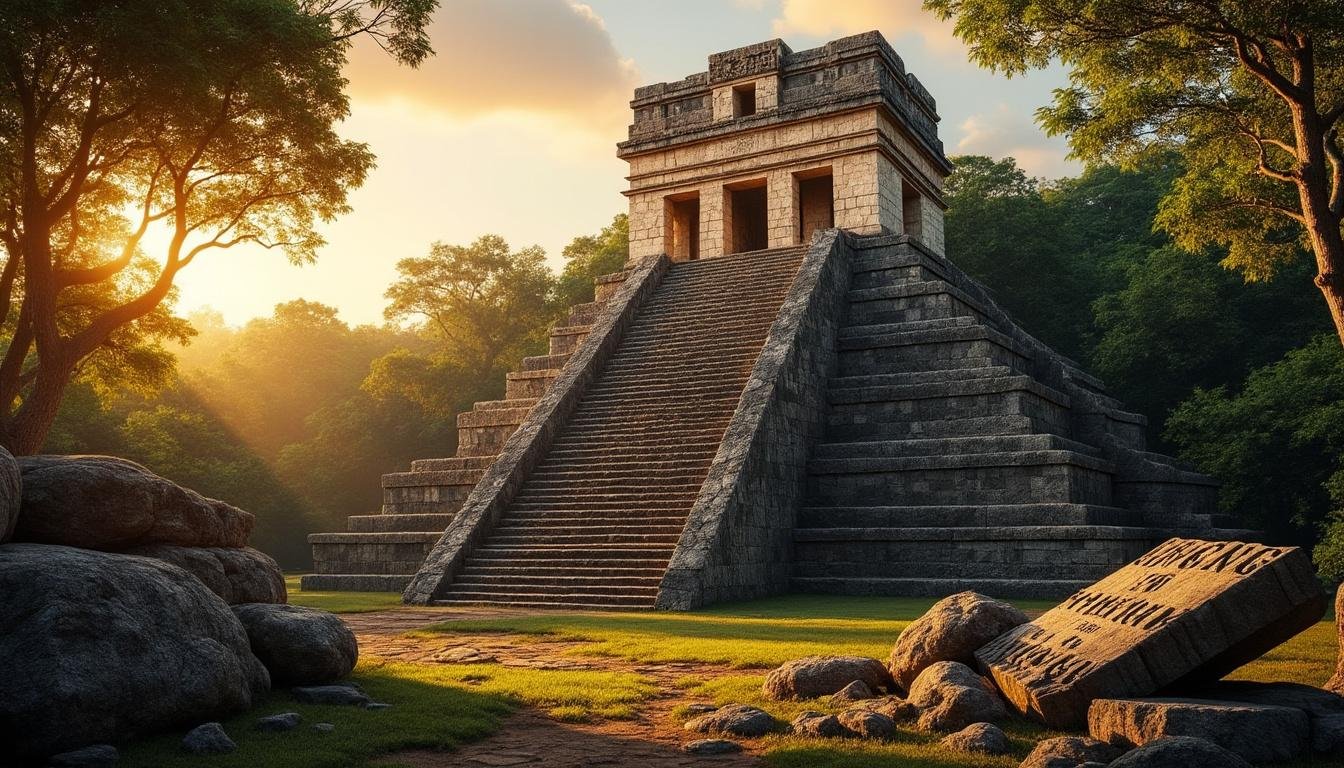
The archaeological site of Ek Balam, nestled deep within the lush Yucatán jungle, stands as a captivating window into the ancient Maya civilization. Flourishing during the 8th century AD, this once-grand city is famous for its stunning structures, intricately carved masterpieces, and the mysteries its ruins still hold. Despite being overshadowed by more famous neighboring sites like Chichen Itza, Ek Balam offers a rare, intimate glimpse into Maya culture, presenting phenomena ranging from its impressive architectural feats to evidence of its sudden abandonment. As more of its 7-mile expanse awaits discovery beneath the jungle canopy, researchers and visitors alike are continually drawn to unearthing the secrets buried in its stone walls and hieroglyphics.
In brief, Ek Balam reveals:
- Extensive ruins covering over 7 miles with only a fraction currently excavated and accessible.
- Unique architectural achievements including the Acropolis pyramid with the tomb of ruler Ukit Kan Lek Tok’, featuring remarkable stucco and jaguar motifs.
- Evidences of advanced Maya cosmology seen in road alignments and ritualistic spaces.
- Defensive structures such as dual protective walls and strategically placed sinkholes surrounding the city.
- Ongoing archaeological excavations gradually revealing more about its political history and cultural practices.
- Exclusive tour experiences providing visitors with private, immersive access to the ruins, including pyramid climbs and detailed expert insights.
- Rich prehistoric artifacts offering a deeper understanding of Maya society and its complex hieroglyphics.
Unveiling Ek Balam’s Rich Archaeological Treasures and Architectural Marvels
Ek Balam, meaning “Black Jaguar,” is not just a name but a symbol deeply intertwined with Maya mythology and political power. This historic site reveals a vast network of architectural treasures and prehistoric artifacts that speak volumes about the civilization’s sophistication. Digging into the site’s 45 identified structures, visitors encounter a varied landscape of ceremonial temples, palaces, ball courts, and protective walls, each highlighting different aspects of Maya culture and engineering prowess.
The Acropolis pyramid dominates the landscape with its grandeur, leading to El Trono (“The Throne”)— a tomb carved into the shape of a jaguar’s mouth, where the remains of Ukit Kan Lek Tok’, a prominent ancient ruler of Ek Balam, rest. This structure is not only a mortuary but also likely played a role in cosmological ceremonies pivotal to the Maya’s religious and political life. The jaguar, a revered symbol in Maya culture, embodied power and mysticism, and its inclusion as the framework for a royal tomb underscores Ek Balam’s deep link to celestial and earthly authority.
Surrounding the Acropolis, defensive features include dual concentric walls. The inner wall, richly adorned with plaster and carvings, served both defensive and ceremonial purposes. The outer wall, plain and massive, was a formidable barrier, recognized as the largest defensive structure in the region during the Late Classic period. These walls, combined with the natural sinkholes encircling the city, created an impregnable fortress. Excavations also unearthed a rubble wall near the Great Plaza, believed to be a last defensive measure against a grave threat, reflecting the city’s eventual fall.
Moreover, Ek Balam’s architectural layout intriguingly aligns with Maya cosmology. The main roads radiate from the central plaza toward the four cardinal points, symbolizing the four-part cosmos fundamental to Maya belief systems. Such meticulous planning highlights the importance of astronomy and spirituality in urban development, revealing a civilization that merged science and faith seamlessly.
The walls of the Acropolis are adorned with well-preserved paintings, including mythological representations like the hunted deer, believed to illustrate the origin of death, and depictions of K’awiil, the deity associated with lightning, maize, and abundance. These artworks provide rare insight into Maya iconography and religious beliefs, enriching our understanding of their worldview.
Tracing the Ancient Civilization Behind Ek Balam and Their Mysterious Decline
Established between the Middle Preclassic and Postclassic periods, Ek Balam rapidly evolved into a significant polity within the northern Maya lowlands. At its zenith in the 8th century AD, the city boasted a population exceeding 20,000 residents distributed across an 11.2-kilometer expanse. The city’s prominence under the reign of Ukit Kan Lek Tok’ between 770 and 802 AD brought unprecedented prosperity, marked by cultural growth in pottery, architecture, and political influence over surrounding sites.
Despite its initial success, by the mid-9th century, Ek Balam began facing mysterious challenges. Archaeological signs indicate population decline and evidence of hurried defensive enhancements, suggesting imminent danger from hostile forces or environmental pressures. These indicators speak of a civilization under duress, forced to abandon its thriving urban center due to threats that remain unclear.
The 16th-century document, “Relación Geográfica,” offers scant details on the rulers and broader kingdom affiliations of Ek Balam, mentioning a possible connection to the Talol kingdom and the aristocratic Cupul family. However, such sources are sparse, leaving much of Ek Balam’s political narrative lost to time. Ongoing archaeological efforts aim to unearth more inscriptions and artifacts that could clarify these historical gaps.
This decline did not occur in isolation; Ek Balam’s fate is part of a larger pattern of Maya regional collapses, which have intrigued scholars worldwide. Exploring the site’s defensive architecture and abandoned ceremonial centers provides scholars with clues linking social turmoil, warfare, and changes in climate that collectively contributed to its abandonment. Through these investigations, Ek Balam continues to shed light on the broader epic of Maya civilization’s endurance and transformation.
Immersive Ruins Exploration: Experiencing Ek Balam’s Historic Site Through Exclusive Private Tours
The allure of Ek Balam extends beyond academia into firsthand experiences for visitors seeking an intimate connection with Maya culture and archaeology. Thanks to private guided tours, travelers now enjoy exclusive access to the site’s highlights, including the chance to climb the towering Acropolis pyramid—an opportunity denied at many other Maya ruins.
These private tours offer comprehensive journeys through Ek Balam’s ceremonial archways, ball courts, and observatories, all led by certified archaeological guides adept at illuminating the stories behind the stones. Visitors learn about ancient rituals, the city’s political structure, and the majestic craftsmanship of the ruins, enriched by engaging anecdotes that bring the ancient civilization to life.
The tours typically include transportation from popular Riviera Maya destinations such as Cancun, Playa del Carmen, and Tulum, tailored to individual group needs for convenience and comfort. Some packages also offer an optional lunch break at nearby traditional towns like Temozón or Valladolid, allowing for enriching cultural exchanges beyond the ruins.
A key feature of these experiences is their flexibility—allowing guests to explore at a relaxed pace without the crowds typical of more crowded sites like Chichen Itza. Travelers consistently praise the personal attention and depth of knowledge provided by guides, accentuating their understanding of Maya culture in this historically rich region.
Moreover, the inclusion of essential services such as private air-conditioned transport, entrance fees, and bottled water underscores the tour’s dedication to a seamless and stress-free adventure, making the archaeological treasures of Ek Balam accessible and enjoyable for all ages.
Artifacts and Hieroglyphs: Unlocking the Stories of Maya Society at Ek Balam
The prehistoric artifacts found throughout Ek Balam contribute extensively to the understanding of Maya society’s complexity. From intricately carved stucco reliefs to untranslatable northern Maya glyphs, each find adds layers to the narrative of the city’s social structure, religious beliefs, and daily life.
Among the most significant discoveries is the carved Jaguar Altar atop the Acropolis, showcasing exquisite craftsmanship and religious iconography unique to Ek Balam. This altar, alongside other ritual objects, reflects the prominence of the jaguar in Maya symbology as a symbol of power and protection.
Further, detailed murals uncovered within the Acropolis depict key mythological scenes, such as the hunting of a deer symbolizing the origin of death and portraits of K’awiil, the lightning and maize god, emphasizing the interweaving of agriculture, religion, and cosmology. These paintings, preserved remarkably well due to the site’s low foot traffic, offer invaluable insight into the theological framework that governed Maya life.
Decoding the hieroglyphs remains an ongoing endeavor, as many texts are fragmented or enigmatic. However, advances in epigraphy have begun to piece together stories of Ek Balam’s rulers, political alliances, and ceremonial customs. These studies complement the broader research into the northern Maya lowlands, building connections with more famous centers like Chichen Itza and Mayapán.
Understanding these artifacts in their archaeological context not only deepens appreciation for Ek Balam’s unique contributions but also enhances the collective picture of Maya civilization’s diversity and sophistication. The effort to preserve and study these pieces continues to accelerate, with modern technology uncovering details imperceptible to the naked eye.
Experience a virtual tour of Ek Balam showcasing its broad ceremonial plaza, the Acropolis pyramid, and richly decorated walls, perfect for those eager to explore the site remotely.
This documentary delves into the broader Maya culture, illustrating how Ek Balam fits within the grand archaeological landscape of ancient civilization in the Yucatán.
Planning Your Visit: Insights and Practical Tips for Exploring Ek Balam’s Archaeological Treasures
For travelers eager to delve into Ek Balam’s ancient mysteries, planning is key to maximizing the experience. The site’s remote location northeast of Chichen Itza means visitors benefit greatly from organized tours that handle logistics and provide expert knowledge. Private tours remain the best option for those wanting a tailored, crowd-free excursion.
When planning your visit, consider the following essentials:
- Early start: Morning tours avoid the midday heat and allow peaceful exploration before any crowds arrive.
- Climbing equipment: Comfortable, closed-toe shoes are recommended as the Acropolis pyramid climb demands agility and balance.
- Sun protection: Hats, sunglasses, and biodegradable sunscreen help safeguard against intense sun exposure.
- Hydration: Carry bottled water—many tours conveniently provide this to keep visitors refreshed.
- Photography considerations: Video and camera equipment may require a nominal entrance fee. Drones and tripods are prohibited.
- Cultural respect: Follow all site regulations to preserve fragile structures and artworks for future generations.
To enhance your understanding of Ek Balam within the wider framework of Maya history, a visit to neighboring sites, such as Chichen Itza, is advisable. The interplay of these sites enriches comprehension of Maya political and cultural dynamics, which unfolded across this corner of Mexico over centuries.
| Feature | Description | Recommendation |
|---|---|---|
| Tour Type | Private guided half-day tours focused solely on Ek Balam ruins | Best for in-depth exploration without extra distractions |
| Accessibility | Easy walkable site with opportunities to climb pyramids | Wear comfortable shoes and be prepared for some steep steps |
| Best Time to Visit | Early morning to mid-morning | To avoid heat and crowds |
| Additional Activities | Optional lunch in Temozón or Valladolid, nearby colonial towns | Recommended for cultural immersion after ruins exploration |
| Photography | Allowed with a small additional fee for certain devices | Bring cameras but plan for entrance fees |
For visitors interested in expanding their exploration, combined tours including Ek Balam and cenote bathing or trips to nearby Tulum and Coba ruins provide diverse glimpses into the Riviera Maya’s rich archaeological tapestry. Such combinations offer dynamic adventures that satisfy cultural curiosity and appreciation for nature’s beauty.
To discover more about related Maya sites and their significance, exploring detailed resources like this comprehensive account of Chichen Itza deepens appreciation of this extraordinary ancient world.
Is climbing the pyramid at Ek Balam allowed?
Yes, visitors can climb the Acropolis pyramid and other smaller temples, providing exceptional views of the surrounding jungle.
Are private tours available for a personalized experience?
Indeed, private guided tours cater specifically to individual or group preferences, offering deeper insights and a more relaxed schedule.
What kind of artifacts have been found at Ek Balam?
Artifacts include intricate stucco carvings, hieroglyphic texts, ceremonial altars, and murals depicting Maya cosmology and mythology.
How was Ek Balam protected against invasions?
The city had two massive curved defensive walls and sinkholes surrounding the perimeter, making direct attacks difficult.
Why was Ek Balam eventually abandoned?
While the exact reasons remain uncertain, escalating threats likely from warfare and societal disruptions caused residents to flee and abandon the city.