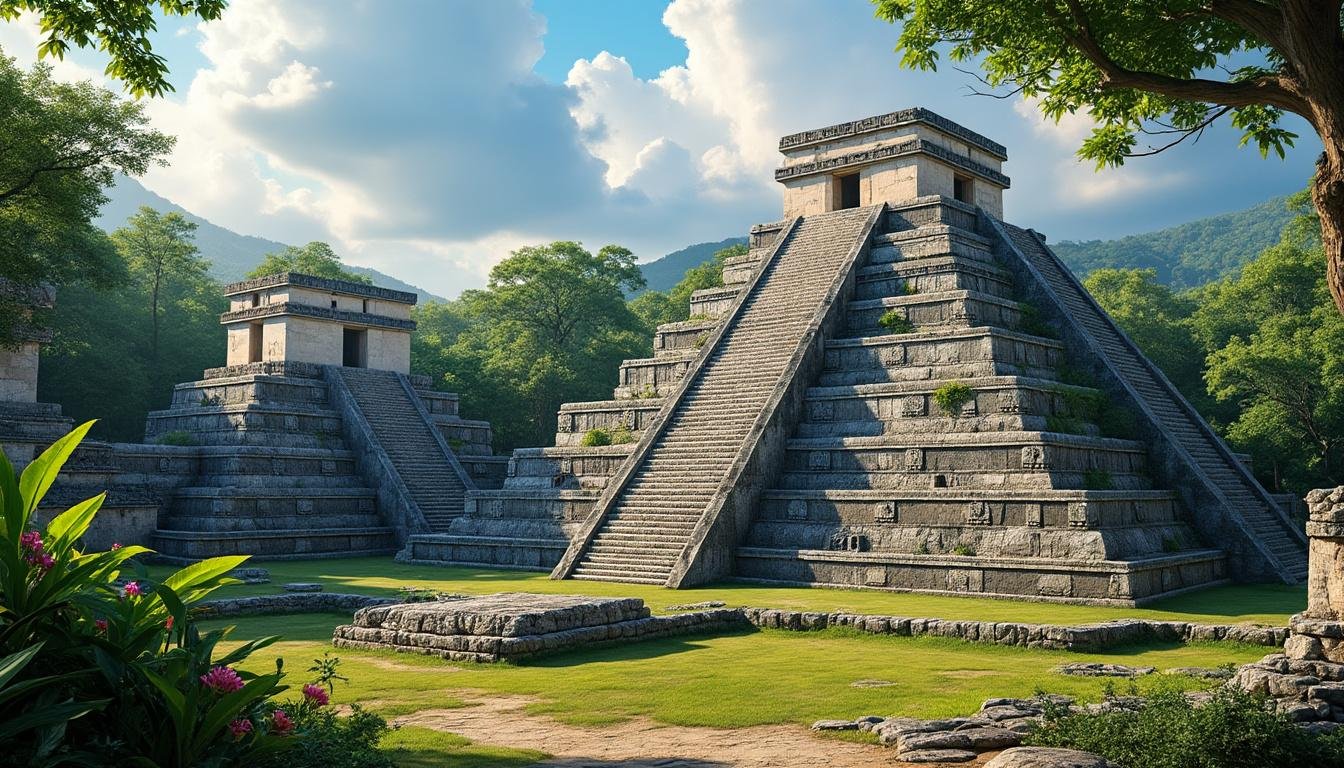

The ancient ruins of Uxmal, nestled deep in the Yucatan Peninsula, stand as a breathtaking testament to the Maya civilization’s architectural brilliance and cultural depth. This captivating archaeological site, adorned with magnificent structures built in the distinctive Puuc style, conveys the grandeur and ingenuity of a people who flourished over a thousand years ago. Unlike more frequented ruins, Uxmal offers a serene immersion into ancient history, inviting visitors to lose themselves among intricately carved stone facades, towering pyramids, and sprawling plazas.
At the heart of the site, the Pyramid of the Magician rises with a commanding presence, embodying mythical tales and showcasing advanced construction techniques unique to the region. Around it unfolds a complex urban plan, where residential structures, administrative palaces, and ceremonial complexes intertwine in a way that reflects both cosmological symbolism and social hierarchy. The city’s remnants vividly portray the spiritual, political, and cultural narratives that defined the Maya world, providing an invaluable window into their lasting legacy. Uxmal’s preservation as a UNESCO World Heritage site further emphasizes its importance as a cultural heritage treasure, carefully protected yet continually revealing new insights to archaeologists and visitors alike.
Historical Significance and Origins of Uxmal within the Maya Civilization
Situated approximately 70 kilometers south of Mérida, Mexico, Uxmal holds a pivotal role in understanding late Classic and Early Postclassic periods of Maya history. Established around 500 AD and thriving until roughly 1000 AD, it became a major political and economic power influencing surrounding settlements including Kabah, Sayil, and Labna. Its strategic location in the Puuc region allowed control over vital trade routes, facilitating the exchange of salt, obsidian, and other commodities essential to Maya prosperity.
Archaeological findings reveal Uxmal was more than a mere residential hub; it was a city meticulously planned with monumental architecture communicating governance, spiritual beliefs, and social order. The origin of its name, meaning “built up three times,” hints at a layered urban development, rising from successive phases that underline growth and adaptation. Intriguingly, local myths intertwine with history, particularly the legend of the “Magician” or dwarf who purportedly constructed the Pyramid of the Magician overnight—a story encapsulating the mystique that surrounds the site.
The unique urban layout distinguishes Uxmal from other Maya centers. Buildings are arranged to mirror cosmological principles, reflecting an alignment with celestial events that guided agricultural calendars and religious ceremonies. Such planning emphasizes the Maya’s profound integration of astronomy with daily life and governance. These elements of origin and historical development position Uxmal as a beacon illustrating the complexity and innovation of the Maya civilization during its height.
Architectural Innovations of Uxmal as a Showcase of Puuc Style Mastery
Uxmal is renowned globally for the elegant and intricate Puuc architectural style unique to the Yucatan’s low, arid hills. This style, perfected in the late Classic Period, emphasizes smooth, plastered lower walls contrasted with intricately carved upper facades richly decorated with stone mosaics. Such gypsum stone techniques allowed the Maya to create dazzling patterns depicting serpents, rain gods, and geometric motifs that continue to inspire awe in contemporary visitors.
A signature technique used in Uxmal is masonry without mortar, where stones were painstakingly cut and placed to interlock, ensuring long-lasting stability. The Pyramid of the Magician stands as an extraordinary example, rising approximately 35 meters with a rounded base uncommon among Maya pyramids. Its five stacked terraces culminate in a small temple, revealing successive construction phases that narrate evolving religious and political narratives.
The Governor’s Palace exhibits a sprawling façade over 100 meters long, adorned with elaborate friezes of masks and serpents. This building was a political and ceremonial nerve center, demonstrating not only architectural virtuosity but also the social stratification of Uxmal’s inhabitants. The palace’s elevated position reflected the elevated status of its occupants and the governing power they wielded. Similarly, the Nunnery Quadrangle displays graceful symmetry and rich sculptural work, though its exact function remains debated—whether a residence for elite women or a sanctuary for ritual activity.
These innovations are more than aesthetics; they symbolize technological advancement and an intimate connection between architecture and cosmology, integrating carved motifs of deities like Chaac, the rain god, underscoring water’s essential role in sustaining agriculture and life. The fusion of form and function in Uxmal’s structures provides key insights into the ingenuity behind Maya architecture.
Cultural and Religious Significance Embedded in Uxmal’s Architectural Layout
Beyond its architectural grandeur, Uxmal served as a vibrant cultural and religious hub that revealed the Maya civilization’s spiritual depth. The city’s layout and constructions were meticulously planned to reflect the interaction between the earthly domain and the divine. This duality permeates the design of temples, plazas, and residences, expressing religious cosmology through physical space.
Central to Uxmal’s spiritual significance is the Temple of the Magician, considered a sanctified space regulating fertility, rain, and agricultural cycles pivotal to Maya survival. Astronomical alignments of key structures demonstrate an advanced understanding of celestial mechanics, used to time rituals and seasonal activities. The orientation of buildings towards celestial events further reinforced the Maya’s concept of harmony between humans and the cosmos.
The integration of ceremonial centers and residential areas highlights the tight interweaving of societal roles. Priests, nobility, and commoners had distinct areas yet shared cultural and religious practices underscored by Uxmal’s architectural plan. The elaborate masks and iconography found in the Nunnery Quadrangle symbolize religious beliefs carried by the elite, who likely mediated between gods and the community.
Today, the spiritual heritage of Uxmal still resonates, influencing contemporary Maya traditions and practices in the region. Rituals, ancestral reverence, and nature worship continue, connecting past and present in a continuum of cultural identity. The site embodies not only historical significance but also living cultural heritage, inspiring an appreciation for the Maya civilization’s lasting impact.
Exploring Uxmal’s Most Iconic Structures: A Journey through Time
To fully grasp the richness of Uxmal, visitors explore several hallmark constructions that reveal the Maya civilization’s social, political, and religious layers. Each building narrates unique stories, from divine myth to earthly governance, drawing visitors into a deeply rooted historical context.
The Pyramid of the Magician
The Pyramid of the Magician is undoubtedly Uxmal’s landmark. Its elliptical base sets it apart architecturally and culturally. This towering pyramid, reaching 35 meters, was built in five distinct stages, marking the evolution of religious and political priorities. Archaeologists have found that its temple once held statues linked to rain and fertility gods, emphasizing the Maya’s reliance on nature’s cycles. The pyramid’s steep staircases and commanding views demonstrate the strategic importance of this temple.
The Governor’s Palace
Stretching over 100 meters, Governor’s Palace stands as a masterpiece of Puuc stonework. The façade’s elaborate masks, serpent motifs, and geometric forms tell tales of power and cosmology. This palace functioned as both a residence and administrative center, where rulers governed and priests conducted ceremonies. The combination of decorative artistry with practical function exemplifies Maya elite culture and governance.
The Nunnery Quadrangle
The Nunnery Quadrangle is a neatly arranged complex of four buildings enclosing a courtyard. Despite its misnomer, it was not a religious convent but likely housed elite members, possibly women of the court, or served ceremonial purposes. Its façades are some of the finest examples of Puuc carvings, laden with serpent imagery and rain god faces reflecting the importance of water and fertility in Maya life.
The Ball Court
The Ball Court of Uxmal, measuring approximately 60 by 30 meters, highlights the profound cultural significance of the Mesoamerican ballgame. Beyond sport, it held ritual importance tied to fertility, war, and cosmic balance. Intricate carvings around the court depict the game’s sacred symbolism and its role as a mechanism for conflict resolution or political negotiation. Its preservation offers keen insight into Maya social and spiritual dimensions.
| Structure | Significance | Key Features |
|---|---|---|
| Pyramid of the Magician | Symbol of mystical origin and spiritual power | Unique elliptical base, five tiers, summit temple |
| Governor’s Palace | Political and administrative center | 100+ meter façade, elaborate Puuc stonework, columns |
| Nunnery Quadrangle | Elite residence or ceremonial complex | Four buildings around courtyard, intricate deity masks |
| Ball Court | Cultural and ritual importance linked to Maya ballgame | Large size, sloped walls, ritual carvings |
For those intrigued by the architectural marvels within the ancient Maya ruins, Uxmal’s structures offer unparalleled insights into their builders’ complex societal and spiritual worldviews. Exploring these sites supports a deeper understanding of the Maya civilization’s ingenuity.
Visiting Uxmal: Essential Tips and Responsible Tourism Practices for 2026
Visiting Uxmal in 2026 presents a unique opportunity to connect with the cultural heritage of the Yucatan Peninsula’s Maya past. To maximize the experience, timing, exploration method, local gastronomy, accommodation, and responsible tourism considerations can profoundly influence your journey.
Optimum Visiting Seasons and What to Expect
The dry season from November through April is ideal due to pleasant temperatures and minimal rainfall, fostering comfortable exploration of the archaeological site. Though once a deterrence, recent studies have shown that visiting during the lush wet season between May and October offers verdant landscapes and fewer visitors, perfect for those seeking tranquility and vibrant photography conditions.
Guided Tours vs Independent Exploration
Guided tours provide expert interpretations, historical context, and logistical ease, especially for first-time visitors wanting thorough knowledge. Conversely, exploring solo allows more freedom, pausing and reflecting at leisure. Both approaches unveil unique layers of understanding about Uxmal’s Maya architecture and the spiritual narrative embedded within the ruins.
Culinary Experiences and Accommodation Choices
Sampling local Yucatecan dishes like cochinita pibil or tamales is a must. Several restaurants near the ruins offer traditional meals with scenic views of Uxmal’s monuments. Accommodation options span from budget hostels to charming boutique hotels in nearby towns such as Muna, affording visitors convenient access and immersive cultural encounters.
Commitment to Historic Preservation through Responsible Tourism
Uxmal faces ongoing challenges due to natural wear and human impact. Preservation efforts by the Mexican government and global organizations focus on restoring and maintaining the site using authentic materials and archaeological best practices. Visitors have a vital role: sticking to paths, not touching stones, and supporting locals sustains this fragile cultural heritage.
- Visit during the dry season for optimal weather conditions
- Choose guided tours for detailed historical insight or self-explore for flexible pacing
- Enjoy authentic Yucatecan cuisine close to the ruins
- Stay in nearby towns offering diverse lodging options
- Observe all preservation guidelines and support sustainable tourism initiatives
Educational videos like this enhance understanding and appreciation of Uxmal’s archaeological wonders before arrival, enriching visitors’ experiences by providing historical context and visual familiarity.
This detailed architectural exploration further reveals the intricacies of the Puuc style, explaining symbolism and construction techniques visible in Uxmal’s majestic structures.
What is the best time of year to visit Uxmal?
The dry season from November to April offers the best weather with less rain and moderate temperatures, ideal for exploring the ruins comfortably.
How does Uxmal’s architecture differ from other Maya cities?
Uxmal exhibits the Puuc style characterized by smooth lower walls and intricately carved upper facades, with unique features like the elliptical base of the Pyramid of the Magician.
Are guided tours recommended for visiting Uxmal?
Guided tours are beneficial for in-depth knowledge of the ruins’ history, culture, and architecture, although independent exploration offers a more personal visit experience.
What measures are taken to preserve Uxmal?
Conservation efforts include careful restoration with original materials, visitor education, and regulations to prevent damage, ensuring sustainable preservation of the site.
Is it possible to visit other Maya sites near Uxmal?
Yes, sites like Kabah, Sayil, and Labna are nearby and were historically under Uxmal’s influence, providing enriched understanding of the regional Maya culture.