The Sacred Cenote at Chichen Itza stands as a compelling symbol of the ancient Mayan civilization’s intricate relationship with nature, spirituality, and survival. Located within the Yucatan Peninsula, this natural sinkhole transcends its geographic and hydrological origins to embody a central component of religious ritual and cultural identity. Far from merely a water source, the Sacred Cenote was venerated as a vital portal to the Mayan underworld, reflecting a profound spiritual ecology that intertwined environmental features with cosmic beliefs. Today, as visitors journey through the grand architectural marvels of Chichen Itza, the cenote invites contemplation about an ancient world that revered water not only as sustenance but as a powerful, sacred entity. This exploration unpacks the Sacred Cenote’s historical layers and significance, revealing how its depths preserve echoes of Mesoamerican culture, ritual sacrifice, and the broader narrative of ancient history.
Key Points:
- The Sacred Cenote served as a ceremonial focal point connected to Mayan religious beliefs and ritual sacrifice.
- Its formation and use illustrate the challenges posed by the Yucatan Peninsula’s scarce water resources to the Mayan civilization.
- Artifacts recovered from the cenote, such as gold and jade, highlight the extensive trade networks and cultural exchange within Mesoamerican culture.
- Modern archaeological efforts continue to uncover the cenote’s secrets, underscoring its religious and historical significance.
- Visiting the Sacred Cenote today offers insight into the deep spiritual values and sophisticated engineering of the ancient Maya.
The Geological and Cultural Origins of the Sacred Cenote in the Yucatan Peninsula
The Yucatan Peninsula is known for its unique geological makeup, predominantly composed of porous limestone karst. Unlike the fertile river valleys of other ancient civilizations, the Mayan settlers faced the challenge of a landscape that offered little surface water. The scarcity of accessible drinking water shaped much of the region’s ecology and human settlement patterns. Cenotes—natural sinkholes formed by the collapse of limestone bedrock exposing groundwater—provided rare but precious water reservoirs amid the arid terrain. Richard Bloom and F.G. Hall’s studies categorize these cenotes into varied formations such as jug-shaped or vertical-walled structures, emphasizing their geological diversity.
Among these, the Sacred Cenote at Chichen Itza stands out for its profound ceremonial role. Named roughly “the mouth of the well” in the Mayan Itzá language, the cenote symbolized a gateway between the earthly plane and Xibalba, the Mayan underworld. The spiritual significance of water in the Mayan worldview was amplified by its scarcity, endowing these natural wells with an aura of holiness. The cenote’s proximity to a small priest’s residence near its edge underscores its purpose beyond mere water procurement—it was a sanctified space for ritual sacrificial ceremonies dedicated to Chaac, the rain god, whose favor was crucial for agricultural success in this challenging environment. The Sacred Cenote thus represents both a vital natural resource and a spiritual nexus.
The Mayan understanding of the cenote’s role is illustrated by the sacbé, or “white road,” a raised causeway connecting the Sacred Cenote to the Great Plaza and iconic structures like El Castillo. This pathway was more than transportation infrastructure; it formed a sacred route for processions transporting offerings to the cenote’s depths. Pilgrims and priests traveled this raised road during ceremonial events, reinforcing the cenote’s integral position within the Mayan sacred landscape.

Exploring Ritual Sacrifice and Archaeological Discoveries at the Sacred Cenote
The Sacred Cenote’s enigmatic allure also lies in its role as a site of ritual sacrifice, where offerings to the gods—especially Chaac—were made to ensure rain and fertility. Early 20th century explorations by Edward Herbert Thompson were seminal in shedding light on the cenote’s function within Mayan religious practice. Despite lacking modern archaeological techniques, Thompson’s dredging efforts starting in 1904 uncovered a wealth of artifacts including gold and jade ornaments, ceramic vessels, and human remains. These treasures, found at the cenote’s bottom, reflect the Mayan’s elaborate rituals that combined material offerings with human sacrifice.
While popular imagination often focuses on violent sacrificial acts, scholarly analyses of recovered bones indicate a more nuanced reality. Some remains lack signs of trauma, suggesting they were either natural sacrifices or reverential deposits. Others display skeletal erosion consistent with prolonged water exposure before deposition. These practices illustrate that the cenote was a multifaceted ritual space where both ceremonial killings and symbolic offerings coexisted.
The recovered artifacts also reveal the Mayan civilization’s extensive trade connections throughout Mesoamerica. Jade stones originating from Guatemala, gold ornaments traced to the Zapotec region of Oaxaca, and ceramic pieces imbued with remnants of copal incense emphasize the cosmopolitan network the ancient Maya engaged with. The ceremonial tossing of such precious items into the cenote symbolized profound devotion and was believed to invoke blessings from divine forces.
Nonetheless, Thompson’s excavations stirred controversy due to his intrusive methods and removal of artifacts from Mexico to foreign museums. More recent efforts by Mexico’s National Institute of Anthropology and History (INAH) have focused on meticulous studies and preservation of the site’s integrity, employing technologies such as LiDAR to reveal buried structures surrounding the cenote, including a steam bath used for purification, altars, and ceremonial platforms. These findings reinforce the Sacred Cenote’s role as a multipurpose ritual complex nurturing Mayan spiritual life across centuries.
Religious Significance and Symbolism of the Sacred Cenote within Mayan Cosmology
In Mayan cosmology, water was a powerful symbol linked with life, death, and rebirth. The Sacred Cenote was much more than a water source; it was an entrance to Xibalba, the underworld realm where gods and ancestors dwelled. Chichen Itza’s architecture and iconography vividly illustrate this connection, making the cenote an axis between the celestial, terrestrial, and subterranean worlds.
The term “mouth of the well” captures the conceptualized portal effect, where the cenote’s open water surface represented not only the physical well but also a spiritual mouth communicating between realms. The surrounding temples and sacbé elevated this liminal space, highlighting its function as a gateway for sacred purposes. The elevated mercury levels found in the cenote’s water, a toxic metal associated with ritual centers, further hint at its sacred contamination and religious importance.
The popularity of Chaac, the rain god, in the region is especially noteworthy. Rain was critical for sustaining crops, and the ceremonial placements of offerings in the cenote were believed to appease Chaac and ensure agricultural abundance. This belief system reinforces the interconnectedness of environmental stewardship and spiritual practice central to Mesoamerican culture.
Moreover, the cenote’s ritual use persisted for centuries, continuing as a place of pilgrimage even after Chichen Itza’s decline as a political center. The water-filled sinkhole’s subtle yet enduring presence in spiritual life reinforces the Maya’s deep reverence for natural phenomena as sacred forces.
Preservation, Tourism, and Modern-Day Exploration of the Sacred Cenote at Chichen Itza
The Sacred Cenote’s enduring mystique today draws countless visitors to Chichen Itza, combining archaeological curiosity with cultural pilgrimage. Recognized as part of the UNESCO World Heritage Site, the cenote is carefully preserved to balance preservation with accessibility. Unlike other cenotes in the region that may allow swimming, such as some tourist-friendly cenotes, the Sacred Cenote is protected due to its archaeological significance and fragile ecosystem.
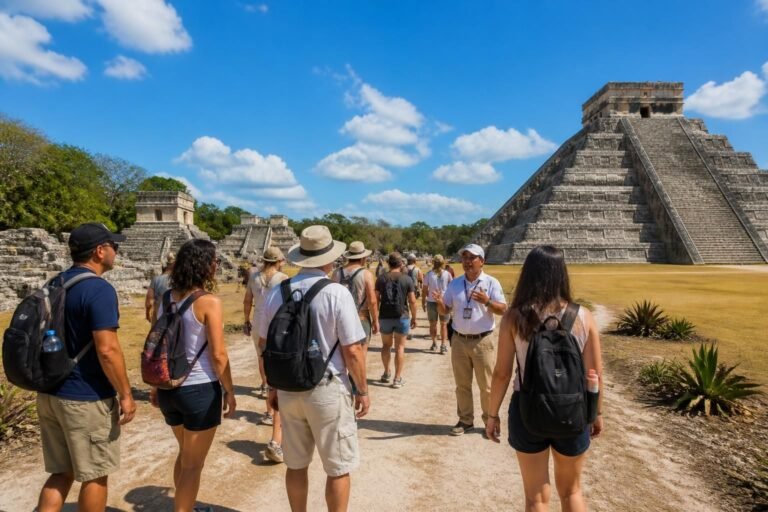
Tourists often explore the broader Chichen Itza site, which includes the iconic El Castillo pyramid. Expert guides highlight the cultural and religious significance of the Sacred Cenote, offering insights that deepen appreciation for the ancient site. Visitors are encouraged to respect the sanctity of the cenote, reflecting on its role in ritual sacrifice and spiritual dialogue. For those interested in combined cultural and natural exploration, some tours include both Chichen Itza and nearby cenotes like Ik Kil, showcasing the region’s natural wonders alongside its historic heritage.
Protection efforts extend to the cenote’s surroundings, including restoration of the sacbé and adjacent ceremonial platforms. Archaeologists employ advanced mapping methods such as LiDAR to uncover hidden features and to monitor environmental impacts. These scientific endeavors contribute to sustainable tourism strategies, ensuring the temple and cenote remain intact for future generations.
| Aspect | Details |
|---|---|
| Location | Chichen Itza, Yucatan Peninsula, Mexico |
| Dimensions | Approximately 60 meters (197 feet) wide |
| Formation | Natural limestone sinkhole (cenote) |
| Primary Use | Ritual sacrifice and religious offerings |
| Artifacts Found | Gold, jade, ceramic vessels, human remains |
| Associated Deity | Chaac, the rain god |
Planning a Visit: Navigating the Sacred Cenote Experience within the Chichen Itza Archaeological Zone
For travelers eager to immerse in the rich heritage of the Sacred Cenote, careful planning enhances the experience. The best times to visit Chichen Itza generally fall during the cooler, less humid months from November through April. Early morning visits can avoid peak crowds and offer a peaceful atmosphere conducive to reflection and photography.
Access to the Sacred Cenote is included with entrance to the archaeological park, which features guided tours illuminating the broader context of the site, from the Temple of Warriors to the iconic pyramid of Kukulcán. Many visitors combine their visit with excursions to nearby cenotes to experience contrasting natural beauty and recreational swimming options, like those detailed in this Chichen Itza cenote tour guide.
Transportation can be streamlined by renting a car in the region or using local bus services, with helpful tips available to navigate schedules and optimize travel in the Riviera Maya. As of 2026, these options provide flexibility for independent explorers and organized groups alike.
- Choose early morning or late afternoon visits to avoid crowds.
- Wear comfortable walking shoes suitable for uneven surfaces.
- Bring water and sun protection while respecting site rules.
- Consider guided tours for deeper historical and cultural context.
- Combine the visit with nearby cenote explorations for varied experiences.
In sum, the Sacred Cenote at Chichen Itza is not only a geological marvel but a profound emblem of ancient Mayan identity, religious fervor, and environmental adaptation. Its enduring mystery continues to fascinate scholars, travelers, and spiritual seekers, making it an essential highlight of any exploration into the ancient wonders of the Yucatan Peninsula.
What made the Sacred Cenote a significant site in the Mayan civilization?
The Sacred Cenote was a critical religious site used for rituals and offerings to the rain god Chaac, thought to connect the earthly realm to the Mayan underworld, Xibalba.
Are visitors allowed to swim in the Sacred Cenote at Chichen Itza?
Swimming is not permitted in the Sacred Cenote due to its archaeological importance and sacred status, but nearby cenotes like Ik Kil are open for swimming and recreational activities.
What types of artifacts have been recovered from the Sacred Cenote?
Archaeologists have uncovered gold and jade ornaments, ceramic vessels, and human remains, many believed to have been ritual offerings or sacrifices.
How can visitors reach Chichen Itza and the Sacred Cenote?
Visitors can reach the site via local bus services, car rentals, or organized tours with guidance on navigating routes and schedules in the Riviera Maya.
What is the sacbé and its relevance to the Sacred Cenote?
The sacbé is a raised white plastered road connecting the Sacred Cenote to the central plaza, used for ceremonial processions carrying offerings.