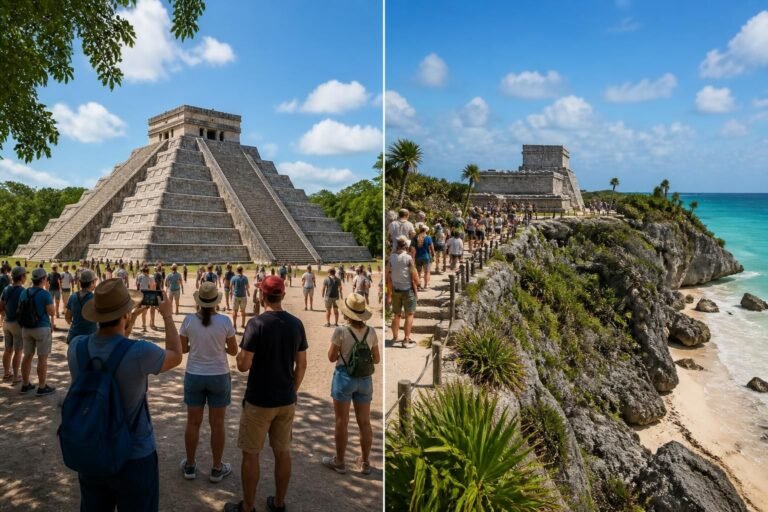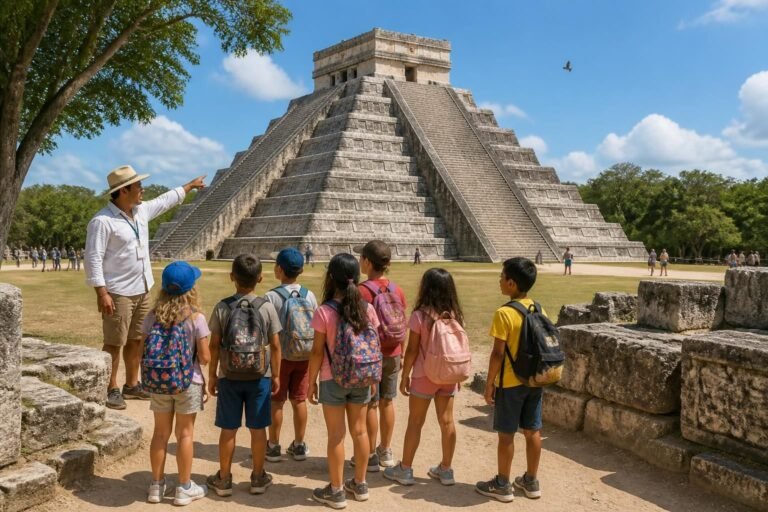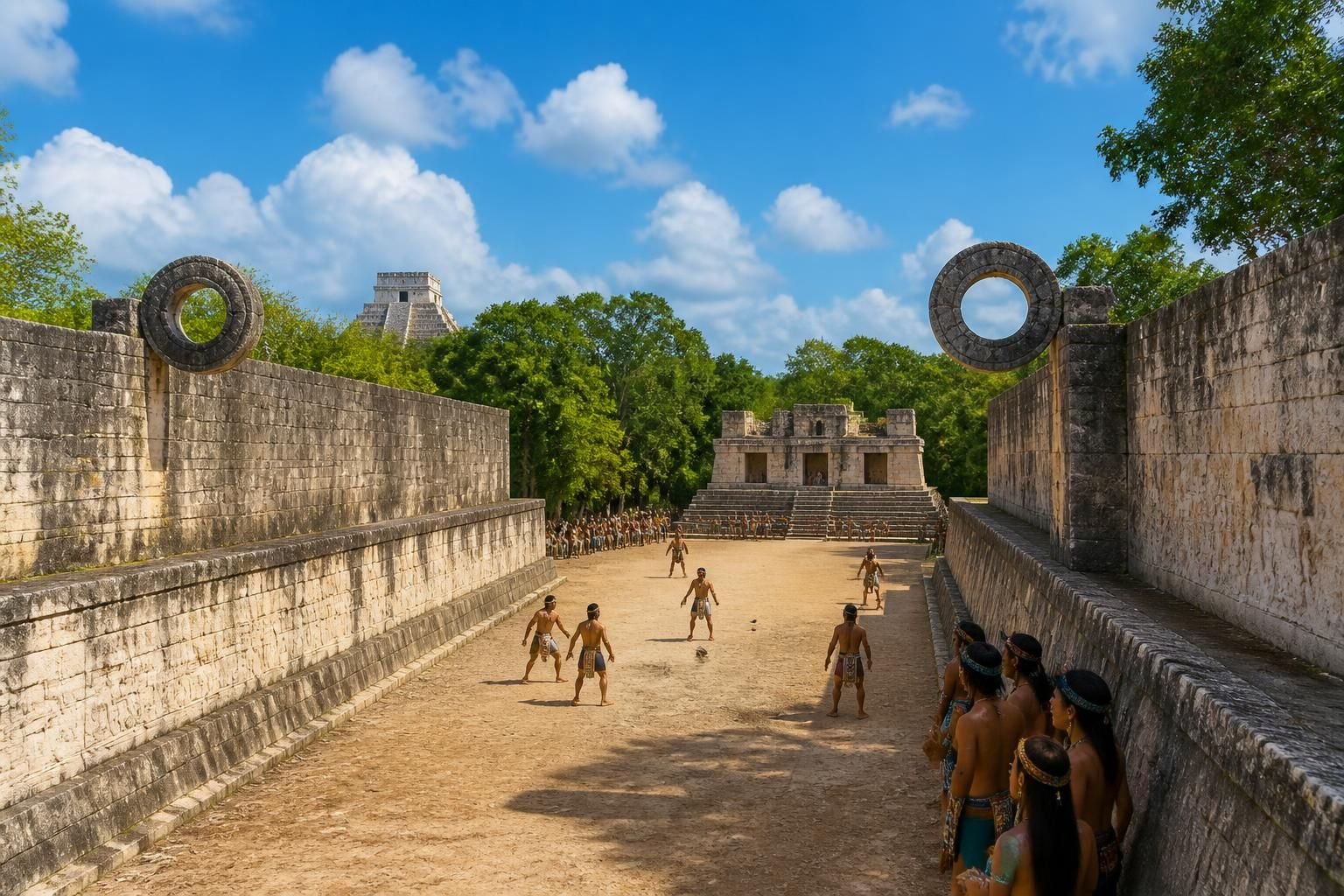

The Chichen Itza ball court stands as a monumental emblem of the Maya civilization’s intricate blend of sport, religion, and governance. Situated in the heart of the Yucatán Peninsula, this immense stone arena reflects not only the societal and cultural values of an ancient people but also offers profound insights into the ceremonial games that held central importance in Mesoamerican history. Beyond just a sporting venue, the ball court served as a stage for sacred rituals and political theater, revealing layers of cultural significance that remain a subject of passionate archaeological exploration today.
As the largest ball court discovered in Mesoamerica, its dimensions alone—stretching 168 meters in length and 70 meters in width—impress upon visitors the scale at which the Maya conducted these ritualized contests. The space’s capacity to hold thousands of spectators highlights its role as a public arena where ancient sports morphed into powerful cultural expressions connected with cosmic battles, life, and death. For travelers planning their journey in 2026, understanding the depth of history embedded in this site enriches any visit, transforming it into a truly immersive experience.
Architectural Grandeur and Unparalleled Acoustics of the Chichen Itza Ball Court
The Great Ball Court at Chichen Itza, unparalleled in size across the pre-Columbian Americas, captures attention through its imposing architecture and resonant acoustics. Measuring 168 meters by 70 meters, the court is framed by parallel walls standing 8 meters high, culminating in an I-shaped layout marked by the North and South temples. These structures flank the playing alley, providing the court with its distinctive form. Constructed around 864 AD during the zenith of Chichen Itza’s cultural and political influence, this arena embodies a fusion of art, architecture, and athletic prowess.
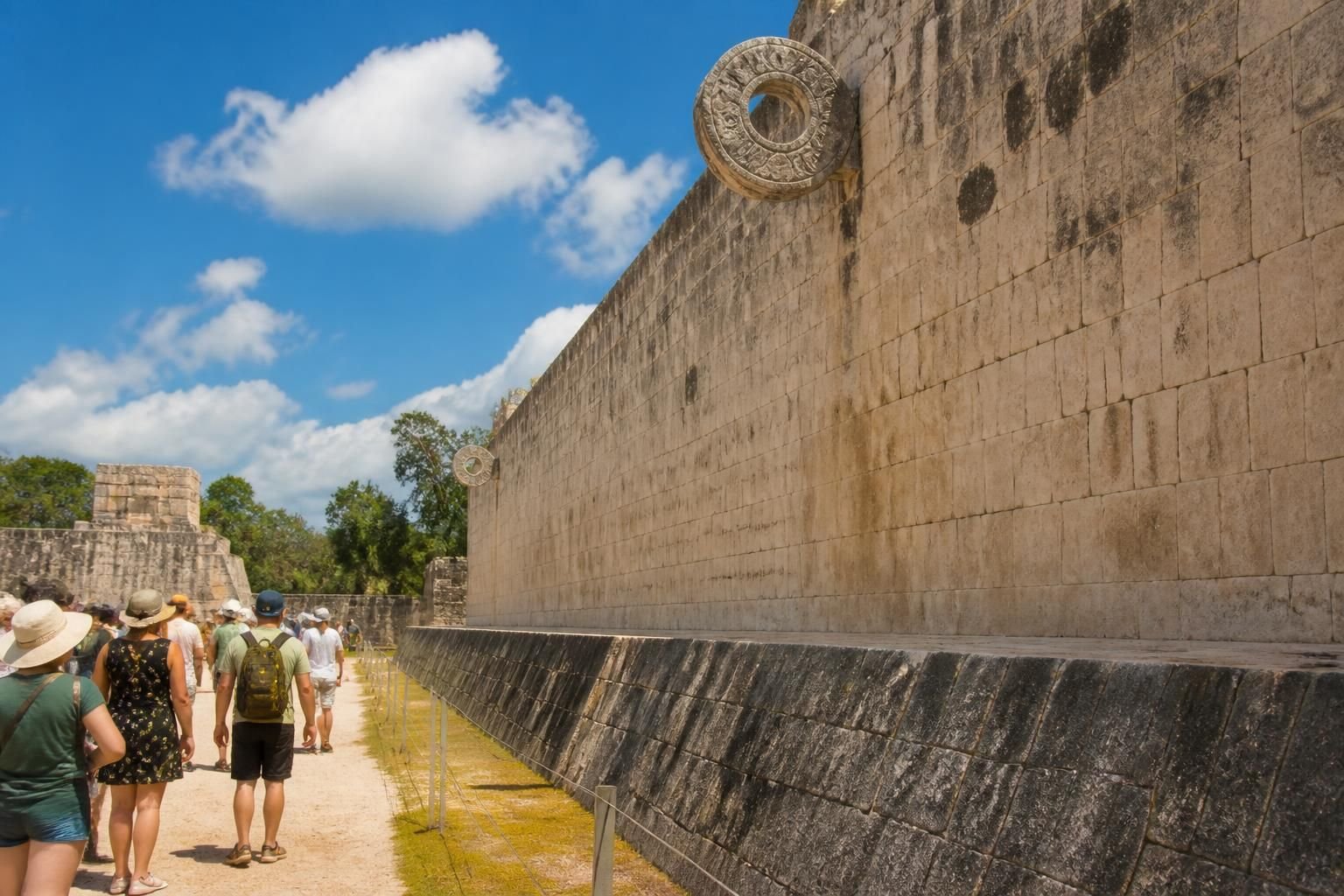
Among its most fascinating features are the stone rings mounted six meters above the playing field on each sidewall. These rings, a meter in diameter and decorated with entwined feathered serpents, presented a near-impossible target for players, as only hip, thigh, forearm, and shoulder contact with the solid rubber ball was permitted. Scoring by passing the ball through these rings ended matches instantly, underscoring the challenges of ancient sportsmanship in a ritual context.
A notable architectural marvel lies in the acoustic properties of the court. Visitors can witness how a single hand clap echoed up to nine times within the corridor formed by the stone walls, a phenomenon studied extensively by acousticians. This resonance is credited to the geometry of the walls, the reflective surfaces of limestone blocks, and the absence of a roof, which collectively create a natural sound chamber. Capturing and experiencing these echoes continues to be a highlight for visitors, turning the ball court into an interactive space that connects modern guests with the sensory experiences of the past.
The Maya Ballgame: Symbolism, Rules, and Rituals at Chichen Itza
The ancient Mayan ballgame known as “pok-ta-pok” was far more than a sport; it was an enactment of sacred myths and a demonstration of societal order. Played on the vast ball court, teams composed of two to seven players engaged in matches that symbolized a cosmic struggle between good and evil, light and darkness, mirroring narratives from the revered Popol Vuh mythology. The game involved keeping a dense rubber ball—crafted from latex of the native chicle tree—in play using only specific body parts such as hips and forearms, while hands, feet, and heads were forbidden from contact.
The ritual significance of the game was deeply intertwined with sacrifice and political display. Six carved decapitation panels adorn the base of the court’s parallel walls, illustrating scenes where losing team captains were ceremonially sacrificed. These bas-reliefs vividly narrate the transition from death to rebirth, with flowing blood depicted transforming into serpents, emblematic of fertility and cosmic renewal. This portrayal emphasizes not only the deadly stakes of the game but also its role in maintaining balance in the Maya cosmos.
Players wore protective gear such as padded hip yokes and arm guards, a testament to the intensity and physical demands of the match. The sport’s structure of two-round matches and scoring through wall and floor detections highlights a complex rule system that reinforced discipline and reverence. This elaborate framework showcases how the game was revered both as a competitive athletic pursuit and as a sacred ceremony embodying Maya cosmology and political power.
Political and Religious Significance of the Great Ball Court in Mesoamerican Society
The ball court was a centerpiece of sociopolitical authority and religious observance in the Maya civilization’s capital. Chichen Itza’s Great Ball Court transcended mere sport by acting as a political theater where rulers displayed power, showcased captives, and staged public sacrifices. Through these events, the elite reinforced hierarchical structures and the divine mandate that justified their rule.
Situated in the Northern Group within the archaeological zone, the ball court’s proximity to other monumental structures such as El Castillo pyramid and the Sacred Cenote reveals its centrality in civic and ceremonial life. The temple complexes at both ends—the North Temple and the South Temple—served as platforms for elites, offering privileged vantage points to witness the ritual games and associated ceremonies. The Upper and Lower Temples of the Jaguars adorned with intricate carvings and serpent columns further amplify the cosmic and spiritual dynamics at play.
Architecturally and symbolically, the ball court embodied the Maya worldview. Hosting thousands of spectators, it was a physical manifestation of the city’s regional power and cultural dominance. The scale and adornment of the court communicated messages about creation, destruction, and cosmic order to attendees and rival city-states alike, confirming Chichen Itza’s status as a preeminent capital in the Maya world.
Archaeological Discoveries and Interpretations of the Ball Court Carvings and Reliefs
Unearthing the ball court has provided scholars with invaluable artifacts and iconographic data crucial for understanding the Maya civilization’s narrative traditions and religious beliefs. The six bas-relief panels that run along the base walls are pivotal in decoding the semantics of ritual sacrifice. These panels, carved with masterful detail, reflect the ritual decapitation of the losing team’s captain as a vital component of sacred ceremonies tied to fertility and the cycle of life and death.
The discovery of hieroglyphic inscriptions on one of the stone rings, dating the construction precisely to January 864 AD, anchors the ball court firmly within Chichen Itza’s peak architectural and political era. Studies of the carvings on surrounding temples reveal mythological figures, elite Itza warriors, and cosmic symbols, enriching the historical exploration of the site. The reinterpretation of these reliefs by experts underscores the court’s function not only as a sports arena but as a canvas for communicating lineage, divine authority, and historical narrative.
Preservation efforts in recent decades have emphasized protecting these delicate carvings from environmental and human damage. The Instituto Nacional de Antropología e Historia (INAH) has enacted visitor guidelines in 2026 that restrict physical access to the playing alley, helping conserve the stone reliefs while still allowing observation from the perimeter. For those interested in detailed explanations of iconography and ritual context, numerous resources and certified guides provide immersive experiences, highlighting the cultural significance embedded within every stone.
Modern-Day Visits: Cultural Context and Practical Guidance for Exploring the Ball Court in 2026
Visitors seeking to explore the Chichen Itza ball court today are encouraged to immerse themselves fully in both its history and the present-day cultural context. The site is accessible from the main west gate of the archaeological zone, with the ball court located roughly 150 meters northwest of the iconic El Castillo pyramid. Planning a visit in the early morning, particularly between 8:00 and 10:00 AM, offers optimal lighting for photography, especially of the feathered serpent rings illuminated against the sky.
The archaeological zone’s layout means that a dedicated visit to the ball court, including acoustic demonstrations and reflection on the carved panels, typically requires 30 to 40 minutes. While entry onto the stone playing floor remains prohibited to protect the site, visitors can walk the perimeter and stand beneath the stone rings to appreciate their scale. Certified guides frequently demonstrate the ball court’s famous echo by clapping near the North Temple entrance, an auditory glimpse into the sensory experience of ancient spectators.
For independent travelers in 2026, helpful resources such as the Chichen Itza independent visit guide and ticket purchasing tips provide essential advice for a smooth and culturally sensitive visit. Staying informed about the site’s regulations ensures that the architectural wonders and cultural heritage of this ancient sports arena are preserved for future generations. Moreover, alignments with other ceremonial sites and themed tours such as sunrise or sunset experiences can deepen visitors’ appreciation for the profound cultural significance of the Maya ball court and its place within the wider archaeological landscape.
Exploring detailed visual histories and expert commentary about the ball court enriches understanding of its place in Mesoamerican history and ceremonial design.
Visual accounts of the ballgame’s rules and ritual significance contextualize the sporting practices within Maya religious traditions and social order.
| Element | Details | Significance |
|---|---|---|
| Dimensions | 168 m long × 70 m wide, 8 m high walls | Largest ball court in Mesoamerica, accommodating thousands |
| Construction Date | 864 AD | Recorded on ball court stone ring, marks peak Chichen Itza period |
| Acoustics | Up to 9 echoes from a hand clap, whisper travels entire alley | Unique sound design enhances ceremonial experience |
| Stone Rings | 1 m diameter, 6 m above floor, decorated with feathered serpents | Sacred targets defining game’s challenge and ritual end |
| Bas-Relief Panels | 6 panels depicting decapitation scenes | Symbolize ritual sacrifice and cosmic renewal |
| Visitor Rules (2026) | No foot traffic on court floor, perimeter access only | Conservation measure to protect carvings and structure |
- Learn about the complex rules and sacred significance of the pok-ta-pok game played within the court.
- Experience the unique acoustic phenomena replicating echoes and whispers across the vast arena.
- Discover the iconography on the carved panels revealing political narratives about sacrifice and power.
- Explore the nearby temples that frame the ball court and understand their spiritual and social roles.
- Receive guidance for planning a respectful and enriching visit under modern regulations and cultural preservation efforts.
How big is the Chichen Itza ball court?
It measures approximately 168 meters long by 70 meters wide, featuring 8-meter high walls that enclose the playing alley, making it the largest ball court in the pre-Columbian Americas.
Who was sacrificed during the ballgame rituals at Chichen Itza?
Current scholarly consensus indicates the losing team captain was sacrificed, as depicted by the carved bas-relief panels showing decapitation scenes representing sacred rituals tied to the game.
What makes the acoustics of the ball court unique?
The design of the parallel limestone walls, their reflective surfaces, and the absence of a roof allow sounds like a hand clap to echo up to nine times and whispers to travel intelligibly across the 168-meter length of the court.
Can visitors walk on the ball court floor today?
No, to protect the historic stone floor and carvings, foot traffic on the playing alley is prohibited. Visitors may walk around the perimeter and stand under the stone rings for viewing.
When is the best time to visit the ball court for photography?
Early mornings, particularly between 8:00 and 10:00 AM, offer excellent lighting conditions to capture the stone rings illuminated against the sky and the textures of the carved walls.