
Choosing between the ancient ruins of Uxmal and Chichen Itza is a defining decision for travelers venturing into the heart of the Yucatan Peninsula. These Mayan sites each offer a distinctly different window into the Mayan civilization, blending breathtaking Mayan architecture with deep spiritual and historical significance. Uxmal captivates with its refined Puuc-style stone carvings and serene atmosphere, while Chichen Itza dazzles as a monumental UNESCO World Heritage Site famously crowned as one of the New Seven Wonders of the World. As tourism continues to evolve into 2026, the choice of which Mayan tour to embark on first depends heavily on travel preferences, timing, and the type of experience sought. While one site boasts grandeur and global acclaim, the other thrives in tranquility and intricate artistry – both inviting visitors on a journey to uncover Mexico’s rich cultural heritage.
For those mapping out their itinerary, several key factors distinguish these archaeological gems: accessibility, crowd dynamics, historical narratives, and onsite amenities. Chichen Itza, located approximately two hours from Cancún or Mérida, attracts millions, often filling the site with enthusiastic visitors eager to witness the famous Kukulkan Pyramid’s equinox serpent shadow and sporty echoes in the Great Ball Court. Conversely, Uxmal’s more intimate scale and lower foot traffic offer a chance for reflective exploration amid lush jungle surroundings, emphasizing the unique craftsmanship of its Puuc architecture. Choosing between these sites involves weighing the allure of iconic status against an authentic, less commercial experience—both radiant windows into the ancient Mayan world.
Exploring the Majestic Chichen Itza: A Bucket-List Archaeological Site
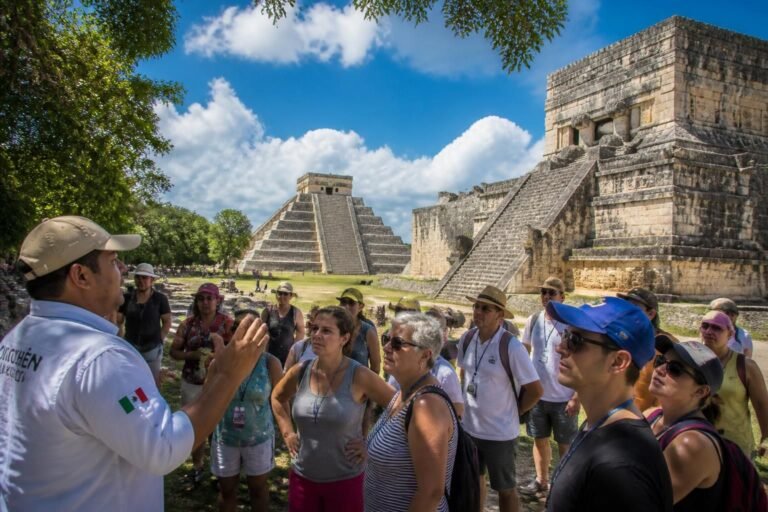
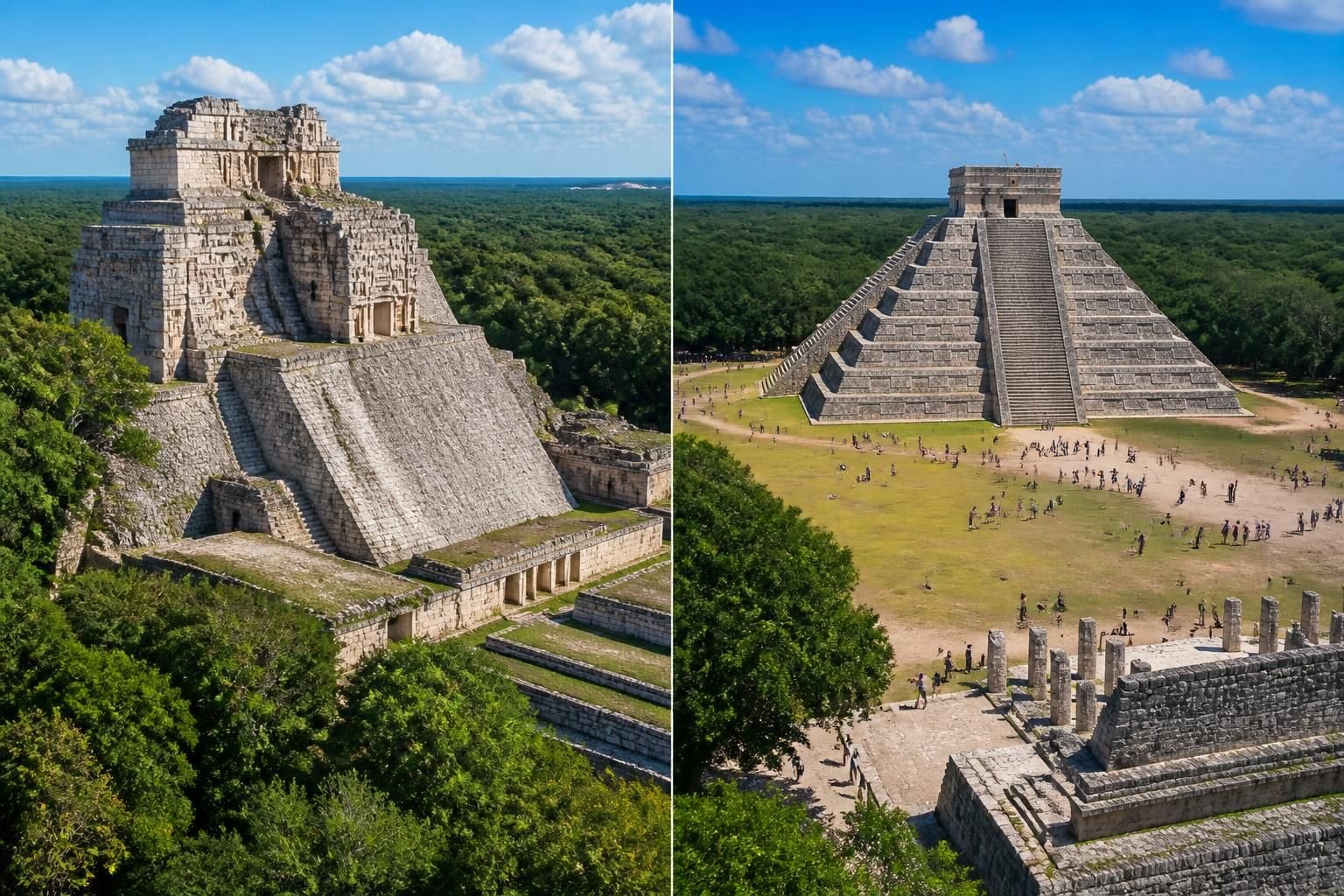
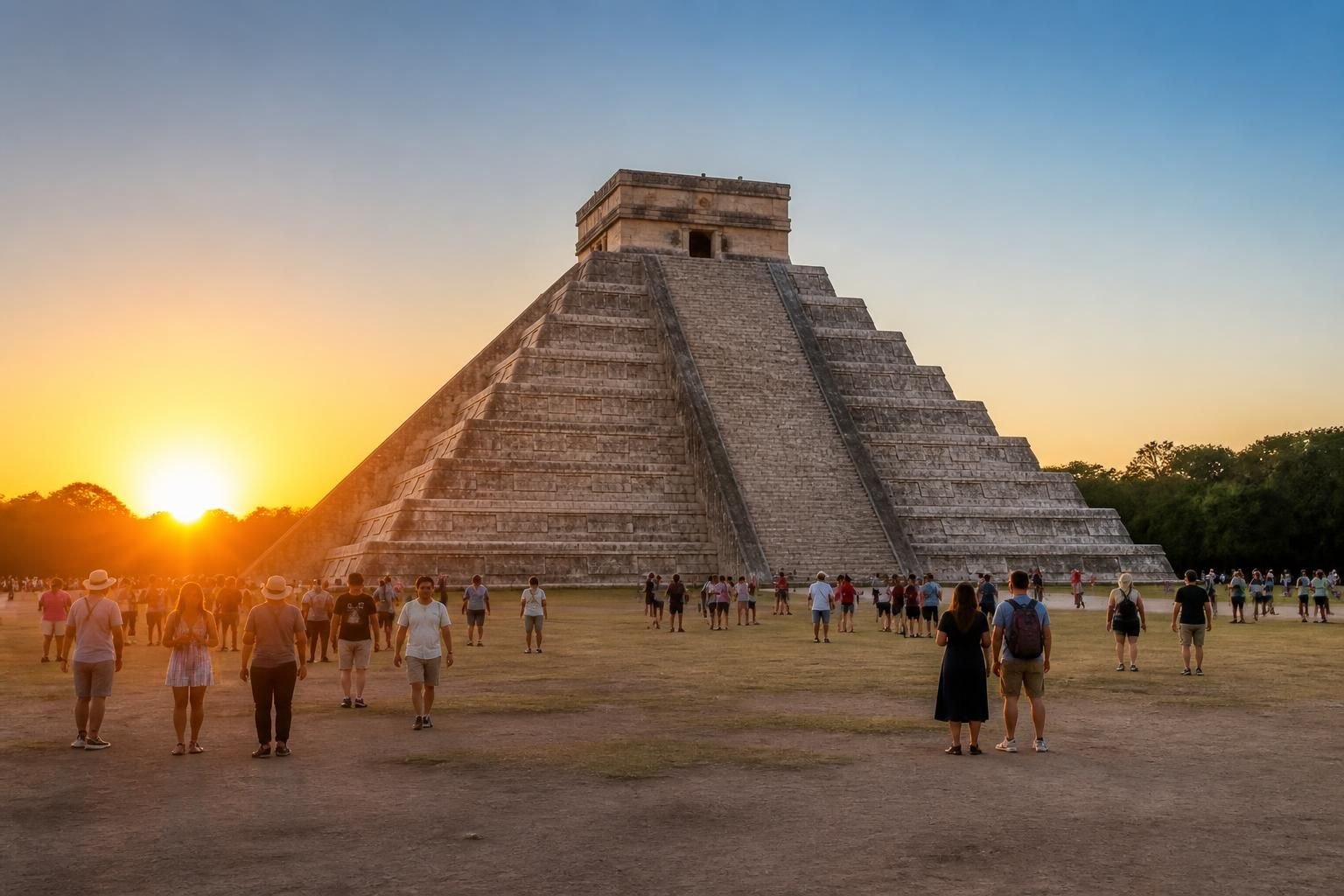
Chichen Itza stands as arguably the most renowned Mayan archaeological site in the world. Established around the 5th century and flourishing from 600 to 1200 AD, it grew into a sprawling metropolis supporting an estimated population of 50,000 inhabitants. Today, its accessibility and grandeur make it a prime destination for international travelers seeking a first deep dive into Mayan history. At the heart of the site lies the Temple of Kukulkan, a 75-foot-high stepped pyramid that demonstrates incredible astronomical precision. Twice a year during the spring and autumn equinoxes, the pyramid showcases the phenomenon of a shadow serpent gracefully descending its steps—a spectacle that draws large crowds but never fails to enchant.
The site sprawls over four square miles, featuring remarkable structures such as the Great Ball Court—the largest in Mesoamerica—where ancient ceremonial games once thrilled spectators. Another highlight is the Temple of the Warriors, identified by its impressive thousand columns and detailed carvings that depict warriors and religious symbolism. Visitors are also drawn to the Sacred Cenote, a natural sinkhole used for sacrificial offerings, where valuable gold and jade artifacts were recovered. These elements reflect the religious complexity of the Maya, underscoring the interweaving of faith and politics in Chichen Itza’s development.
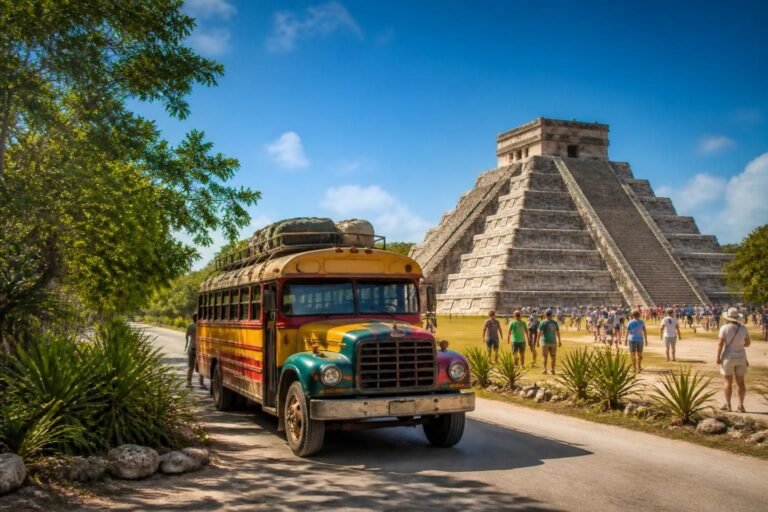
The influx of around 2.7 million annual visitors by late 2025 illustrates both its appeal and challenges. Tourists often navigate bustling plazas crowded with vendors selling souvenirs, a lively but sometimes overwhelming ambiance. Despite this, the site’s strategic location allows convenient access through organized bus tours, private drives, or rental vehicles—facilitating day trips from major cities like Cancún, Playa del Carmen, and Mérida. Practical amenities, including guided tours and light shows reanimating ancient Mayan legends, heighten the immersive experience, though visitors are advised to arrive early to avoid peak crowds and midday heat.
Chichen Itza’s prominence transcends tourism; locals deeply revere it as a jewel of their ancestral legacy. Its mixture of Toltec and Maya styles symbolizes a cultural fusion that shaped regional history. From an architectural perspective, the city’s layout reflects urban planning attuned to cosmological concepts, enriching every corner with spiritual significance. For travelers prioritizing historical travel paired with iconic imagery, Chichen Itza offers an unparalleled encounter with one of the world’s most celebrated ancient civilizations.
Uxmal’s Tranquil Charm and Architectural Elegance
Uxmal presents a contrasting yet equally compelling archaeological site experience within the Yucatan Peninsula. Unlike the grandeur-driven bustle of Chichen Itza, Uxmal enchants through the elegance of Puuc-style Mayan architecture—famous for finely carved stone mosaics and elaborate facades. This site flourished somewhat earlier during the Classic to Terminal Classic period (600-900 AD) and supported a population of approximately 25,000 inhabitants. Its key structures, concentrated around expansive courtyards, showcase an artistic sensibility deeply connected to religious symbolism.
Unique to Uxmal is its ingenious water management system. Situated far from surface rivers and natural cenotes, its inhabitants constructed over 160 chultunes, or subterranean cisterns, to collect and store rainwater—an engineering feat vital for sustaining agriculture and daily life in the arid environment. The Pyramid of the Magician captivates with its unusual elliptical base and layered construction spanning multiple generations, tied to local legends about a magical dwarf that raised the pyramid overnight.
The site’s Nunnery Quadrangle is a masterpiece of ornate stone decoration featuring masks of the rain god Chaac, stylized animals, and geometric patterns that invite attentive exploration. The Governor’s Palace, stretching an imposing 100 meters, is heralded as one of Mesoamerica’s most exquisite buildings with intricate friezes celebrating celestial and mythological themes. Visitors to Uxmal often enjoy a remarkable sense of serenity, complemented by iguanas basking on the warm stones and the opportunity to climb select pyramids—an experience largely restricted at other sites.
Reaching Uxmal is straightforward from Mérida, roughly an hour’s drive or a budget-friendly bus ride costing around 65 pesos. The price of admission remains attractive compared to many global heritage sites, currently around 413 pesos, and the smaller visitor numbers—near 285,000 annually—translate into a peaceful, immersive atmosphere. Uxmal’s lack of onsite vendors enhances its authenticity, enabling visitors to absorb details in quietude and focus deeply on architectural nuances. Local communities cherish it as a haven against over-tourism, recommending it to travelers who seek meaningful cultural engagement over fleeting spectacle.
Top reasons why Uxmal appeals to discerning travelers:
- A rich display of Puuc architectural style not found elsewhere in such concentration.
- Intimate setting with fewer crowds and limited commercialization.
- Physical connection to nature through its jungle surroundings and wildlife encounters.
- Opportunities to climb and explore more structures up-close.
- Proximity to other cultural destinations on the Ruta Puuc for extended explorations.
Comparative Overview: Uxmal vs Chichen Itza for Cultural Heritage Enthusiasts
Understanding the distinct qualities of Chichen Itza and Uxmal is crucial for planning a Mayan tour that matches expectations. The scale, visitor numbers, and site atmosphere differ markedly, shaping entirely different experiences.
| Feature | Chichen Itza | Uxmal |
|---|---|---|
| Location | 2 hours from Cancún and Mérida | 1 hour southwest of Mérida |
| Annual Visitors (approx.) | 2.7 million | 285,000 |
| Entrance Fee (2026) | 481 pesos | 413 pesos |
| Architectural Style | Maya-Toltec fusion with grand pyramids and ball courts | Classic Puuc with ornate mosaics and detailed carvings |
| Climbing Allowed | Limited (none on major pyramids) | Permitted on some structures like the Great Pyramid |
| Vendors & Commercialization | High—with many vendors and crowded paths | Low—vendors restricted inside the site |
| Best Time to Visit | Early morning to avoid crowds and heat | Morning or late afternoon for tranquility |
While Chichen Itza offers iconic views and grand narrative spectacles, Uxmal offers intimacy and preservation of intricate stonework in a natural setting. The former suits tourists prioritizing accessible, famous landmarks; the latter serves those craving quieter, in-depth encounters.
Optimal Travel Strategies and Experiences for Mayan Archaeological Site Visits
Maximizing the visit to either site involves thoughtful timing and preparation. Arriving at opening time, typically 8:00 am, is critical to beat the midday heat and avoid the heaviest influx of visitors. Sun protection and sturdy walking shoes are essential, given the large expanses and often exposed pathways. Both Uxmal and Chichen Itza provide guided tours, but private tours, especially from Mérida, can transform a visit by providing flexible schedules and immersive historical context.
For visitors centered in Mérida, day trips to Uxmal are highly recommended due to the short travel time. Combining this with visits to nearby cultural heritage spots on the Ruta Puuc — such as Kabah, Labná, and Sayil — offers enriched understanding of the region’s diverse Mayan legacy. Conversely, tourists based in the Riviera Maya or Valladolid may prefer Chichen Itza due to its closer proximity and well-organized tour infrastructure, which often includes a swim in nearby cenotes, adding an adventurous break to the cultural immersion.
Travelers should also consider the impact of visiting on Sundays, especially at Chichen Itza, where local residents enter free of charge, creating significant crowd surges. Patience and respectful behavior towards the sites, including adherence to pathways and avoiding touching carvings, help preserve these treasures for future generations. Several visitor centers provide refreshments, but packing water and simple snacks remains practical, given the size of the sites and the climate.
Key tips for travelers:
- Plan to arrive early to enjoy cool temperatures and fewer crowds.
- Wear comfortable shoes suitable for uneven terrain.
- Hire a local guide for enhanced cultural understanding.
- Combine site visits with nearby cenotes or colonial towns for a broader cultural palette.
- Respect preservation rules and carry essentials like water and sunscreen.
Embracing the Legacy: Choosing Your First Mayan Site in the Yucatan
Deciding whether Uxmal or Chichen Itza should be the first Mayan archaeological site to visit hinges on travel style and itinerary logistics. Chichen Itza provides the spectacle of world-renowned pyramids and scale, especially appealing for first-time visitors aiming to check this wonder off their bucket list. Uxmal’s tranquil pace, coupled with its architectural grace and lesser crowds, offers an immersive cultural journey that resonates deeply with lovers of art and history alike.
Many seasoned travelers recommend exploring both sites if time allows, as each enriches the understanding of the Mayan civilization from different viewpoints. Locals express profound pride in both, viewing them as complementary chapters in the Yucatán’s vast story. Supporting these ancient sites through respectful tourism contributes to ongoing preservation efforts, ensuring future generations continue to encounter the spirit of the Maya embedded in stone.
In essence, the choice between Uxmal and Chichen Itza is not merely logistical but deeply personal. It reflects an individual’s desire for grandeur or quiet reflection, symbolic legend or detailed craftsmanship. The Yucatan awaits those ready to walk amid the living legacy etched in the stones of these remarkable ancient Mayan ruins.
Is it possible to visit both Uxmal and Chichen Itza in one day?
While possible, it can be challenging due to the distance and size of each site. It is more enjoyable to dedicate separate days to fully experience each archaeological site without rushing.
What is the best time of year to visit the Mayan sites in the Yucatan?
The dry season, from November to April, offers the most comfortable weather, with cooler temperatures and less rainfall, ideal for exploring outdoor ruins.
Are there guided tours available at Uxmal and Chichen Itza?
Yes. Both sites offer guided tours, which enhance the cultural and historical context. Private tours from Mérida or Cancun provide personalized experiences.
Can visitors climb the pyramids at Uxmal and Chichen Itza?
Climbing is allowed on some structures at Uxmal, such as the Great Pyramid, but is limited at Chichen Itza to preserve the monuments.
Are there facilities and amenities at both sites?
Both archaeological sites provide visitor services including restrooms, food vendors, and souvenir shops, though Uxmal has fewer commercial vendors, offering a more peaceful experience.