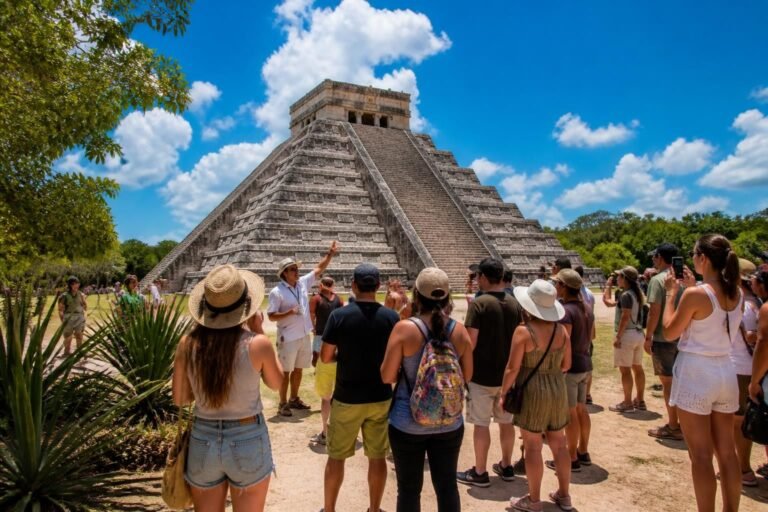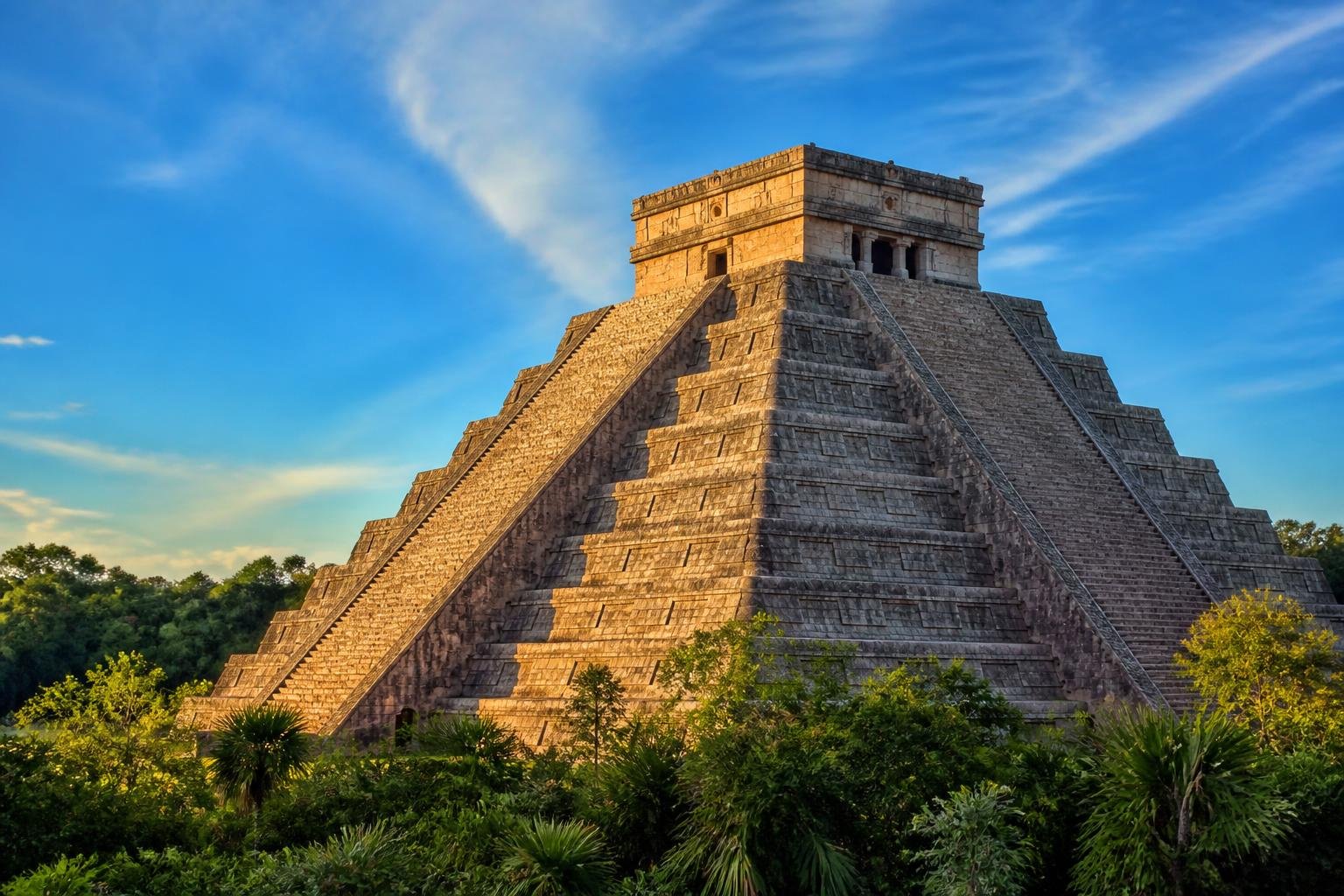

Discover Chichen Itza, a mesmerizing archaeological jewel deeply rooted in the rich tapestry of the Mayan Civilization. This iconic site, crowned as one of the New Seven Wonders of the World, draws travelers and history enthusiasts worldwide to the Yucatán Peninsula of Mexico. From its stunning Pyramid of Kukulkan to its vast ball courts and sacred cenotes, Chichen Itza stands as a testament to ancient ingenuity, cosmology, and architectural mastery. Visitors experience the harmonious blend of culture, astronomy, and ritual embedded within the ruins, revealing stories of a sophisticated civilization that thrived centuries ago. Its status as a UNESCO World Heritage site and its significant role in Mexico Tourism reinforce its importance as both a cultural landmark and a historical site.
Highlights at a glance:
- Chichen Itza, an ancient Mayan city, is home to the famous Pyramid of Kukulkan with precise astronomical alignments.
- Recognized internationally as one of the Seven Wonders, it showcases unparalleled archaeological treasure in Mexico.
- The site features acoustical marvels such as sound waves on the pyramid stairs that echo the sacred quetzal bird’s call.
- The observatory, known as El Caracol, exhibits the Mayan’s advanced understanding of celestial patterns.
- Visitors must adhere to strict preservation rules including bans on climbing the pyramid to protect its integrity.
Chichen Itza: Architectural and Astronomical Marvels that Define the Seven Wonders
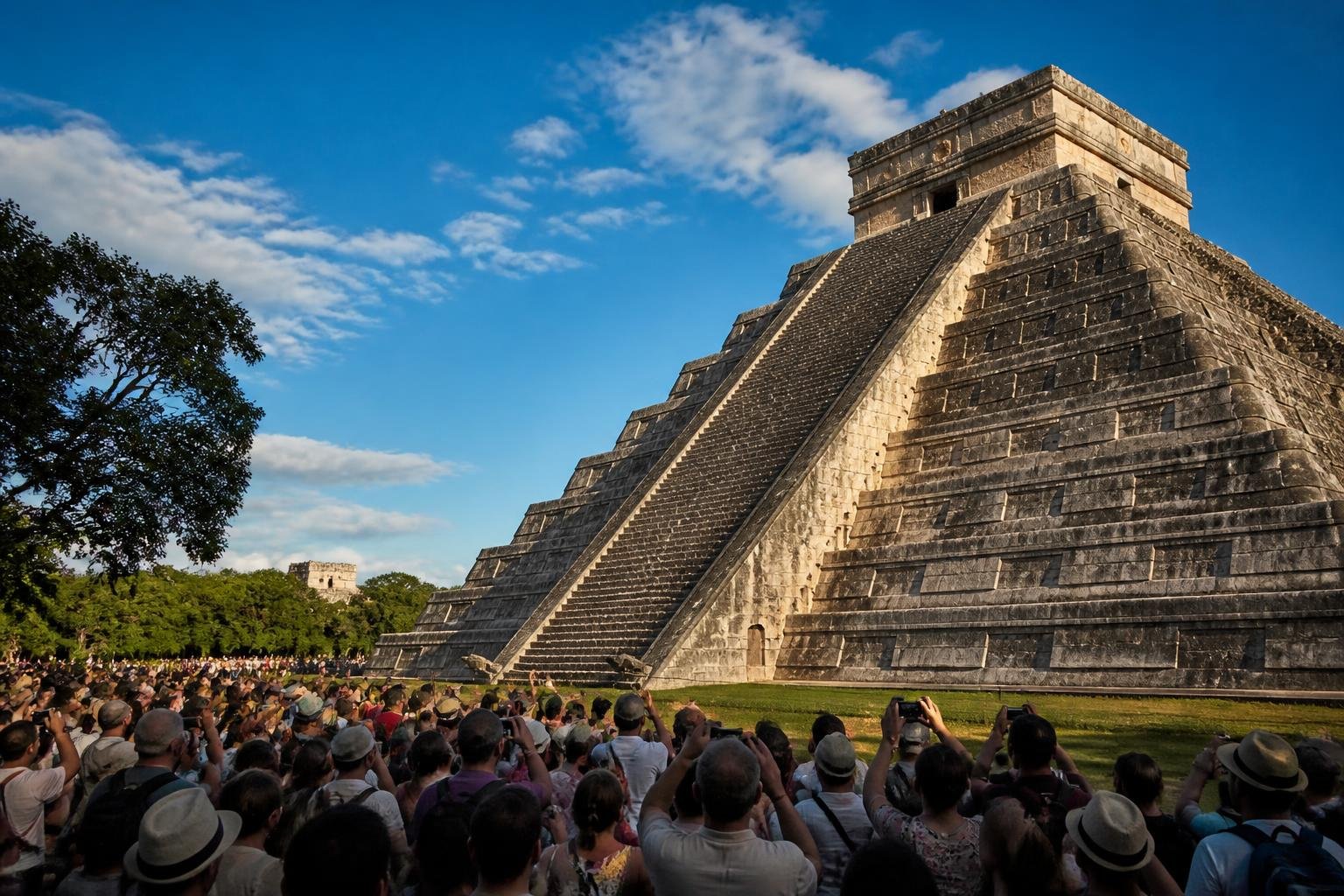
At the heart of Chichen Itza lies the majestic Pyramid of Kukulkan, an awe-inspiring structure heralding the ingenuity of the Mayan Civilization. Constructed around 600 AD and reaching its zenith by 900 AD, this pyramid masterfully integrates religious reverence with astronomical science. Designed with 365 steps – representing days of the solar calendar – its four staircases align perfectly with the equinox sun. During the spring and autumn equinoxes, a shadow resembling a serpent undulates down the northern staircase, symbolizing the descent of Kukulkan, the feathered serpent god. This spectacle draws crowds eager to witness ancient cosmological precision in action.
But beyond its striking visuals, the pyramid’s soundscape is equally captivating. Clapping near its base produces echoes that mimic the call of the quetzal bird, sacred to the Mayan people. This acoustic feature reflects the deep understanding the Mayans had of sound waves, further reinforcing their architectural sophistication.
Adjacent to El Castillo is El Caracol, the ancient observatory. Its circular tower, featuring windows oriented to celestial bodies like Venus, exhibits the Mayans’ mastery of astronomy. This allowed them to track planetary movements and equinoxes vital for agricultural and religious calendrical systems. The site’s strategic positioning and alignment demonstrate a highly advanced civilization that fused spirituality with scientific observation.
Other ruins at the site, such as the Temple of the Warriors and the Great Ball Court, showcase the composite influence of Maya and Toltec cultures. The ball court, measuring an impressive 554 feet long, not only served as a sports arena but held ritualistic significance, potentially linked to human sacrifice and political symbolism. The carved stone panels on the surrounding walls narrate stories of warriors, captives, and high-stakes games, underscoring the site’s multifaceted role as a cultural and ceremonial hub.
Preserving Chichen Itza: Challenges and Measures of Conservation
Protection of Chichen Itza as a World Heritage and cultural landmark involves complex challenges given the heavy influx of tourists and exposure to natural elements. In response, authorities have imposed a strict ban on climbing the Pyramid of Kukulkan since 2006. This decision followed a tragic incident in which a visitor fell, highlighting the dangers posed by the steep, eroded limestone steps.
More importantly, continuous foot traffic was causing irreversible damage to the centuries-old stone structure. Preservation efforts aim to curtail erosion while respecting the authenticity of this historical site. These measures have been widely supported by Mexico Tourism organizations as they balance the need for public access with conservation ethics.
Other restrictions include prohibiting drones without special permits and limiting photography equipment like tripods. The implementation of guided tours has helped manage visitor numbers and educate tourists about the cultural significance and rules of the site. Guided visits also offer deeper engagement, explaining complex Mayan concepts of astronomy, mythology, and political structures embedded in the ruins.
In 1988, UNESCO designated Chichen Itza as a World Heritage Site, an acknowledgment of its outstanding universal value. Since then, ongoing archaeological research and advanced technologies such as ground-penetrating radar have revealed hidden chambers and sacred cenotes beneath the ruins, enriching our understanding of how this ancient city functioned. For travelers interested in these detailed explorations, options like a small group tour or a private guided experience provide unparalleled insights into the Caryatids, carvings, and ritual spaces that weave together its mythical and historical narrative.
Historical Legacy: The Rise and Decline of Chichen Itza in the Mayan World
Chichen Itza’s prominence as a political and religious center spanned approximately 800 years, during which time it evolved into one of the most influential cities in Mesoamerica. At its peak, it was home to an estimated population of 50,000 inhabitants, reflecting its role as a bustling hub of trade, governance, religion, and culture. This ancient city synthesized Mayan architectural styles with Toltec influences, visible in warrior depictions and serpent iconography.
Religious practices centered around deities like Kukulkan and Chaac, the rain god. The Sacred Cenote, a deep natural sinkhole, was used for offerings and human sacrifices, emphasizing the integration of nature, religion, and governance. Archaeologists have recovered numerous artifacts such as jade, gold, and ceramics from this cenote, providing a material glimpse into ritual life.
Chichen Itza’s decline during the 13th to 14th centuries is linked to shifts in trade routes, internal strife, and the rise of competing Maya cities. By the 15th century, the city was largely abandoned and reclaimed by the jungle. Rediscovery by explorers like John Lloyd Stephens in the 19th century marked a new chapter in archaeology, sparking renewed global interest in Mayan civilization and its mysteries.
Today, the site stands as a bridge between past and present, offering visitors a chance to step into ancient stories etched in stone and whispered by the jungle winds. To fully appreciate this historical depth, taking a comprehensive tour such as one that includes lunch and transport can be highly rewarding, ensuring comfort and immersive learning throughout the visit as detailed in this ultimate Chichen Itza tour experience.
Planning Your Visit: Tips to Experience Chichen Itza at Its Best
Exploring Chichen Itza requires thoughtful planning to make the most of its vast and multifaceted ruins. The site is approximately 120 miles west of Cancún, accessible via car or organized tours departing from major tourist hubs like Cancún, Playa del Carmen, and Tulum. Early morning visits between 8 AM and 10 AM are highly recommended to avoid large crowds and the intense Yucatán heat.
The ideal visiting seasons are the cooler months from November to February and during the equinoxes in March and September when the serpent shadow phenomenon at El Castillo creates a unique spectacle. Visitors should prepare by wearing comfortable, breathable clothing consistent with the local climate and respectful of the site’s cultural significance, as advised in specialized guides on appropriate attire for Chichen Itza.
Essential tips to enhance your Chichen Itza experience:
- Choose reputable guided tours offering in-depth historical interpretation and avoiding large crowds.
- Bring plenty of water and sun protection to cope with the Yucatán’s tropical atmosphere.
- Respect site regulations: no climbing, no littering, and follow designated paths.
- Consider combining your visit with a swim in nearby cenotes to refresh after touring.
- Book tickets and transport in advance to save time, especially during peak seasons.
| Aspect | Details |
|---|---|
| Entry Fee | Approximately $30 to $35 USD |
| Guided Tour Price | $50 to $100 USD depending on inclusions |
| Best Visiting Hours | Early morning 8 AM – 10 AM |
| Best Months to Visit | November – February; Equinox periods (March & September) |
| Accessibility | Accessible from Cancún, Playa del Carmen, and Tulum via car, bus, or tour |
The Enduring Mystique and Cultural Impact of Chichen Itza in Contemporary Mexico Tourism
More than a tourist destination, Chichen Itza embodies a cultural legacy that remains deeply embedded in Mexico’s identity and its promotion on the global tourism stage. Drawing millions each year, it plays a pivotal role in economic development while fostering appreciation for indigenous heritage and archaeological preservation. The site’s recognition as one of the New Seven Wonders transcends mere recognition; it emphasizes the universal human fascination with our shared past and ingenuity.
This complex acts as a live classroom where visitors engage with ancient knowledge embedded in stone, sound, and ritual. It sparks curiosity about the Mayan worldview, their relationship with astronomy, mathematics, and spirituality. Many travelers integrate visits into broader journeys celebrating Mexican culture, gastronomy, and natural wonders.
As interest in sustainable and educational tourism grows, Chichen Itza sets a benchmark for balancing mass visitation with cultural respect and conservation. Travelers curious about comprehensive and eco-conscious experiences may explore private tours that highlight lesser-known aspects of the ruins with expert English guides, creating personalized journeys through time and space. Guidance on how to efficiently reach Chichen Itza from Cancún further enhances accessibility and planning.
Why is Chichen Itza considered one of the Seven Wonders of the World?
Chichen Itza’s architectural brilliance, extensive historical significance, and advanced astronomical knowledge place it among the New Seven Wonders, highlighting the ingenuity of the ancient Mayan Civilization.
Can visitors climb the Pyramid of Kukulkan at Chichen Itza?
No, climbing the pyramid has been banned since 2006 to ensure visitor safety and preserve the delicate limestone structure from erosion.
What is the best time to visit Chichen Itza to avoid crowds?
Early mornings between 8 AM and 10 AM and the cooler months from November to February are ideal. Visiting during the equinoxes offers unique astronomical events but attracts larger crowds.
Are guided tours necessary at Chichen Itza?
While not mandatory, guided tours provide valuable historical context, interpret intricate symbols, and enrich the overall visitor experience.
How can one efficiently travel to Chichen Itza from Cancún?
Many efficient transportation options exist, including private and group tours, buses, and rental cars, with detailed guides available online to optimize travel planning.