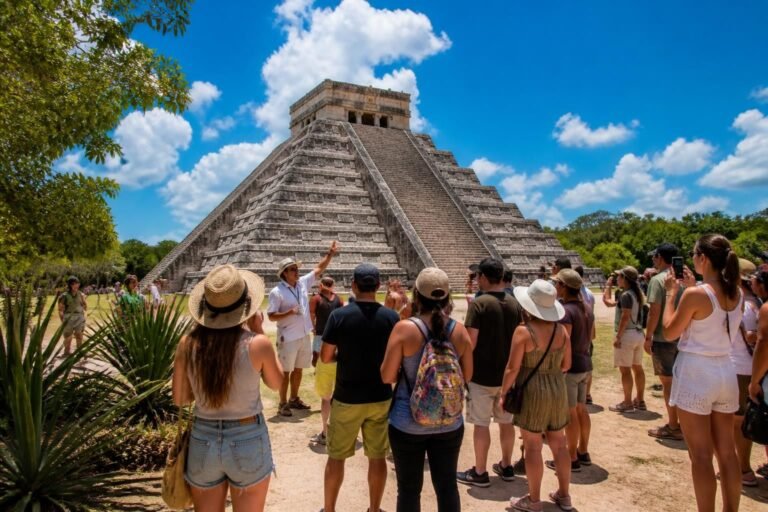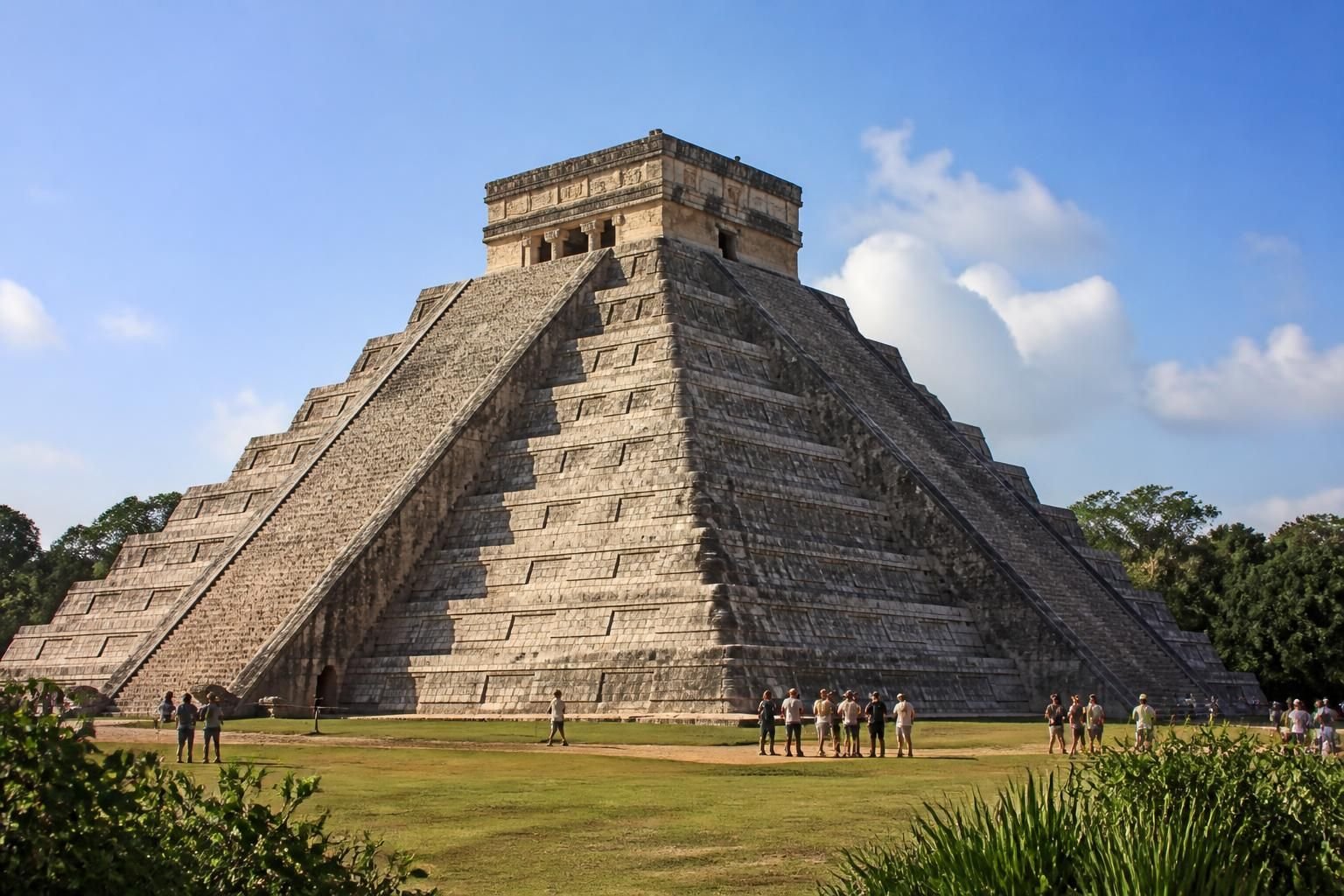

The Kukulkan Pyramid, also known as El Castillo, stands as an enduring symbol of the ancient Mayan civilization’s sophistication and mystique. Nestled in the heart of Chichen Itza, this magnificent step-pyramid draws millions of visitors annually, beckoning those eager to explore the layers of history, culture, and astronomy embedded within its stones. Far beyond its impressive facade, the pyramid reveals a complex interplay of religious belief, astronomical precision, and architectural brilliance that continues to captivate archaeologists and curious travelers alike.
Chichen Itza itself, located on Mexico’s Yucatán Peninsula, was once a thriving metropolis during the height of Mayan cultural achievements between the 9th and 12th centuries. The Pyramid of Kukulkan held a central role—not only as a temple dedicated to the Feathered Serpent god Kukulkan but also as a calendar, a ceremonial site, and an architectural marvel designed to resonate with cosmic events such as the equinoxes. The pyramid’s design encodes a profound understanding of the cosmos, symbolized through its precise alignment with the solar calendar and even acoustic phenomena.
Exploring the Kukulkan Pyramid offers an unparalleled journey into ancient Mesoamerican heritage, revealing secrets like the elusive “pyramid within a pyramid,” hidden underground cenotes that connect the living world with the underworld, and relics that attest to the social and spiritual lives of the Maya rulers. The mysteries it holds continue to inspire tourism while shedding light on a culture renowned for its astronomical prowess and deep connection to the natural and spiritual worlds.
For visitors and scholars, a deeper dive into the pyramid’s architecture, symbolism, and archaeological findings not only enriches appreciation of Mayan ingenuity but invites reflection on the civilization’s lasting influence on culture and heritage across centuries.
In brief:
- Architectural marvel: Kukulkan Pyramid embodies advanced Mayan engineering and religious symbolism, integrating astronomy into its very structure.
- Hidden mysteries: Internal pyramids, sacred chambers, and subterranean cenotes reveal layers of cultural and spiritual significance.
- Astronomical alignments: The pyramid’s design marks solar events like equinoxes and solstices, illustrating Mayan cosmic understanding.
- Acoustic phenomena: Unique sounds mimic sacred bird calls, reinforcing the pyramid’s spiritual atmosphere.
- Cultural heritage: As a UNESCO World Heritage site, Chichen Itza bridges past and present, attracting global tourism and honoring Mayan legacy.
Architectural Genius and Hidden Layers of the Kukulkan Pyramid at Chichen Itza
The Kukulkan Pyramid stands not only as a towering monument but also as a layered architectural enigma that reflects the Mayan civilization’s continuous evolution and profound religious devotion. This step-pyramid, reaching nearly 24 meters in height, is composed of four staircases with 91 steps each, plus the temple platform atop—together summing to 365 steps, mirroring the solar year. This deliberate design emphasizes the Mayan mastery of calendar systems long before modern instruments.
One of the pyramid’s most astonishing revelations stems from archaeological excavations in the 1930s, uncovering a pyramid nested within the larger structure. This internal pyramid predates the prominent outer façade by centuries and offers a glimpse into earlier construction phases and ceremonial purposes. Such a “pyramid within a pyramid” phenomenon illustrates the sacred importance of the site, where successive generations built atop previous ones to renew cultural and spiritual connections.
The internal complex also houses a network of chambers and tunnels, which are believed to have served multiple sacred functions—potential burial vaults for elite rulers, ritual spaces, and settings for offerings to the Feathered Serpent deity. One of the most remarkable findings is a hidden chamber believed to contain the “Red Jaguar Throne,” an artifact painted in vibrant red and ornamented with jade that likely belonged to high-ranking priests or rulers.
Material-wise, the pyramid was primarily constructed from locally quarried limestone, expertly cut and assembled without mortar, traditional to Mayan engineering techniques that ensured durability. The use of corbel arches inside to create spacious interiors characterized advanced building capabilities. Logistics behind the pyramid’s construction also imply a well-organized society capable of mobilizing skilled labor and resources over extended periods, attesting to Chichen Itza’s significance as a political and religious hub.
Such architectural complexity is not only a statement of power but also an embodiment of Mayan cosmological beliefs, with the nine terraces symbolizing different levels of the underworld, and the pyramid’s orientation marking the four cardinal points. Visitors to Chichen Itza can now view this monumental structure while appreciating its multifaceted role as an ancient ceremonial center and an astronomical instrument integrated into the natural world.
The Astronomical Mastery Embodied in Kukulkan Pyramid’s Design and Alignments
One of the most captivating aspects of the Kukulkan Pyramid lies in its extraordinary astronomical alignments. This ancient marvel functioned far beyond a religious temple—it was a celestial calendar, precisely orchestrated to engage with solar and planetary cycles that governed Mayan life. Its orientation and architectural features demonstrate a sophisticated understanding of astronomy unparalleled among contemporaneous civilizations.
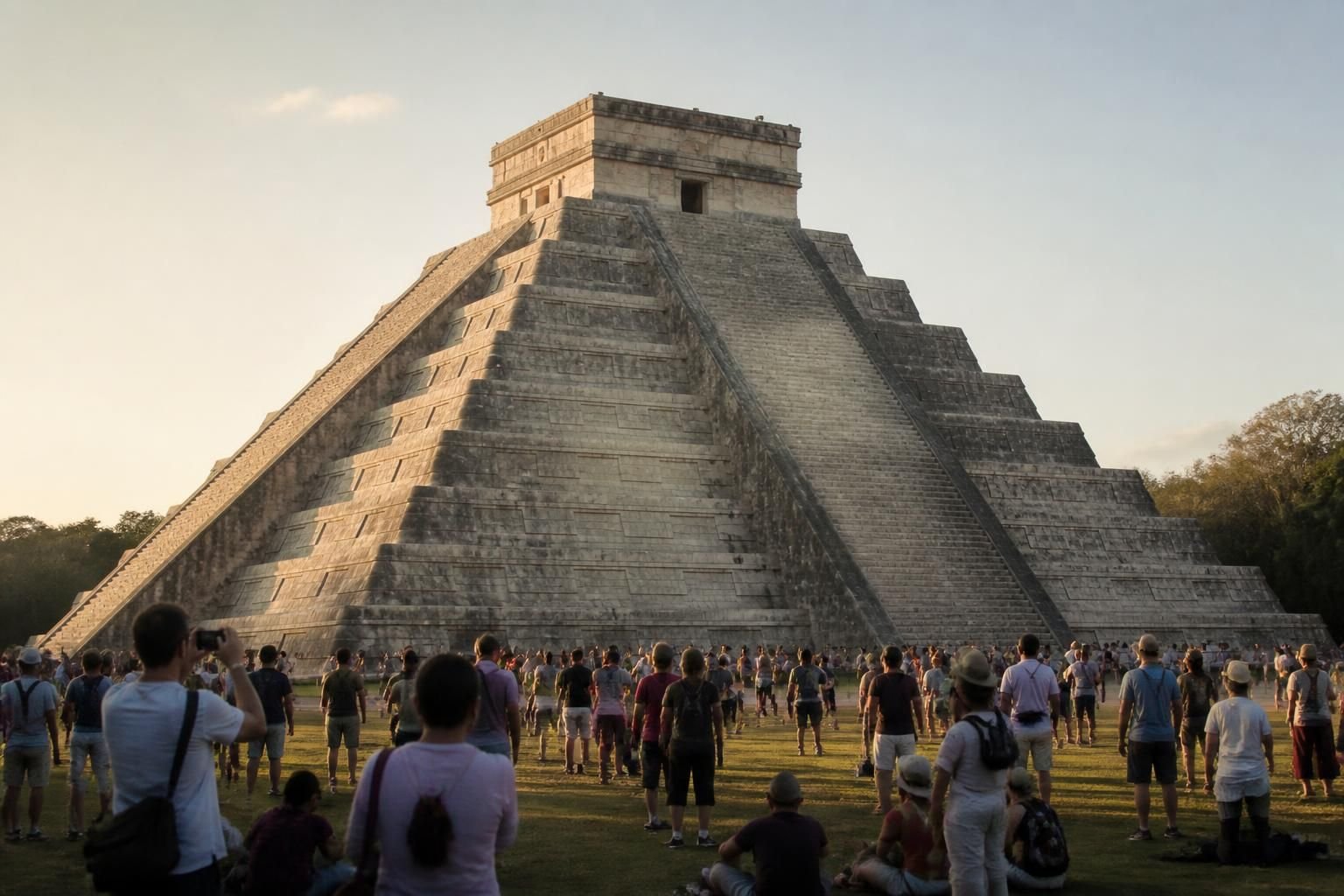
During the equinoxes in March and September, a unique phenomenon occurs when the sun casts shadows on the pyramid’s northern staircase, creating the illusion of a serpent descending the stairs—symbolizing Kukulkan, the Feathered Serpent deity. This shadow-play reflects not merely artistic display but the Mayans’ elaborate integration of cosmic cycles into their spiritual practices and agricultural calendar. The event draws thousands yearly, underscoring the pyramid’s lasting impact on tourism and cultural appreciation.
The pyramid’s four staircases with 91 steps each collectively match the 365 days of the solar year (including the temple platform), highlighting how the Mayan calendar was embedded into the structure’s very geometry. Furthermore, observations of solstices and other celestial movements correspond with the alignment of auxiliary structures within Chichen Itza, reaffirming the site’s role as an observational complex for temporal regulation.
The Mayans also meticulously tracked planetary cycles—Venus, in particular, was viewed as a harbinger of war and was closely monitored through detailed astronomical codices. The integration of celestial guides with earthly construction like the Kukulkan Pyramid demonstrates the close relationship the Maya maintained between their spiritual beliefs, governance, and natural environment.
The pyramid’s acoustics further accentuate this cosmic connection. When clapping at the base of its staircases, echoes mimic the chirping of the quetzal bird, sacred in Mayan culture. This intentional design amplifies the spiritual ambiance, merging sensory experience with symbolism, reinforcing the pyramid’s sacred nature.
Unveiling the Archaeological and Spiritual Mysteries Concealed Within the Pyramid of Kukulkan
Beyond its awe-inspiring exterior, the Pyramid of Kukulkan conceals layers of archaeological and spiritual mysteries that speak to the depth of Mayan culture. Advanced technological methods, including ground-penetrating radar, have unveiled a cenote beneath the pyramid’s foundation—a natural sinkhole that held immense spiritual significance. Cenotes were portals to the underworld in Mayan belief, and their presence beneath sacred structures like El Castillo connects the realm of gods and spirits with the earthly plane.
This subterranean cenote likely served as a sacred site for offerings and rituals to appease deities, especially Kukulkan. Discoveries of artifacts and sacrificial remains indicate that the pyramid functioned as a nexus linking the heavens, earth, and underworld, symbolizing a holistic cosmology deeply embedded in Mayan worldview. The cenote’s position emphasizes how the Maya strategically selected construction sites based on spiritual geomancy in addition to practical considerations.
The pyramid also reflects societal hierarchy and religious practice through relics like the Red Jaguar Throne found in inner chambers. This ornate throne, painted red and decorated with valuable jade, suggests ceremonial importance and governance linked to religious authority. These hidden sanctuaries underscore the intertwining of political power and spiritual mandate, with leaders possibly conducting rites that reinforced their legitimacy as divine intermediaries.
Exploration of these dark, fragile chambers remains limited to protect their delicate state, contributing to the aura of mystery that surrounds the site. However, ongoing archaeological work continues to illuminate aspects of Mayan societal structure, religious ritual, and artistry through these concealed spaces.
The pyramid’s complex acoustic properties, sacred subterranean water connections, and layered architectural design together reveal an intricate blend of science, spirituality, and culture that defines Mayan heritage and continues to inspire tourism and research today.
Key Cultural Significance and Tourism Insights on Visiting Chichen Itza’s Kukulkan Pyramid
The Kukulkan Pyramid holds immense cultural significance that extends far beyond its ancient origins. As a focal point of Chichen Itza, a UNESCO World Heritage site, it symbolizes the enduring legacy of Mayan civilization and its continued influence on contemporary culture and identity. The pyramid is an emblem of indigenous achievements in astronomy, architecture, and spirituality that resonates throughout Mexico and the wider world.
Modern tourism to Chichen Itza is robust, with millions visiting annually to witness the extraordinary equinox serpent shadow or to explore the surrounding ruins, sacred cenotes, and the famed Great Ball Court. Preservation concerns have led authorities to prohibit climbing the pyramid or entering its inner chambers, ensuring the site’s conservation for future generations.
Visitors coming from popular tourism hubs such as Cancun and Playa del Carmen can benefit greatly from well-organized tours that provide expert guidance, rich historical context, and comfortable travel arrangements. Exploring the best Chichen Itza group tour experiences offers an authentic way to navigate the ancient city, while visitors seeking tailored visits will find private tours with expert English-speaking guides especially valuable for deeper insight.
Beyond the pyramid, the broader Chichen Itza complex holds layers of cultural heritage, including plazas, temples, and marketplaces, reflecting the vibrant social life of this ancient metropolis. Events like the equinox phenomenon provide not only spectacular photographic moments but also a window into the Maya’s seamless blending of astronomy, religion, and architecture.
- Optimal visiting periods: Spring and autumn equinoxes for shadow phenomena
- Preservation rules: No climbing or entering inside the pyramid to protect its integrity
- Nearby attractions: Sacred Cenote, Great Ball Court, and Mayan village tours
- Tour options: Group tours, private guides, and cultural excursions from Cancun or Playa del Carmen
- Educational value: Learn about Mayan science, religion, and art firsthand
| Tour Type | Highlights | Ideal For | Departure Points |
|---|---|---|---|
| Group Tour | Guided visits, cultural history, equinox experience | Casual travelers, budget-conscious visitors | Cancun, Playa del Carmen |
| Private Tour | Personalized attention, English guides, flexible itinerary | History enthusiasts, families, photography lovers | Cancun, Playa del Carmen |
| Cultural Excursion | Extended exploration, local gastronomy, other archaeological sites | In-depth cultural experience seekers | Cancun |
The Kukulkan Pyramid remains a pinnacle of Mayan heritage and a magnet for global tourists, encapsulating the allure of ancient mysteries interwoven with scientific marvels and vibrant culture. Its preservation and interpretation offer invaluable connections to our shared human past and inspire ongoing exploration into one of the world’s most captivating archaeological sites.