
The Mayan ball game at Chichen Itza stands as a compelling window into the cultural, spiritual, and political life of the ancient Maya civilization. Far beyond the realm of sport, this ceremonial game embodied profound cosmological meanings and social functions. The grandeur of the court, the intricate symbolism carved into its walls, and the rituals associated with the game reveal layers of significance that astonish even the most seasoned archaeologists and visitors. This exploration delves into the layered importance of the Mayan ball game, illustrating how it was an indispensable thread in the fabric of Mesoamerican culture.
Key points to know about the Mayan ball game at Chichen Itza:
- The ball game represented a symbolic cosmic battle between light and darkness, life and death.
- Chichen Itza houses the largest and best-preserved ball court in Mesoamerica, measuring 120 by 70 meters.
- This court held both political and religious significance, acting as a venue for ritualized contests, sacrifices, and social ceremonies.
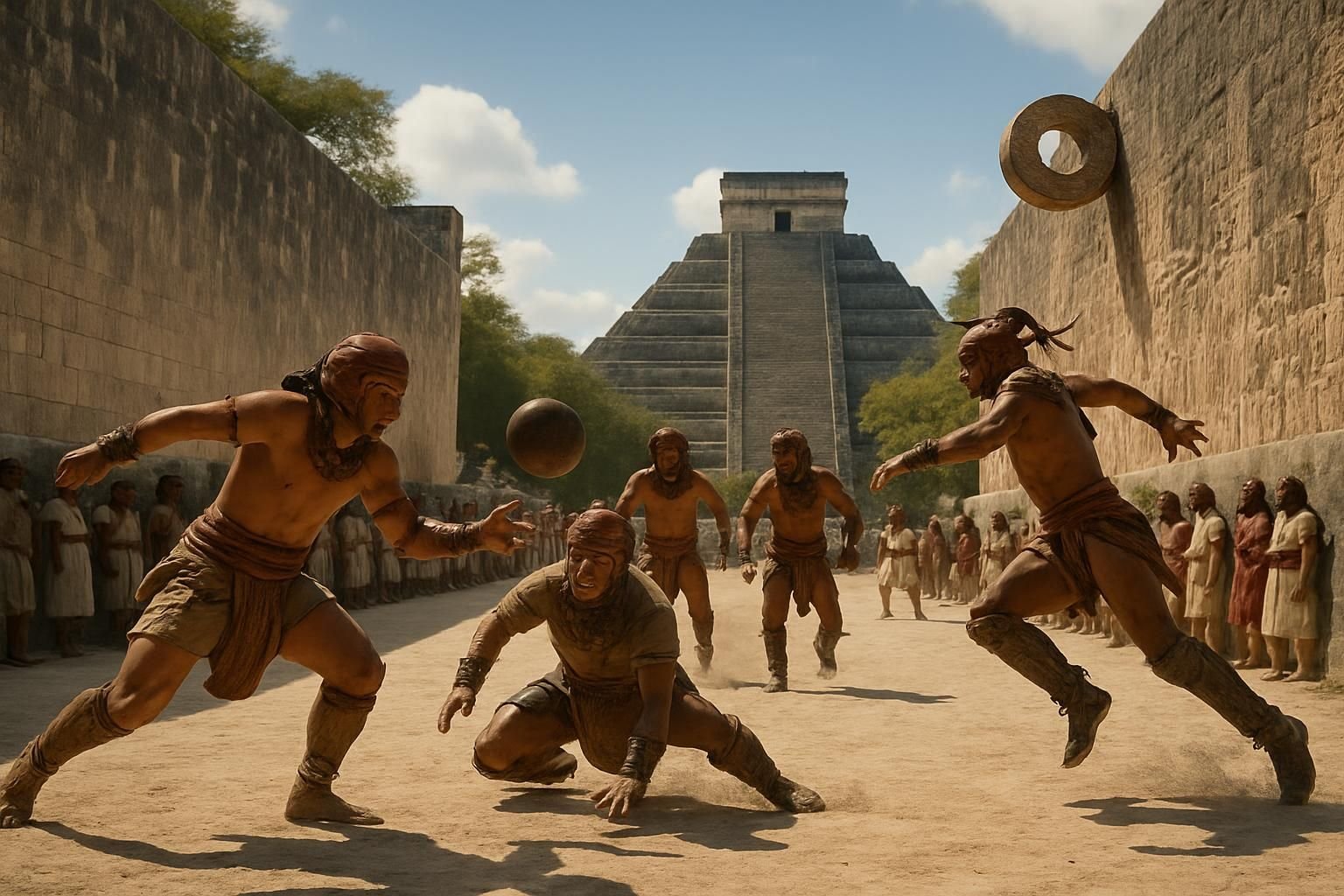
- The game’s rules involved propelling a heavy rubber ball through stone rings using only specific parts of the body, emphasizing skill and ritual meaning rather than mere competition.
- The architecture and artwork of the court offer insights into the Maya cosmovision and their understanding of the underworld and celestial realms.
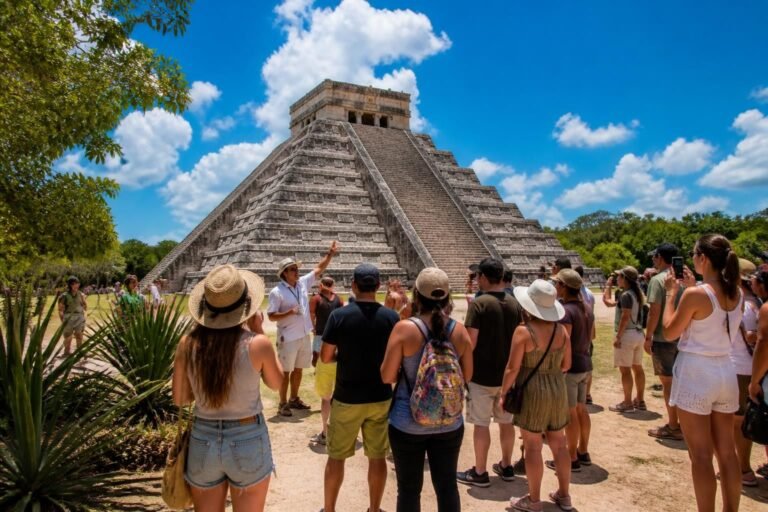
- Modern tours to Chichen Itza provide visitors with the chance to experience the cultural depth of the ball game and the broader Maya civilization.
The Grandeur and Architectural Marvel of Chichen Itza’s Ball Court
The ball court at Chichen Itza is a testament to Maya architectural mastery and ceremonial grandeur. Spanning approximately 120 meters in length and 70 meters in width, it stands as the largest known ancient ball court in all of Mesoamerica. Its scale communicates the importance this ceremonial game held within Maya society. The towering walls flanking the court rise about 25 feet high and are adorned with detailed carvings depicting scenes from Maya mythology, specifically those illustrating the cosmic struggle embodied in the game.
Visitors approaching this imposing structure are immediately struck by its monumental presence, which echoes the city’s political and religious might. The walls feature two large stone rings positioned high above the playing surface, indicating the goal of passing the heavy rubber ball through these constricted hoops using only hips, knees, and elbows — a feat requiring remarkable athleticism and precision. The imagery on the walls depicts mythological players and ritualistic scenes that likely narrate stories from the Maya sacred text, the Popol Vuh, which chronicles the adventures of Hero Twins and their interactions with the underworld.
Beyond physical size, the court’s design reveals a carefully planned space that reflected Maya cosmology. It includes two parallel walls serving as seating areas, and a north tower reserved for social elites and rulers, symbolizing the heavens. The playing field itself represents the underworld, a dimension central to Maya spirituality, while the surrounding terraces signify the terrestrial plane. This spatial symbolism merges architecture with mythology, transforming the court into a microcosm of the universe and showcasing how deeply the Maya integrated cosmology with their urban landscapes.
Thanks to ongoing archaeological conservation and research, these features remain remarkably well-preserved, allowing modern audiences to connect tangibly with a civilization that thrived centuries ago. The impact of the ball court’s grandeur thus transcends time, becoming both a cultural heritage site and a vivid expression of pre-Columbian ingenuity and worldview.
Mayan Ball Game Rules and Their Ritual and Symbolic Meaning
While the Mayan ball game may resemble ancient sports in form, its significance runs far deeper than competition or recreation. The game’s rules were strict: players could only manipulate a solid rubber ball using their hips, knees, and elbows, attempting to pass the ball through high stone rings fastened to the court’s walls. The ball’s weight, sometimes as heavy as 4 kilograms, added a layer of difficulty and physical challenge.
This sport, known as “pitz” by the Maya, was charged with symbolism representing the eternal celestial battle between light and darkness — a core theme in Maya cosmology. The players embodied mythological heroes who reenacted the cosmic cycle of day and night, life and death. According to Mayan beliefs, each game was a ritual that ensured cosmic order and balance.
Ritual sacrifices were often connected to the ball game, underlining its spiritual gravity. Winners or losers might be offered to the gods or underworld deities to preserve harmony between the celestial realms and the earthly world. This aspect, while haunting from a contemporary perspective, reveals how intrinsic spirituality and governance were to ancient Maya society. The Ball Court at Chichen Itza was not just a game arena — it functioned as a political and legal platform, where disputes could be resolved and justice was divinely endorsed via the game’s outcome.
Significantly, archaeological findings and iconography provide evidence of the players’ costumes, some bearing symbolic colors or motifs that marked social status or affiliation to particular mythological teams. This detail reinforces the idea that the ball game transcended sport and entered the domain of sacred drama and theatrical spectacle, a ritualized event observed with reverence by the community and ruling classes alike.
The enduring fascination with the Mayan ball game is tied to this blending of physical contest with symbolic and ritualistic importance, elevating it well beyond the conventional concept of ancient sports.
Spiritual and Political Functions of the Ball Game in Maya Civilization
The Mayan ball game served multifaceted roles within Maya society, intertwining spiritual beliefs with political authority. As a ritual event, it was used to symbolize the struggle between opposing forces such as life and death or day and night, essential to maintaining cosmic equilibrium. The ball court itself symbolized the underworld, providing a literal stage where these cosmic forces were enacted.
Politically, the game was a powerful tool for rulers to demonstrate legitimacy and divine favor. The ball game was often associated with royal accession ceremonies, where the ruler’s power was endorsed through symbolic acts during the game. Political elites, priests, and nobles frequently observed and officiated the matches, reinforcing their roles as intermediaries between the gods and the people.
Beyond affirming social hierarchy, the game had a judicial function. Some historical records and ethnographic parallels suggest that the ball court acted as a form of legal arena where conflicts or accusations were settled through ritualized matches. The outcome of the game could determine guilt, innocence, or the dispensing of punishment, with priests serving as judges and arbiters. Sometimes, defendants could hire skilled “players” to compete on their behalf, indicating an early form of legal representation rooted in ritual performance.
The combination of religious symbolism, judicial utility, and political display created a complex cultural institution unique to the Maya civilization. This multifaceted nature heightened the game’s importance far beyond merely being an ancient sport.
Present-day archaeological studies continue to illuminate these roles, expanding understanding of how deeply intertwined governance, religion, and sport were in pre-Columbian Mesoamerican culture. Chichen Itza’s ball court, with its rich iconography and monumental scale, remains one of the most illustrative sites revealing this cultural synthesis.
Archaeological Insights and the Legacy of the Mayan Ball Game Today
The archaeological exploration of the Chichen Itza ball court has considerably shaped modern knowledge of Mayan civilization. Excavations have not only uncovered the remarkable architectural features but also revealed inscriptions and murals expressing mythological narratives and historical references. These findings provide crucial context, highlighting the ceremonial game’s significance beyond mere sport.
The preservation of this monumental court has made Chichen Itza a focal point for tourism and scholarly interest, attracting thousands who seek to understand the Maya civilization’s complexity. Modern archaeological methods, including 3D mapping and comparative studies, have enhanced interpretations of the site’s function and cultural impact.
Moreover, ongoing research uncovers how the legacy of the ball game influences contemporary Yucatec communities, where variants of the game continue in ritualistic play, linking past and present cultural identities. Educational tours and cultural programs emphasize the game’s role as a bridge connecting history, heritage, and modern cultural pride.
In this context, the Chichen Itza ball game emerges not only as an ancient archaeological treasure but as a living symbol of Maya endurance and cultural significance. For travelers interested in a profound experience, detailed and culturally rich tours are available, offering insight into the intricacies of the game and the broader Maya world. Comprehensive guides shed light on the archaeological marvels while revealing the spiritual and political symbolism engraved within the ball court.
Exploring these archaeological treasures through well-curated tours deepens appreciation for the Maya’s sophisticated understanding of the cosmos. For those seeking to uncover the marvels of pre-Columbian history, discover these insights by visiting Chichen Itza with expert guidance and realizing the profound cultural layers hidden within this ancient site.
Experiencing the Mayan Ball Game: Cultural Tourism and Its Impact in 2026
Modern tourism in the Riviera Maya increasingly focuses on cultural and archaeological experiences that offer more than just sightseeing. Visiting the ball court at Chichen Itza permits an immersive encounter with a centuries-old ritual game that shaped the political and spiritual heart of the Maya civilization.
Visitors can explore the court’s imposing dimensions and study the intricate carvings that illustrate symbolic rituals, enhancing their understanding of pre-Columbian cultures. The experience is heightened through expertly guided tours, which provide comprehensive cultural context with references to the game’s cosmic significance and ceremonial roles. This multisensory approach encourages travelers to perceive the ancient game as a vibrant part of history rather than a distant relic.
In 2026, cultural tourism continues to boost appreciation of the Mayan ball game, with travel agencies offering tailored excursions that delve into Chichen Itza’s mysticism and archaeological splendor. These tours often integrate visits to other nearby Mayan sites, such as the El Caracol observatory, enriching visitors’ grasp of Maya scientific and spiritual innovations.
The surge in archaeological tourism also sparks sustainable tourism initiatives, emphasizing preservation and responsible visitation. Encouraging cultural respect and awareness, these efforts help protect the site while allowing new generations to engage with Maya heritage sustainably.
For individuals planning trips to Cancun or the Riviera Maya, such rich cultural connections can be accessed through curated itineraries offering deep dives into Mayan history and traditions. Exploring the ball game at Chichen Itza today offers a rare chance to witness an ancient ceremonial spectacle that still resonates across millennia.
Those intrigued by Maya civilization and its enduring mysteries are advised to consult comprehensive travel guides such as in-depth resources on visiting Chichen Itza to maximize the cultural and educational value of their journey.
| Aspect | Description | Significance |
|---|---|---|
| Court Dimensions | Approximately 120m long by 70m wide with 25-foot-high walls | Largest ball court in Mesoamerica symbolizing power and cosmology |
| Gameplay Rules | Ball propelled only with hips, knees, elbows; aiming through stone rings | Represents cosmic cycles and ritual endurance |
| Symbolic Iconography | Engraved friezes depicting mythological players and sacrificial rituals | Emphasizes spiritual and social dimensions of the game |
| Political Role | Venue for royal accession ceremonies and legal adjudications | Integrates sport with governance and divine authority |
| Modern Legacy | Preserved as archaeological site attracting global cultural tourism | Connects past to present and sustains cultural memory |
What was the main purpose of the Mayan ball game at Chichen Itza?
The game served as a symbolic ritual representing cosmic battles between life and death, combining sport with religious ceremonies and political functions.
How did the architecture of the ball court reflect Maya cosmology?
The court was designed to represent the three levels of Maya cosmology: the underworld (playing field), the earth (side terraces), and the heavens (north tower for elites).
Were there human sacrifices associated with the ball game?
Yes, sacrifices were typically linked to the ball game to maintain cosmic balance, often involving ritual offerings to gods after significant matches.
Can visitors today experience detailed tours of the ball court at Chichen Itza?
Absolutely, numerous expert-led tours offer in-depth explorations of Chichen Itza, including the ball court’s history, cultural significance, and rituals.
Are there any contemporary communities that continue the tradition of the ball game?
Some modern Yucatec communities preserve variants of the ball game as cultural and ceremonial practices, linking past traditions to living heritage.