Discover the ancient secrets of Ek Balam, an archaeological jewel tucked away in the northern Yucatán lowlands of Mexico. This ancient Mayan city once thrived as a majestic kingdom, sprawling over 7 miles and home to up to 20,000 inhabitants at its peak in the 8th century. Notoriously overshadowed by its famous neighbor Chichen Itza, Ek Balam offers an immersive journey into the less explored, yet richly complex world of Mayan civilization.
The site’s sprawling ruins invite exploration of its grand temples, imposing defensive walls, and intricate stucco sculptures that narrate the city’s history and cosmology. Unlike many Mayan sites, Ek Balam stands out for its preserved architectural grandeur and stunning artwork, including deeply symbolic wall paintings and hieroglyphic inscriptions. These remnants unravel stories of ancient rulers, ceremonial rites, and the cultural zenith of this mysterious city.
Brief Highlights of Ek Balam’s Mysteries and Archaeological Importance:
- Ek Balam means “black jaguar,” symbolizing strength and mystery within Mayan culture.
- The Acropolis temple houses the tomb of the ruler Ukit Kan Lek Tokʼ, featuring an entrance sculpted like a jaguar’s mouth.
- Only about 1 mile of the 7-mile city is cleared for public exploration, leaving much to be discovered.
- Defensive walls and natural sinkholes reveal the city’s strategic military engineering.
- Ek Balam influenced neighboring Maya sites, including initial developments at Chichen Itza in ceramics and murals.
Unveiling the Grandeur of Ek Balam’s Ancient Architecture and Temples
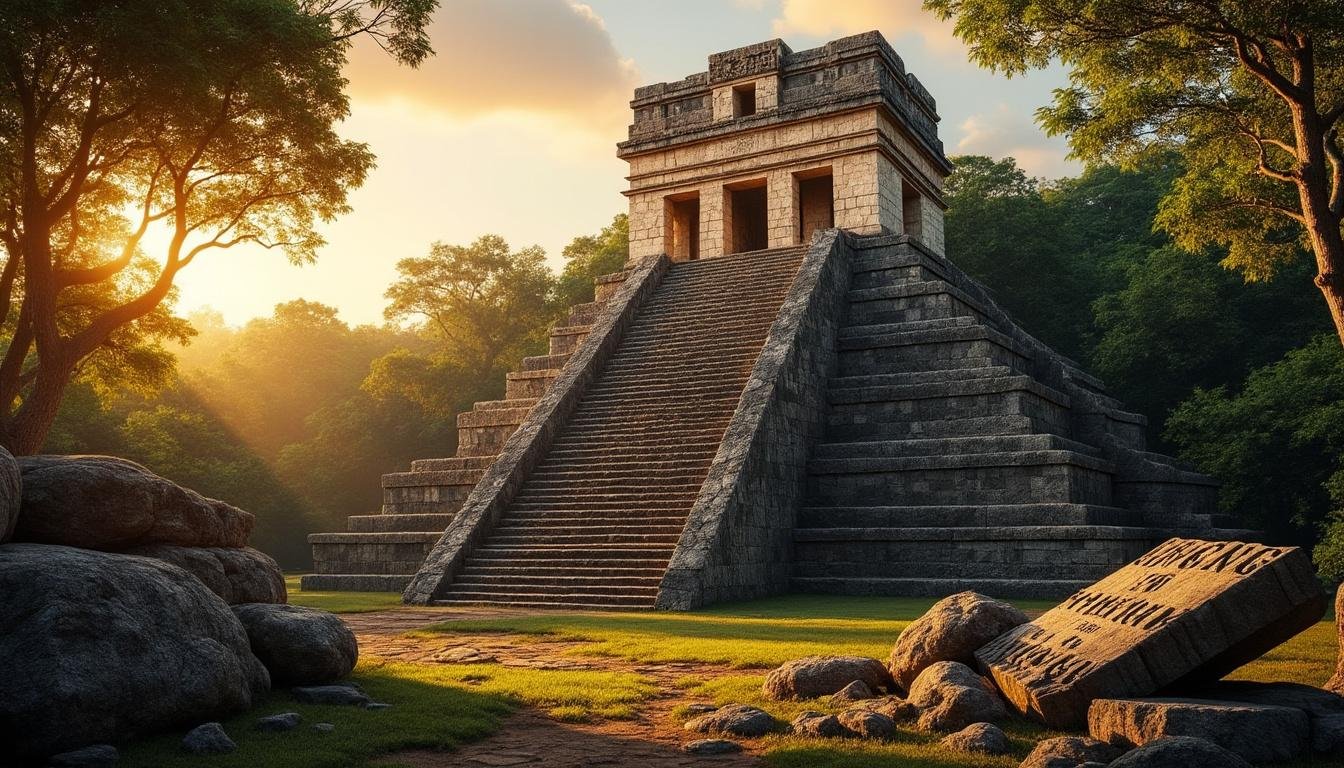
One of the most fascinating aspects of Ek Balam is its architectural sophistication that reflects the grandeur of the Mayan civilization at its height. The city’s structures include temples, palaces, courts, and expansive plazas, many of which have been painstakingly uncovered since serious excavations began in the 1980s. Among these, the Acropolis stands as the tallest and most complex structure, dwarfing many contemporaneous Mayan temples across the Yucatán.
The Acropolis rises majestically, comprising a multi-tiered pyramid topped by the temple known as El Trono (“The Throne”). This temple gained fame for its jaguar-mouth entrance, symbolizing the power and mystique of the jaguar figure, deeply revered in Mayan mythology. Inside, archaeologists found the tomb of Ukit Kan Lek Tokʼ, one of Ek Balam’s greatest rulers. The tomb’s elaborate carvings and iconography illustrate the ruler’s importance, blending both political and religious authority.
Surrounding the Acropolis, many other notable temples stand, such as the twin temples known as Los Gemelos (“The Twins”), which functioned as ceremonial centers. These temples are adorned with stucco sculptures and paintings, vividly depicting deities, mythological creatures, and scenes from Mayan cosmology. Wall paintings—a rarity in the region—offer a glimpse into the beliefs and everyday life of the ancient city.
The city’s defensive architecture is equally impressive. Ek Balam is encircled by two distinct curved walls—an inner and an outer one. The inner wall, often elaborately plastered and decorated, served ceremonial purposes while the outer wall was purely defensive. Flanking the defensive line, deep natural sinkholes formed natural barriers, making it nearly impossible for invaders to bypass the fortifications. These construction choices not only highlight the city’s military ingenuity but also its capacity to thrive in a potentially hostile environment.
Exploration and Archaeological Discoveries: Unlocking Ek Balam’s History
Ek Balam’s archaeological exploration provides a compelling case of how modern research is reshaping our understanding of Maya civilization. Although discovered by French archaeologist Désiré Charnay in the late 19th century, formal excavations began only in the 1980s due to the vast scale and dense jungle cover. Since then, a wide range of structures and artifacts have been studied, uncovering a rich narrative carved into stone walls and painted murals.
At least 45 distinct structures have been identified at the site, from tombs and temples to ball courts and palatial residences. The central plaza, radiating roads extending to the four cardinal directions, and the alignment of structures suggest a city meticulously planned to reflect the Mayan worldview, with a symbolic four-part cosmos layout.
One of the remarkable finds was the discovery of numerous hieroglyphic texts and stucco reliefs, which have been translated to reveal historical events and clan genealogies. These texts add depth to the story of Ek Balam’s rulers, especially the reign of Ukit Kan Lek Tokʼ, whose leadership saw the city flourish from 770 to 802 AD. His rule marked Ek Balam’s peak as a cultural and political power in the region.
The decline of Ek Balam remains partially shrouded in mystery. Theories suggest a combination of external invasions, including possibly from the Itza people, internal strife, and environmental pressures like drought contributed to the city’s abandonment in the early 11th century. Archaeologists found signs of hastily built defensive barricades near the Great Plaza, indicating attempts to repel attacks before the inhabitants eventually fled.
Further archaeological work continues, with hopes to uncover more secrets about this enigmatic city. New technologies like laser scanning and ground-penetrating radar are helping to map unexplored areas, hinting at the large parts still buried under the jungle. As exploration advances, Ek Balam promises to reveal more about ancient Mayan society’s complexities and its cultural connections within the Yucatán peninsula.
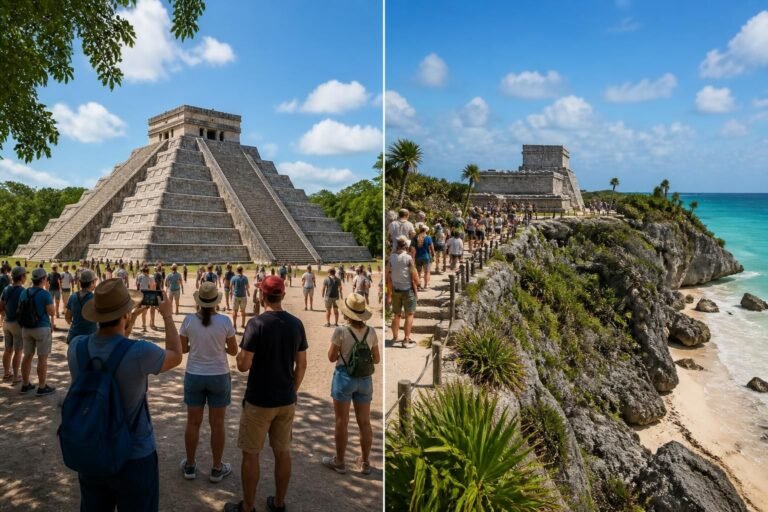
Visitors wishing to explore Ek Balam’s site can also combine it with nearby attractions. For insights into the larger Mayan world, travelers often visit the neighboring Chichen Itza ruins, accessible through comprehensive visitor guides detailing history and practical tips, increasing appreciation for the interconnected nature of ancient Mayan cities.
Ek Balam’s Cultural Significance and Influence on Mayan Civilization
The cultural and artistic achievements preserved at Ek Balam are invaluable windows into the Mayan civilization’s spiritual and societal fabric. The city was part of the kingdom of Talol and was governed by a noble elite who commissioned artworks, complex architecture, and ceramics that not only served local use but also influenced nearby centers.
Ek Balam’s legacy extends beyond its own borders, as it notably impacted Chichen Itza during its early stages. Innovations in mural painting techniques, stucco decoration, and pottery styles found at Ek Balam were later adopted by artisans in the greater Maya region, illustrating its status as a cultural beacon. This heritage highlights the city’s importance in the broad narrative of Maya art and architecture development.
The ceremonial aspects observed in Ek Balam’s layout and iconography emphasize the deep cosmological beliefs integral to Maya culture. For instance, the presence of multiple sacbeob (raised roads) radiating from the city center in the four cardinal directions aligns with the Mayan cosmology of a universe governed by four cardinal points, each with symbolic meaning. Such urban planning reveals how architecture was not merely practical but also held spiritual significance.
Visitors fascinated by Ek Balam’s culture might also be intrigued by nearby destinations like Valladolid, where a travel guide highlights the region’s colonial charm and Mayan heritage, enriching understanding of the Mayan influence on contemporary culture and society in Yucatán.
Practical Insights for Visiting Ek Balam: Tips for Tourists and Archaeology Enthusiasts
For travelers planning a visit to Ek Balam, understanding how to best experience the ruins can enhance appreciation for the site’s archaeological richness and cultural context. Since only a small portion of the extensive ancient city is accessible to the public, guided tours and expert commentary can illuminate its hidden stories that otherwise might be missed.
Recommended Tips for Visiting Ek Balam:
- Arrive early: To avoid the midday heat and larger crowds, early morning visits provide a more comfortable experience and better lighting for photography.
- Hire a knowledgeable guide: Their expertise enables visitors to decode the mysteries of murals, hieroglyphs, and the site’s architectural marvels.
- Wear appropriate footwear: The terrain includes uneven surfaces and stairs, especially when climbing the Acropolis pyramid where panoramic views await.
- Explore surrounding attractions: Complement the visit with nearby cultural sites or natural wonders like cenotes, creating a fuller Riviera Maya journey.
- Respect preservation rules: Avoid touching delicate stelae or paintings to help conserve this priceless heritage.
Below is an overview comparing Ek Balam with other major Maya archaeological sites in the region, offering a snapshot of their unique characteristics:
| Archaeological Site | Location | Notable Feature | Accessibility for Visitors |
|---|---|---|---|
| Ek Balam | Temozón, Yucatán | Jaguar-mouth tomb & elaborate Acropolis | Open to public with guided tours |
| Chichen Itza | Yucatán Peninsula | El Castillo pyramid & astronomical alignments | Major tourist attraction with facilities |
| Cobá | Quintana Roo | Ancient sacbeob network & tallest pyramid | Accessible, less crowded than Chichen Itza |
| Tulum | Caribbean coast, Quintana Roo | Coastal ruins overlooking the sea | Popular beachside archaeological site |
Preserving Ek Balam: Archaeological Efforts and Protection of Cultural Heritage
Ek Balam stands as a testament to the rich history and culture of the Mayan civilization, but its preservation demands continuous effort. The site is under the care of Mexico’s National Institute of Anthropology and History (INAH), which manages thousands of archaeological locations across the country. Since the 1980s, systematic work has been devoted to excavation, restoration, and protection of the site.
Given its vast size, only a fraction of Ek Balam has been excavated and made accessible, leaving a trove of undiscovered mysteries still buried beneath the jungle canopy. INAH employs advanced technologies like laser scanning and digital mapping to plan future digs and monitor the site’s condition.
Legal protection ensures Ek Balam’s integrity, preventing unauthorized developments or damage from tourism. Visitors are encouraged to follow guidelines safeguarding the delicate stuccos, murals, and structural remains. Efforts to promote sustainable tourism aim to balance public access with conservation, enabling people worldwide to connect with this ancient city’s legacy without compromising its future.
As archaeological research progresses and public interest grows, Ek Balam will undoubtedly remain a focal point for those drawn to the enigmas of the ancient Maya, combining thrilling exploration with a profound cultural heritage.
What does Ek Balam mean?
Ek Balam translates to ‘black jaguar’ or ‘sun jaguar’ in the Maya language, symbolizing power and mystique.
Can visitors climb the structures at Ek Balam?
Yes, tourists are allowed to climb the Acropolis pyramid, providing stunning views of the surrounding jungle and ruins.
How does Ek Balam compare to Chichen Itza?
While Chichen Itza is larger and more widely known, Ek Balam offers unique features such as the jaguar-mouth tomb and well-preserved murals, often with fewer crowds.
Why was Ek Balam abandoned?
The city’s decline is attributed to a combination of environmental stresses, possible invasions, and internal conflicts, culminating in its abandonment around the early 11th century.
What should I know before visiting Ek Balam?
It’s recommended to visit early, hire a guide, wear proper footwear, and respect preservation guidelines to fully appreciate and protect the site.