In brief:
- Chichen Itza served as a pivotal center of the Mayan civilization from the Late Classic to the Terminal Classic period, located in the fertile Yucatan Peninsula.
- The site is renowned for the Pyramid of Kukulkan, an architectural marvel showcasing precise astronomy and mathematical design aligned with celestial events like the equinoxes.
- Chichen Itza’s architecture blends diverse styles, reflecting cultural exchanges within Mesoamerica and exemplifying pre-Columbian artistic ingenuity.
- The city flourished as an economic hub with extensive trade networks, evidenced by artifacts from distant regions and complex market structures.
- Religious rituals, including human sacrifices conducted in the Sacred Cenote, reveal the spiritual depth of the Mayan culture and its societal structures.
- The site’s decline resulted from environmental, political, and external pressures before its rediscovery and preservation efforts have helped maintain its legacy.
Historical Foundations of Chichen Itza and Its Role in the Mayan Civilization
Chichen Itza, nestled in the vast expanse of the Yucatan Peninsula, stands out among ancient ruins as a critical center of the Mayan civilization’s evolution. Established between AD 600 and AD 900 during the Terminal Classic period, this metropolis became a thriving hub of political, economic, and cultural activity in northern Mesoamerica. Characterized by a unique convergence of architectural styles, including Puuc, Chenes, and Central Mexican influences, Chichen Itza reflects a highly diverse population and an intricate network of exchanges.
This city’s strategic position near four significant natural sinkholes or cenotes provided reliable access to fresh water, a critical resource in the karst environment of the region. The Sacred Cenote, the most celebrated among these, served not only as a water source but also as a ceremonial site where offerings and human sacrifices were made to appease the rain deity Chaac. Such rituals underscore the deep religious fabric that wove together the city’s social and political structures.
Chichen Itza’s ascendancy coincided with the fragmentation of southern Maya centers like Tikal and Coba, highlighting a shift in power and cultural dynamics across Mesoamerica. Unlike the classic Maya polities ruled by singular dynasties, some archaeologists propose that Chichen Itza may have experimented with a more collective ruling system, the so-called “multepal,” consisting of councils of elite lineages. Though debated, this suggests an innovative political model during its rise.
As the capital of the northern Yucatan up to around AD 1050, Chichen Itza functioned both as a commercial marvel and a sacred city. It was intricately connected to expansive waterborne trade routes, facilitating the exchange of valuable commodities such as obsidian, jade, and gold from regions as far as central Mexico and southern Central America. This extensive network positioned the city as a dominant economic power within the Maya world.
The historical records also refer to Chichen Itza as potentially being one of the legendary tollans, great cities celebrated in Mesoamerican lore for their grandeur and influence. Its diverse population likely enriched the urban culture, enabling the blend of Mayan and toltec traditions apparent in the artistry and urban design.
The Pyramid of Kukulkan and Architectural Masterpieces of Chichen Itza
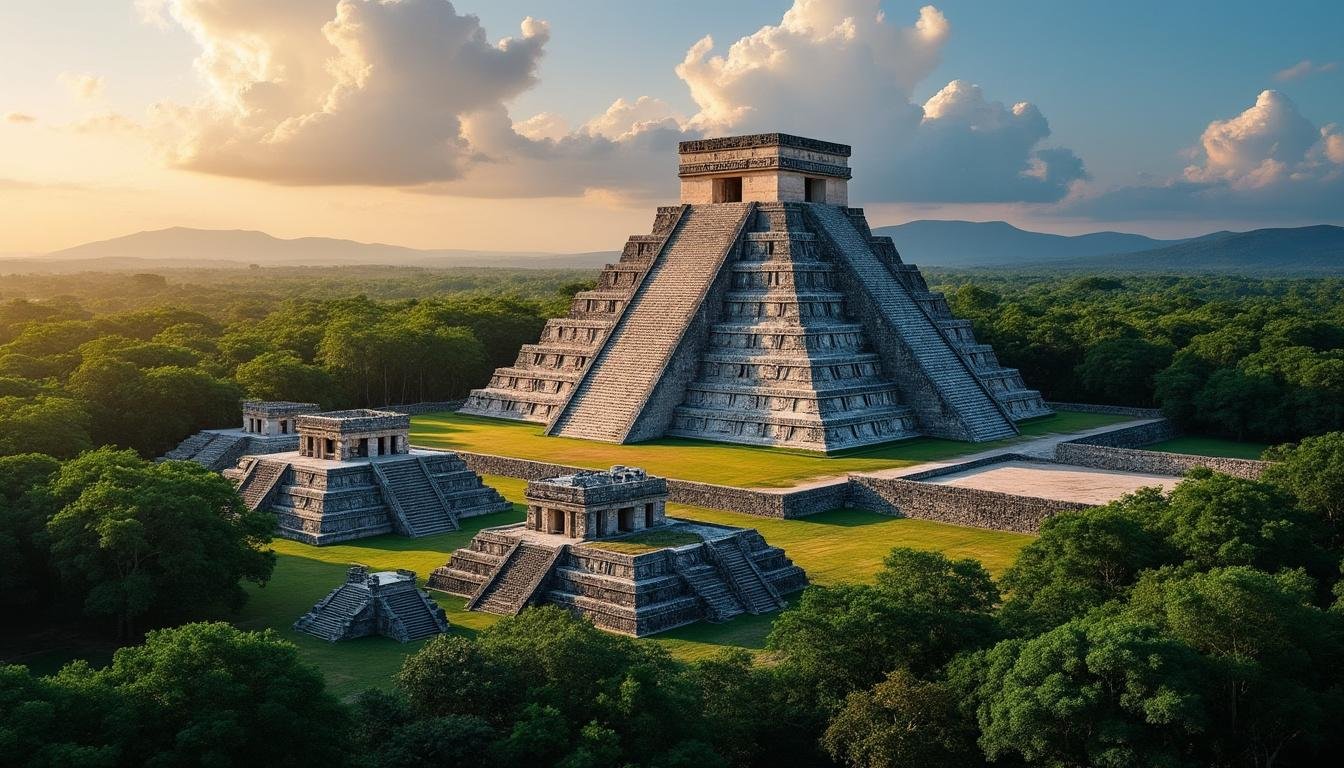
The Pyramid of Kukulkan, often called El Castillo, is undoubtedly the centerpiece of Chichen Itza and epitomizes the fusion of astronomical knowledge, religious symbolism, and architectural mastery. Standing approximately 30 meters tall, this stepped pyramid was constructed with precise mathematical calculations, with four staircases each containing 91 steps, adding up to a total of 365 steps corresponding to the solar year. This remarkable attention to detail exemplifies how the Maya integrated advanced astronomy into their buildings.
One of the pyramid’s most impressive phenomena occurs during the equinoxes, when the play of light and shadow creates the illusion of a serpent descending its northwest staircase. This effect symbolically represents the feathered serpent deity Kukulkan, linking the cosmos to terrestrial ceremonies. While widely popular, modern research suggests that this phenomenon is visible over several weeks around the equinoxes, which implies the effect may have served broader calendrical or ceremonial purposes rather than pinpointing a single date.
Beneath the visible pyramid lie earlier substructures uncovered through recent excavations, revealing a sequence of construction phases and expansions consistent with Mesoamerican architectural traditions. This layering provides insight into the city’s growth and evolving religious expression over centuries.
Beyond El Castillo, Chichen Itza houses other monumental constructions such as the Temple of the Warriors, distinguished by its rows of carved columns depicting warrior figures, and the sprawling Great Ball Court, the largest known in ancient Mesoamerica. The ball court measures some 168 by 70 meters and features stone rings adorned with intertwined feathered serpent motifs. This court wasn’t merely recreational — it was a sacred space where matches reflected spiritual beliefs about life, death, and cosmic cycles.
Architectural styles across the site vary, with complexes like Las Monjas showcasing Puuc-style ornate façades, while others reveal influences from the Toltec capital of Tula, suggesting extensive cultural diffusion. Decorative carvings and hieroglyphs narrate stories of rulers, deities, and mythological symbolism.
- Architectural highlights of Chichen Itza include:
- El Castillo (Pyramid of Kukulkan) – astronomical temple featuring equinox serpent effect.
- Temple of the Warriors – military and ritualistic complex with sculpted columns.
- Great Ball Court – sacred sports arena with ritual connotations and serpent rings.
- Casa Colorada – residential and ceremonial palace with significant hieroglyphic texts.
- El Caracol – circular observatory aligned with Venus and other celestial bodies.
| Structure | Purpose | Unique Feature |
|---|---|---|
| Pyramid of Kukulkan | Religious temple and astronomical calendar | Staircases total 365 steps symbolizing solar calendar |
| Temple of the Warriors | Ceremonial rituals and warfare symbolization | Rows of warrior columns and Chac Mool statue at summit |
| Great Ball Court | Sport and ritual activities | Feathered serpent motifs on stone rings |
| El Caracol | Astronomical observatory | Windows oriented to Venus cycles |
| Casa Colorada | Administrative and ceremonial | Hieroglyphs detailing rulers and events |
These enduring structures stand testament not only to architectural prowess but also to the intricate relationship between Maya spirituality, cosmology, and urban planning.
Religious Rituals, Societal Structure, and the Sacred Cenote at Chichen Itza
Religion was interwoven into the very foundation of Chichen Itza’s society. The city’s many temples and public plazas served as stages for an elaborate system of ritual practices, which were essential for maintaining harmony between the people and their deities. The worship of gods such as Kukulkan, Chaac, and Ix Chel permeated every layer of civic life.
The Sacred Cenote remains one of the most evocative and mysterious features of Chichen Itza. This vast natural sinkhole, measuring approximately 60 meters in diameter and 27 meters deep, was more than a water source. Archaeological investigations, including those initiated by Edward Herbert Thompson in the early 20th century, have uncovered thousands of artifacts, gold and jade offerings, pottery, and human remains within its depths. These findings strongly suggest the cenote was a site for sacrificial rituals aimed at appeasing the rain god during periods of drought or crisis.
Recent bioarchaeological research undertaken in 2024 has shed new light on ritual practices associated with these sacrifices. Genetic studies revealed that many of the sacrificial victims were young males, some related, indicating possible selection criteria rooted in societal and spiritual beliefs. Additionally, skeletal analyses suggest that other forms of ritual body disfigurement and public display of human remains, such as skull racks, underscored hierarchies and religious symbolism in Chichen Itza.
The social hierarchy within Chichen Itza was complex. Elite rulers, priests, and warriors held significant authority, orchestrating the religious calendar, managing trade, and governing civic affairs. The common populace mainly comprised farmers, artisans, and traders who sustained the economic and cultural lifeblood of the city. Their participation in public rituals, including the famed Mesoamerican ballgame played in the Great Ball Court, was not only entertainment but a profound expression of cosmological narrative.
Human sacrifice, while sobering, must be understood within the context of Maya cosmology, where offerings to the gods were a vital exchange to ensure cosmic balance, agricultural fertility, and societal prosperity. The extensive exchange networks and wealth evident in the city empowered such rituals to remain focal points of Mayan culture.
Factors in the Decline and Abandonment of Chichen Itza
Chichen Itza’s decline, ultimately leading to its abandonment before the full impact of Spanish colonization, remains a subject of rigorous scholarly discussion. The multifactorial circumstances combine environmental, political, and economic elements that destabilized the city’s preeminence.
One primary issue was environmental degradation. Intensive cultivation practices likely led to soil exhaustion and deforestation, impairing agricultural yield crucial to sustaining the city’s large population. The karst topography, while rich in cenotes, could not compensate indefinitely for the strain on natural resources.
Political fragmentation also emerged as a key factor. Archaeological interpretations dispute the “multepal” ruling system’s feasibility over time and point towards power struggles among elite groups. The loss of centralized control would have disrupted trade networks, religious practices, and the cohesion necessary for urban vitality.
Externally, shifting trade routes and rising regional powers eroded Chichen Itza’s economic dominance. Its former northern Maya allies and neighbors such as Coba and Yaxuna faced decline, which correlated with Chichen Itza’s waning influence.
Spanish accounts suggest that conquests by rival groups such as Mayapan contributed to political turmoil. However, archaeological evidence indicates the city was already in decline by this time. The arrival of Europeans in the 16th century, accompanied by diseases and empire-building, only hastened the site’s obsolescence as a political and cultural capital.
In the aftermath, the site was largely abandoned and reclaimed by jungle growth, its grandeur buried and forgotten until the 19th century rediscovery. Nevertheless, its historical secrets remain etched in stone and continue to captivate archaeologists and historians worldwide.
Rediscovery, Archaeology and Modern Preservation of Chichen Itza
Chichen Itza’s modern journey began in the 19th century with explorers like John Lloyd Stephens and Frederick Catherwood, whose detailed illustrations and accounts rekindled global fascination with Maya culture and its ancient ruins. Their work sparked a surge in archaeological interest that initiated the site’s long-term study and restoration.
The 20th century witnessed significant archaeological projects, notably by the Carnegie Institution, which helped uncover structures such as the Temple of the Warriors and the Caracol observatory. Edward Herbert Thompson’s early explorations, including his dredging of the Sacred Cenote, recovered invaluable artifacts now housed in institutions worldwide.
Preservation efforts today are led by Mexico’s Instituto Nacional de Antropología e Historia (INAH), which manages the site as federal property and enforces sustainable tourism practices. Modern challenges include mitigating the wear caused by millions of visitors annually—by 2025, nearly 10 million tourists visited the site—and environmental factors like erosion, microbial growth, and weathering of the limestone monuments.
The opening of the Great Museum of Chichen Itza in early 2024 marked a milestone in conservation and education, offering visitors a comprehensive journey through the site’s history and discoveries. The museum displays artifacts from various excavations and uses multimedia presentations to contextualize the historical secrets uncovered by decades of research.
Furthermore, the integration of advanced technologies like 3D scanning, ground-penetrating radar, and gamma-ray spectrometry has enhanced understanding and preservation. Studies mapping the deterioration of building materials now inform strategies to protect monumental architecture for future generations.
Community involvement remains a cornerstone, with local Maya descendants participating in maintaining ancestral heritage. Outreach programs help foster respect and understanding, bridging the gap between past and present.
Those interested in exploring the rich legacy of Chichen Itza can find detailed travel insights and cultural perspectives in specialized resources such as Chichen Itza tours and cultural guides and archaeological reports and visitor information, providing valuable context to the ongoing story of this pre-Columbian wonder.
What is the significance of the Pyramid of Kukulkan’s design?
The Pyramid of Kukulkan is both a religious temple and an ancient astronomical calendar. Its four staircases, each with 91 steps, add to 365, symbolizing the number of days in the solar year. The pyramid features a famous light-shadow serpent effect during equinoxes, representing the feathered serpent deity Kukulkan, indicating the Maya’s advanced understanding of astronomy.
What types of sacrifices took place at the Sacred Cenote?
Archaeological evidence from artifacts and human remains suggests that the Sacred Cenote was the site of ritual offerings, including human sacrifice, to the rain god Chaac. Victims, often young males, were thrown into the cenote as part of ceremonies intended to ensure rain and fertility. Some remains also suggest non-sacrificial burials related to religious practices.
How did trade contribute to Chichen Itza’s power?
Chichen Itza was a key economic hub on the Yucatan Peninsula, controlling ports like Isla Cerritos that facilitated maritime trade. It obtained valuable goods like obsidian and gold from distant regions through complex trade networks. Control over trade routes and tribute from conquered cities enhanced its wealth and influence across Mesoamerica.
Why was Chichen Itza abandoned before the Spanish conquest?
Multiple factors including environmental degradation, political decline, resource depletion, and shifting trade routes contributed to Chichen Itza’s decline. Although the Spanish arrived in the 16th century, archaeological evidence shows the city was waning as a political center well before European contact, leading to its eventual abandonment.
How is Chichen Itza being preserved today?
Preservation efforts are led by Mexico’s National Institute of Anthropology and History, focusing on protecting monuments from damage caused by tourism and natural erosion. Modern technology such as 3D scanning and gamma-ray spectrometry helps monitor and maintain structural integrity. The Great Museum of Chichen Itza educates visitors about its significance, while involving local indigenous communities ensures cultural respect and continuity.