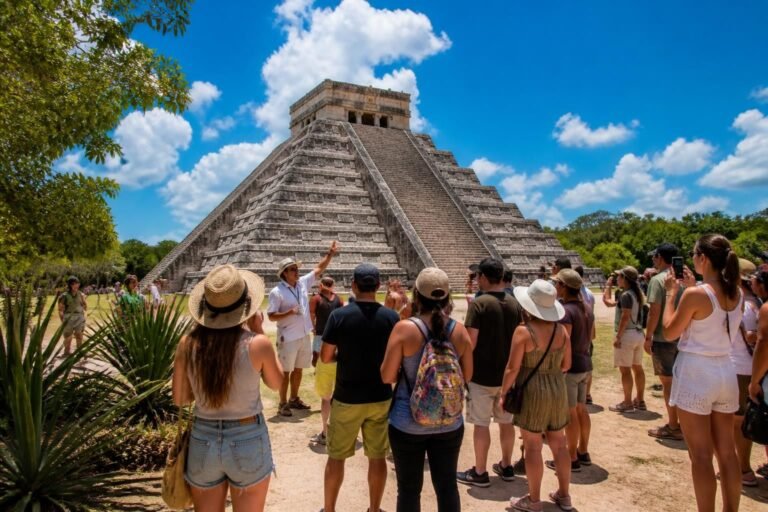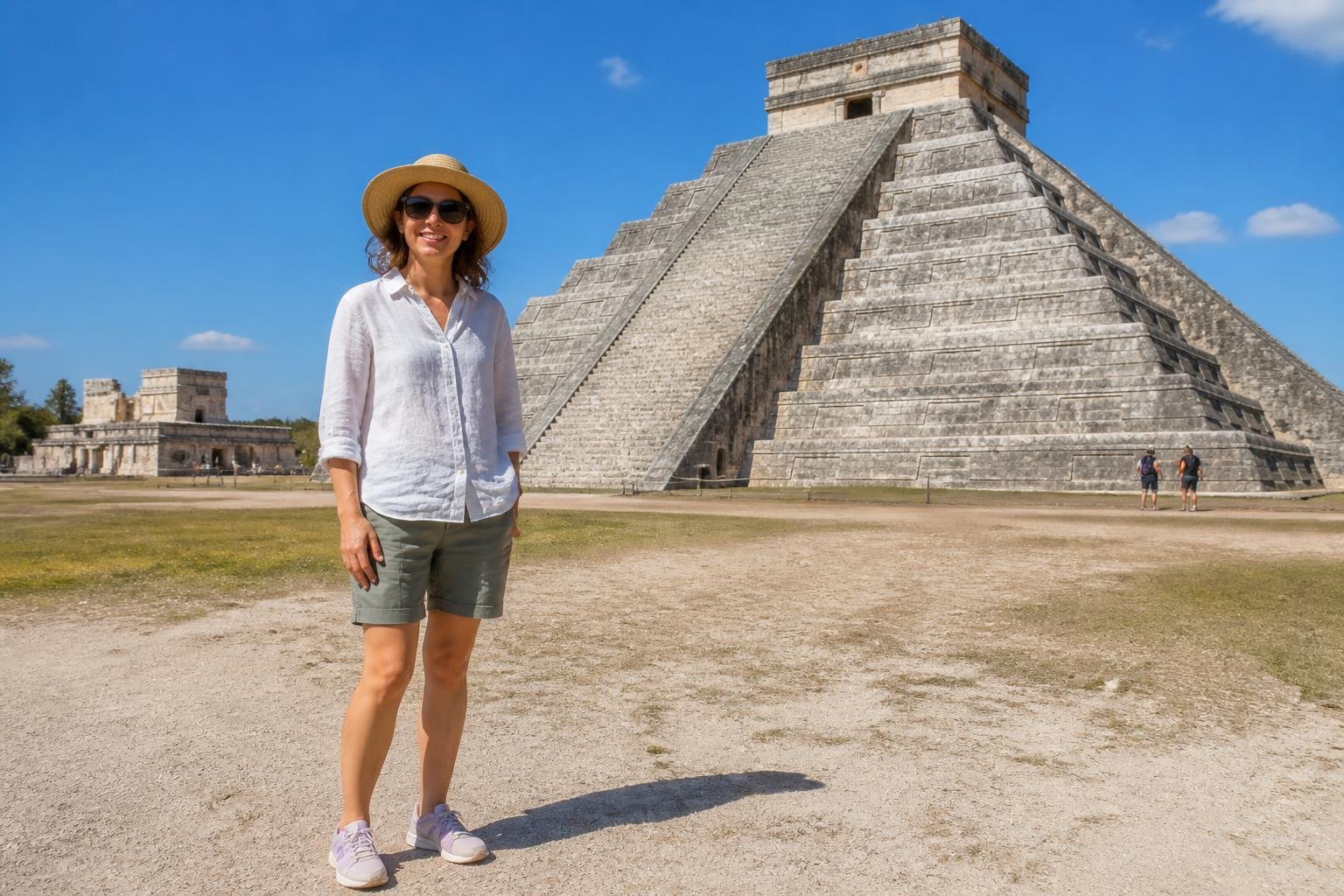

Visiting Chichen Itza offers a fascinating glimpse into Mayan civilization amid the Yucatán’s intense sun and heat. Understanding the climate, terrain, and cultural significance is essential for choosing the right attire to ensure both comfort and respect during your visit. The archaeological site stretches over several kilometers with limited shade, making it an environment where clothing choices impact the overall experience. To navigate the uneven stone paths and cope with high temperatures often exceeding 35°C, visitors must prioritize lightweight fabrics and breathable materials that facilitate air circulation while protecting the skin from UV exposure. Respectful attire is equally important, reflecting the site’s cultural importance and preserving the ruins.
Sun protection ranks as a non-negotiable factor when planning your outfit for Chichen Itza. Long before the widespread availability of cooling gear, the Mayans themselves used wide-brimmed hats or head coverings to defend against relentless sunlight. Today’s visitors benefit from modern hats designed to shield the face, ears, and neck effectively. Pairing this with reef-safe sunscreen, ideally SPF 50 or higher, helps prevent sunburn while minimizing harm to the region’s fragile ecosystems, especially if your visit includes a stop at a nearby cenote. Carrying a water bottle is essential to remain hydrated throughout the journey, as hydration contributes directly to comfort and cognitive alertness while exploring the ruins.
Footwear must strike the right balance between durability and comfort. The site’s rocky terrain makes closed-toe shoes with good grip indispensable, as they offer protection and stability. While casual flip-flops are common on Caribbean beaches, they quickly prove inadequate over stone paths. For those planning to swim in cenotes included within some tours, packing water shoes or sport sandals offers practicality without sacrificing safety.
Consideration of respectful attire extends to selecting modest clothing that honors local customs and the sacred nature of Chichen Itza. Lightweight long sleeves and pants provide protection against both the sun and mosquitoes, particularly in the wetter months from May to October. These clothing choices can also reduce fatigue by shielding the body without adding insulation. A lightweight cover-up or scarf serves multiple purposes: shielding the skin while on site, covering shoulders when visiting sacred areas, or even doubling as a towel after a refreshing cenote swim. Throughout this guide, discover essential items and smart packing strategies to ensure a seamless visit full of discovery and appreciation for one of the New Seven Wonders of the World.
Choosing Comfortable Clothing to Beat the Yucatán Heat at Chichen Itza
One crucial aspect of a comfortable visit to Chichen Itza lies in selecting clothing crafted from breathable materials that facilitate moisture-wicking and airflow. The Yucatán’s tropical climate challenges visitors with intense heat, which can drain energy quickly unless dressed appropriately. Lightweight fabrics—such as linen and cotton—are highly recommended because they absorb sweat and dry rapidly, reducing discomfort. Avoid synthetic fabrics that can trap heat and hinder breathability.
Breathable materials allow heat to escape and air to flow freely, preventing overheating. For example, a loose-fitting shirt with long sleeves offers the benefit of sun protection without forcing sweat to accumulate. Lightweight pants in natural fibers protect the legs from harsh solar rays and insect bites, which become particularly relevant if the visit takes place during the rainy season when mosquitoes are prevalent. Shorts may be suitable for some visitors, but those seeking respectful attire often prefer modest clothing that respects the sanctity of the site.
Examples of optimal fabrics include:
- Pure linen shirts and trousers
- Lightweight cotton blends
- Technical travel fabrics with moisture-wicking properties
Choosing colors plays a practical role too. Light shades such as whites, creams, and pastels reflect sunlight rather than absorb it, contributing to cooler skin temperatures. In contrast, dark colors retain heat and make visitors feel warmer. Footwear should complement clothing selections by being both protective and breathable. Sneakers with mesh panels or sport sandals that offer secure support provide a good combination for walking 2 to 3 kilometers around the site’s uneven surfaces. Visitors should prepare for the possibility of rain, which can make paths slippery; footwear with strong grip reduces the risk of falls.
Comfortable clothing on site also means dressing flexibly to accommodate varied weather conditions. The Yucatán experiences sudden rain showers during the wet months, so packing a lightweight rain jacket or poncho in your daypack is a wise precaution. Additionally, visitors might want to bring a clean change of clothes if planning to swim in nearby cenotes, as these natural sinkholes are a popular way to cool off after touring the ruins. Incorporating these principles into your packing list sets the foundation for an enjoyable and fatigue-free day.
Effective Sun Protection Strategies: Hats, Sunscreen, and Sunglasses
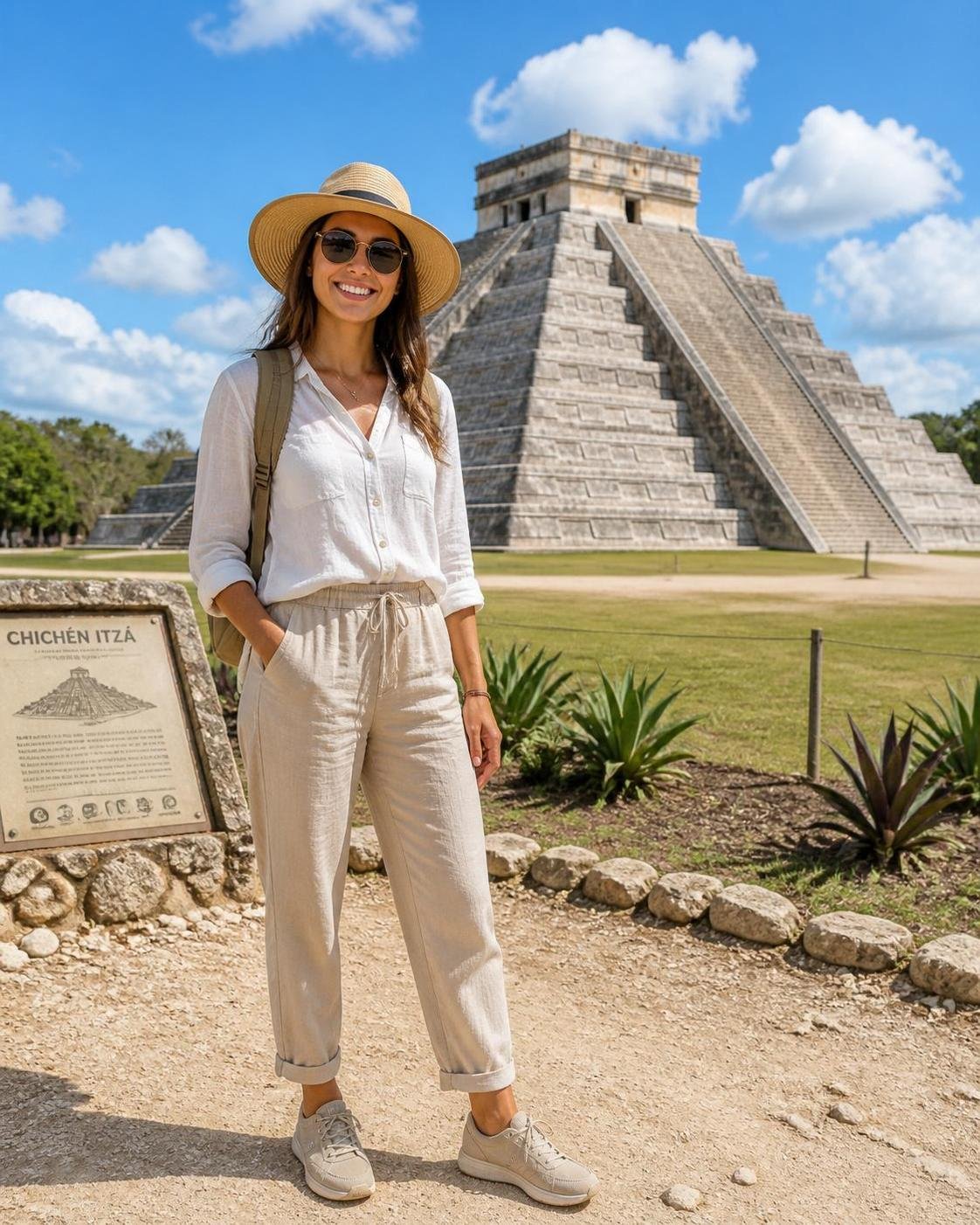
Given the vast open spaces and minimal shade throughout the Chichen Itza archaeological zone, sun protection must be a constant concern for visitors. The area’s UV index consistently ranks high, making the risk of sunburn and heatstroke a serious consideration, even during winter months. To combat this, wearing a wide-brim hat is one of the simplest and most effective ways to shield your face, neck, and ears—the most sun-sensitive areas that are often neglected by standard caps.
Baseball hats, while popular, typically lack coverage for the neck and side of the face, leaving vulnerable skin exposed. In contrast, hats with brims extending six inches or more provide ample shade, enhancing comfort during long walks on stone paths. Pairing hats with UV protection sunglasses minimizes eye strain caused by reflection off limestone surfaces common to the region. Premium sunglasses with lenses blocking 99-100% of UVA and UVB rays protect the eyes and reduce squinting, which ultimately conserves energy.
Sunscreen application is indispensable and requires careful selection. Visitors should opt for high-SPF formulations—preferably SPF 50 or more—to withstand the prolonged exposure. Reapplying sunscreen at least every two hours is critical, especially after sweating or swimming in cenotes. Reef-safe, biodegradable sunscreens are highly recommended in this sensitive ecosystem to prevent environmental damage. Bringing your own sunscreen is advisable since options available on-site are usually limited and expensive.
Enhancing sun defense involves layering with light, long-sleeved tops made from breathable fabrics. Such layers act as a second barrier while enabling sweat evaporation, keeping you cool. Don’t forget other practical aids like handheld fans or cooling towels infused with mineral salts that can significantly reduce body temperature when wrapped around the neck. Staying vigilant about sun protection not only prevents discomfort but also protects health, ensuring an enjoyable visit lasting several hours amidst the ruins.
Footwear and Practical Accessories for Navigating Chichen Itza’s Terrain
Exploring Chichen Itza requires extensive walking over irregular terrain, including uneven stones, gravel, and grassy patches. This calls for stable, supportive footwear designed to handle these challenges while keeping the feet comfortable during multi-hour excursions. Closed-toe shoes are strongly encouraged, as they guard against cuts, scrapes, or insect bites from undergrowth around the archaeological site. Breathable sneakers or trail shoes with rugged soles are widely considered the best option, combining durability with comfort.
Flip-flops or open sandals might seem convenient initially, but they expose the feet to injury and are less secure on rugged paths. Some visitors may choose sport sandals with thick straps and soles that offer grip and protection, particularly relevant when planning to visit a cenote, a common activity included in many tours. Water shoes add an extra layer of safety on wet, slippery surfaces near these natural swimming holes and are compact enough to carry in a small daypack.
In addition to footwear, picking the right accessories enhances mobility and convenience. Carrying a small crossbody bag or light backpack helps keep essentials accessible without adding bulk or weighing down the shoulders. Key items to pack include a water bottle, sunscreen, insect repellent especially during rainy season, and a lightweight towel for drying off after swimming. Cash in Mexican pesos is essential as the entrance fee and most vendors do not accept cards, and there’s no ATM machine at the archaeological site. Leaving valuables behind in your accommodation minimizes risk and ensures focus on the experience.
| Essential Accessories | Purpose | Example Items |
|---|---|---|
| Comfortable walking shoes | Protection and support on uneven terrain | Breathable sneakers, trail shoes |
| Wide-brim hat | Sun protection for face, neck, ears | Straw hats, fabric hats with venting |
| Sunscreen (SPF 50+) | Prevents sunburn and skin damage | Reef-safe formulations recommended |
| Water bottle | Hydration during long tour | Reusable bottles with filtration |
| Small daypack | Carry essentials without height or load issues | Compact backpacks or crossbody bags |
Observing site regulations and packing smartly contribute to a respectful visit, reducing any environmental footprint while fostering personal safety. For further details on guided tours and tips on seamless exploration, discover practical advice for a memorable Chichen Itza experience that highlights preparation and gear.
Respectful Attire and Cultural Considerations to Honor Mayan Heritage
Chichen Itza is not only a remarkable archaeological site but also a sacred place that deserves thoughtful and respectful behavior from all visitors. Choosing modest clothing demonstrates appreciation and sensitivity towards the cultural and spiritual significance attributed by the Mayan descendants and locals. The site’s open, exposed layout invites attire that balances protection from elements with decency: lightweight long-sleeved shirts and pants guard against sun and insect bites while showing respect.
The importance of avoiding overly revealing or tight-fitting attire cannot be overstated as it aligns with expected respectful etiquette. This is especially important when visiting ceremonial platforms or other ritual areas where traditions and beliefs remain deeply rooted. A lightweight scarf or sarong is practical to cover shoulders or knees when required and can help visitors adhere to local customs without sacrificing comfort during tropical weather.
Layers also aid in accommodating changing temperatures and facilitating respectful dressing. After swimming in refreshing cenotes, changing into clean, dry clothing helps maintain dignity and comfort throughout the remainder of the visit. These practices help preserve the solemn atmosphere and contribute positively to ongoing cultural tourism that supports local communities.
For those interested in extending their exploration of Mayan civilization, consider discovering the nearby archaeological site of Coba, where different customs and practices may also influence attire choices. Understanding and respecting these nuances highlights a genuine commitment to cultural appreciation beyond just sightseeing.
Hydration and Additional Tips to Maximize Comfort During Your Chichen Itza Visit
Hydrating adequately is fundamental when visiting Chichen Itza, given the Yucatán peninsula’s tropical climate characterized by high heat and humidity, especially between late spring and early fall. Carrying a reusable water bottle is not just recommended—it is essential to maintain energy and alertness during multi-hour walks across the site’s extensive grounds. Many tours provide refill options, yet having your own source of hydration minimizes costs and guarantees access when needed.
In addition to basic hydration, visitors prone to dehydration should consider electrolyte supplements or hydration mixes to replenish minerals lost through sweat. Overlooking hydration can lead to fatigue, dizziness, and poor concentration, detracting significantly from the enjoyment of this historic site.
Additional practical measures include packing insect repellent during the rainy season (May–October), as mosquitoes thrive near local vegetation. A small bag designed to store wet swimwear is helpful when visiting cenotes, allowing for comfortable movement without damp clothing throughout the day. Light towels made from quick-dry materials add convenience without adding weight.
Planning for unexpected weather variations, visitors can include compact rain gear and a sun parasol for additional shade if walking independently. Many guided tour packages relieve this pressure by handling logistical details such as transportation, locker rentals, and introducing the cultural and historical context, further enriching the experience. To explore these options, consider checking out the best group tours of Chichen Itza for 2026 that combine comfort with deep cultural insight.
What type of clothing is best for sun protection at Chichen Itza?
Lightweight, breathable clothing made from natural fibers such as linen or cotton is ideal. Long sleeves and pants help protect the skin from UV rays and insect bites, especially during the rainy season.
Are closed-toe shoes necessary for visiting Chichen Itza?
Yes, shoes that provide support and protect the feet from uneven terrains like breathable sneakers or trail shoes are recommended over flip-flops to avoid injury and discomfort.
Is sunscreen required, and what type should I use?
High-SPF (50+) sunscreen is essential and should be reef-safe and biodegradable if you plan to swim in the cenotes. Reapplying sunscreen regularly throughout the day is vital.
Can I bring valuables or large backpacks into Chichen Itza?
It is advisable to leave valuables such as jewelry at your hotel as there are no secure storage options onsite. Large backpacks may be subject to inspection and cause delays during entry.
What should I bring to stay comfortable besides clothing?
A refillable water bottle, insect repellent during rainy season, sunglasses, a wide-brimmed hat, and a small daypack to carry these essentials ensure comfort and protection during the visit.