
Discover the captivating history behind the Chichen Itza pyramids, ancient marvels that epitomize the genius of the Maya civilization and firmly establish their legacy within Mesoamerica’s rich archaeological and cultural heritage. As a towering symbol of advanced knowledge and spiritual significance, these pyramids are not only architectural masterpieces but also vital pieces of ancient history that reveal the intricate relationship of the Maya with astronomy, religion, and governance. Millions of visitors from across the globe journey to this celebrated site every year to marvel at its grandeur and uncover the mysteries carved into stone over a millennium ago.
This exploration into Chichen Itza unveils layers of cultural intersections, technological achievements, and political evolution that shaped one of the greatest cities of the Maya world. From the majestic El Castillo pyramid to the expansive Great Ball Court, each temple and structure tells a story embedded in celestial cycles, ritual ceremonies, and societal organization. Understanding the deeper historical context behind these extraordinary archaeological wonders provides a window into how the Maya excelled in architecture, cultural innovation, and regional influence.
Key points to explore:
- Chichen Itza’s role as a central hub of political and religious power in the Northern Maya Lowlands during the Terminal Classic period.
- The architectural genius displayed in structures like the Pyramid of Kukulcan and the Great Ball Court.
- The cultural fusion evident in Chichen Itza’s art and building styles from Maya and Toltec influences.
- How cenotes factored into religious rituals and the city’s water management system.
- Modern-day tourism dynamics and preservation challenges for this UNESCO World Heritage Site recognized as one of the New Seven Wonders of the World.
Historical Significance and Cultural Heritage of Chichen Itza in the Maya Civilization
Positioned strategically in the northern part of the Yucatán Peninsula, Chichen Itza arose as a formidable pre-Columbian city spanning a crucial epoch between AD 800 and 1200. It became a nexus of political authority, economic exchange, and religious installment, centralizing the Northern Maya Lowlands like no other urban center before it. Rather than isolated development, the city reveals a dynamic blend of cultural traits influenced by internal Maya traditions and external contacts — notably Toltec elements from central Mexico — witnessed through its diverse architectural expressions.
The name “Chichen Itza” itself reflects its geographical and spiritual connection: in Yucatec Maya, “Chi’” means mouth or edge, “Ch’en” means well, and “Itzá” refers to the dominant ethnic group associated with the region. This name directly ties to the Sacred Cenote, a prominent natural sinkhole that served as a vital source of water and a site for complex rituals to appease the rain god, Chaac. Archaeological excavations continue to reveal artifacts and human remains in the cenote, confirming centuries-old religious practices that merged spiritual beliefs with survival needs.
Furthermore, Chichen Itza’s prominence aligns with power shifts and trade expansions in Mesoamerica. The city’s influence stretched via routes linking coasts and interior highlands, where markets traded essential commodities like obsidian, jade, and gold. Political governance traditionally described as a council-based system has more recently been reconsidered as a monarchical regime, echoing leadership models seen in southern Maya states and reflecting the city’s complexity and authority.
These historical layers illuminate not just the architecture but the societal fabric and spiritual mindset that fashioned an enduring legacy. The continuous exploration and preservation of Chichen Itza are essential to appreciating the cultural heritage of the Maya civilization and understanding their extraordinary contributions to ancient history and archaeology throughout Mesoamerica.
Architectural Marvels: The Pyramids and Temples of Chichen Itza
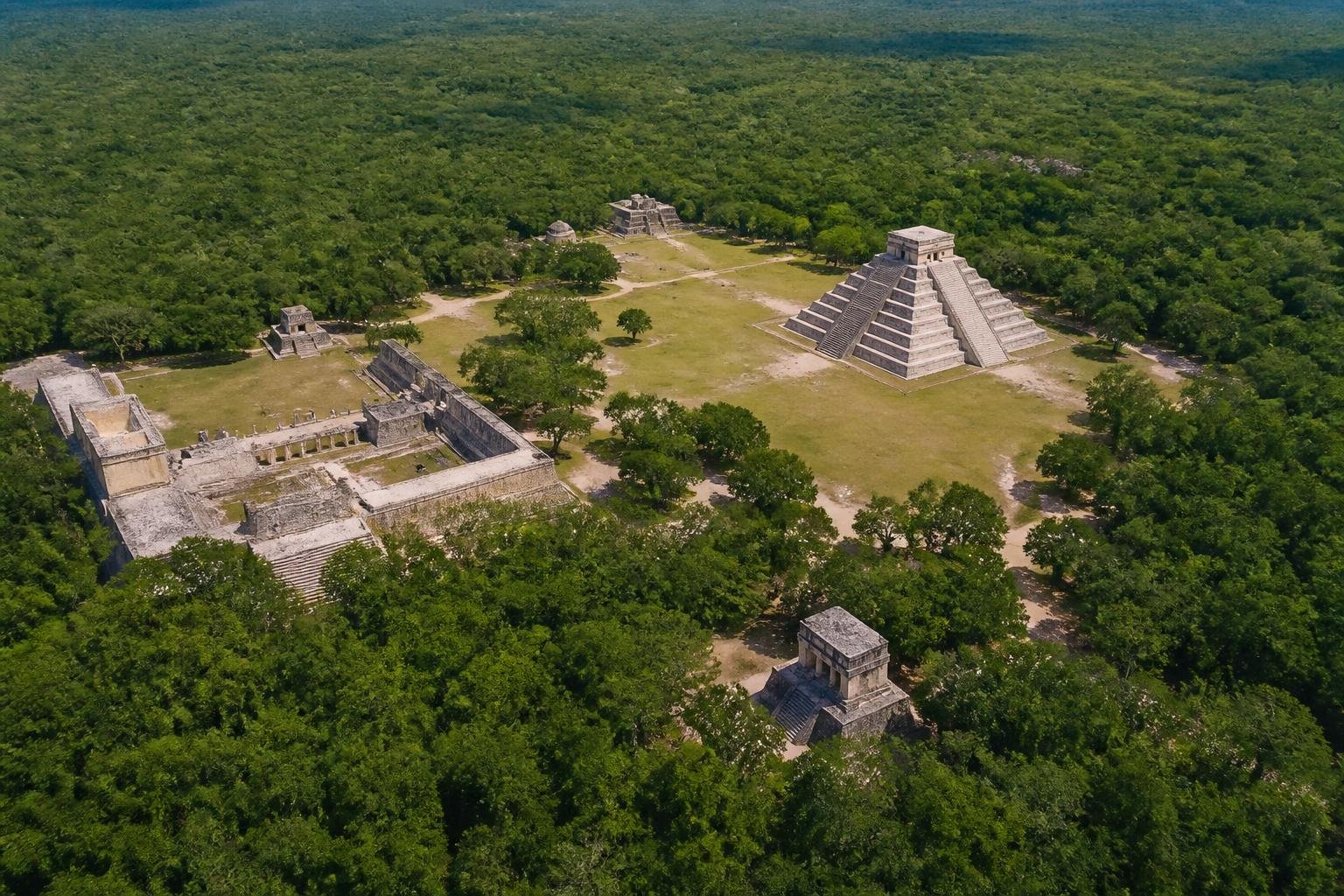
The city’s architectural ingenuity stands as one of the clearest testimonials to the Maya’s advanced mastery of design, astronomy, and symbolism. Each structure at Chichen Itza serves multiple layers of function, ritual, and representation, culminating in a landscape that is equally a spiritual nexus and a blueprint of cosmological knowledge.
El Castillo: The Pyramid of Kukulcan
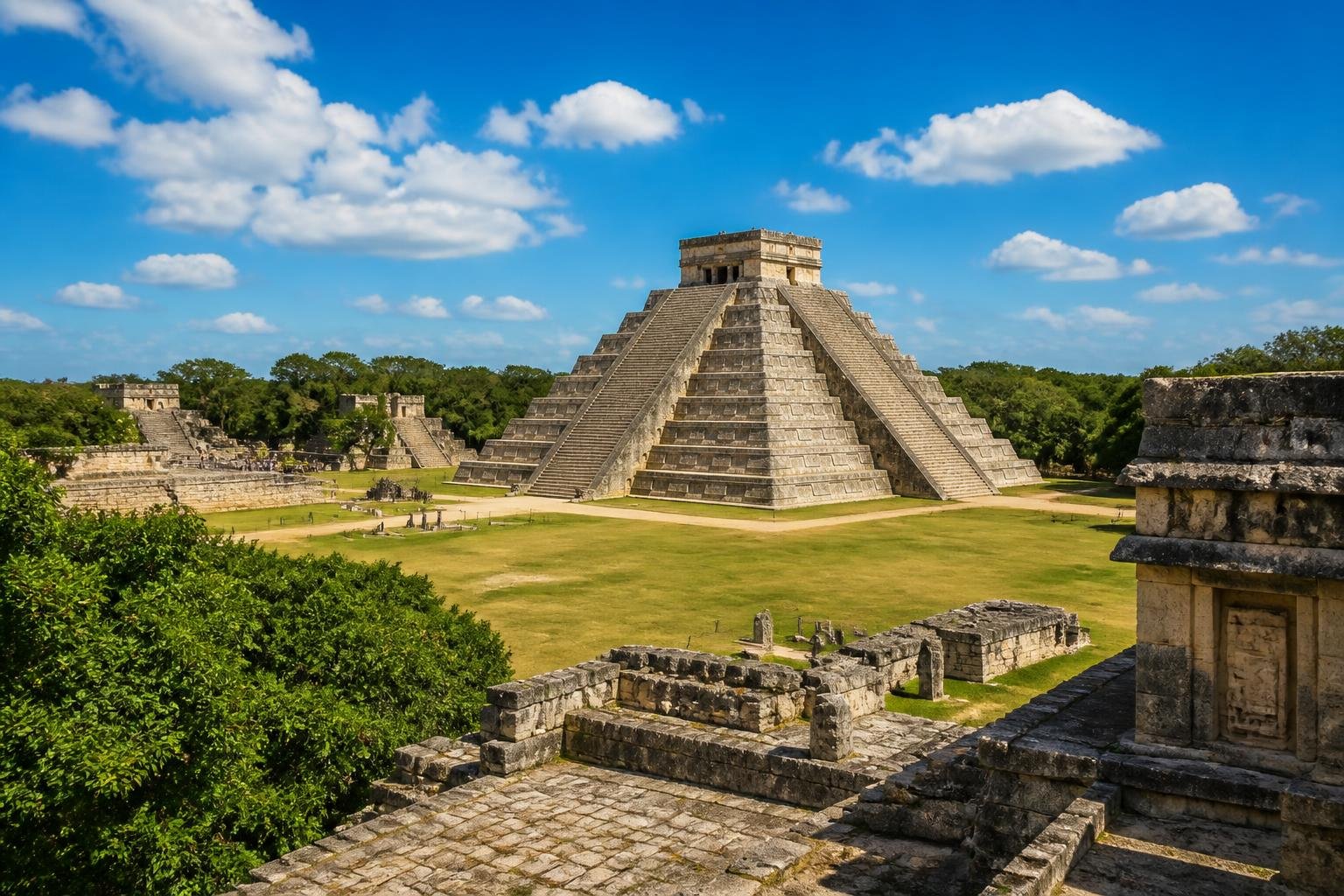
Among the pyramids, El Castillo towers as the most iconic. This step pyramid, reaching some 24 meters in height, is meticulously aligned with celestial events, reflecting profound understanding of astronomy. Builders crafted El Castillo so that during the spring and autumn equinoxes, shadows cast by the late afternoon sun create the illusion of a serpent—symbolizing the deity Kukulcan—slithering down its staircases. This visual phenomenon highlights the Maya’s integration of architecture with their religious calendar, marking a deep connection between terrestrial actions and celestial cycles.
El Castillo’s design further incorporates Maya calendar symbolism: the pyramid has four stairways with 91 steps each, plus the top platform, totaling 365 steps representing the days of the year. This blend of mathematical precision and spiritual narrative makes it a profound statement of power and cosmology. The temple atop the pyramid hosted ceremonies and offerings dedicated to Kukulcan, cementing its role as both a sacred space and a political symbol.
The Great Ball Court: A Centerpiece of Maya Ritual Sport
Chichen Itza houses the largest ball court in Mesoamerica, measuring approximately 168 meters long and 70 meters wide. Here, the Mesoamerican ballgame was played—a sport deeply imbued with religious symbolism, often connected to cosmic dualities such as life and death or the earthly and divine realms. Participants employed their bodies to strike a dense rubber ball through stone rings mounted high on the walls, with matches sometimes concluding in human sacrifice, underscoring the ritual gravity of these affairs.
The court is renowned not only for its spatial proportions but also for its sophisticated acoustics, where sounds travel with remarkable clarity across great distances. This feature enhanced communal engagement, allowing spectators and participants to share in the ceremonies and rituals performed during important games. The intricate reliefs and carvings around the court dramatically depict players, deities, and mythological scenes, offering rich insights into religious practices and social dynamics.
Temple of the Warriors and El Caracol Observatory
The Temple of the Warriors, characterized by its forest of carved columns featuring warrior figures, exemplifies Toltec influence merged with Maya tradition, signaling cultural exchange resulting from trade and migration. These columns and overall design speak to military power and ritual importance. The presence of Chac Mool statues—reclining figures holding vessels—points to sacrificial rites tied to agrarian cycles and rain gods.
El Caracol Observatory reveals the Maya’s impressive astronomical expertise. Its circular structure contrasts the typical linear forms elsewhere on the site, featuring carefully aligned windows for observing Venus, solar and lunar movements, and stellar cycles. These observations were critical for agricultural timing, religious festivals, and political calendars.
| Structure | Purpose | Significance | Architectural Style |
|---|---|---|---|
| El Castillo (Temple of Kukulcan) | Religious ceremonies, astronomical marker | Equinox shadow-serpent phenomenon; Mayan calendar representation | Step pyramid with intricate reliefs |
| Great Ball Court | Sports arena for ritualistic ballgame | Religious symbolism; social and political ritual center | Rectangular court with high stone rings and carved panels |
| Temple of the Warriors | Ceremonial temple complex | Maya-Toltec cultural fusion; military power | Column-supported terraces with sculptural reliefs |
| El Caracol (Observatory) | Astronomical observation | Tracking of celestial events linked to agriculture and religion | Round tower with aligned windows |
Religious and Political Roles of Chichen Itza in Ancient Maya Society
Chichen Itza was a focal point not only architecturally but also socially and politically. Its temples and plazas served as stages for complex ceremonies, binding the community through shared beliefs and legitimizing rulers via divine association. The city’s governance, once thought to be a collective council or “multepal” system, now appears more aligned with monarchical structures dominant in southern Maya regions, signifying political evolution.
Trade played a vital role in sustaining Chichen Itza’s power. The city’s control over trade routes connecting coastal landing points to inland regions facilitated the flow of exotic goods critical to elite prestige and economic strength. Obsidian, jade, and other valuable commodities passed through Chichen Itza’s economic web, highlighting its influence beyond mere territorial boundaries.
Religious rites intertwined deeply with political authority. The Sacred Cenote exemplifies this fusion, where ritual sacrifices sought favor from the rain god Chaac ensured water supply and agricultural prosperity—central concerns in a challenging karst environment. The presence of human remains and offerings affirms the intensity and seriousness of these acts.
The intricate carvings and statues found at Chichen Itza also narrate tales of mythology, power struggles, and divine right. Iconography throughout the city portrays pivotal moments and gods that influenced Maya cosmology and societal order. These elements collectively reveal a civilization deeply invested in maintaining a balance between spiritual life and earthly governance.
Visiting Chichen Itza in 2026: Practical Tips and Optimal Experiences
With its growing status as one of the New Seven Wonders of the World and a UNESCO-recognized site, Chichen Itza attracts millions of tourists annually. Making the most of a visit requires planning for climatic conditions, crowd management, and understanding local guidelines designed to preserve this invaluable cultural heritage.
The best months to visit fall during the dry season from December to April when temperatures and rainfall are more comfortable. However, this period attracts large crowds. For a quieter experience, late April or the shoulder months of September to November offer fewer tourists and milder weather, though brief tropical showers are possible. More detailed information on the optimal timing can be found at best time to visit Chichen Itza.
Travelers can choose guided tours, which provide deep historical insight and efficient site navigation, or self-guided exploration for a personalized pace. Many tours depart from nearby cities such as Cancun and Playa del Carmen, with options like a private English-speaking guide adding value. For those interested, the ultimate Chichen Itza bus tour experience is a popular choice combining convenience, history, and cultural immersion.
Practical advice includes wearing light, breathable clothing, applying sunscreen generously, and preparing for significant walking on uneven terrain. Respectful visitor behavior helps preserve the structures for future generations—access restrictions on climbing the pyramids remain in place to protect their fragile stonework.
- Arrive early to avoid heat and crowds.
- Hire a certified local guide to enrich historical and cultural understanding.
- Bring water and snacks but avoid littering.
- Explore nearby attractions like Cenote Ik Kil and colonial Valladolid.
- Respect local customs and park regulations, especially regarding photography and artifact protection.
Preservation and Ongoing Archaeological Discoveries at Chichen Itza
Despite its status and heavy visitation, Chichen Itza’s preservation remains a critical priority. Collaborative efforts between Mexican authorities and international institutions have carefully restored key monuments, including El Castillo and the Temple of Warriors. Decades of excavation have enriched the understanding of the site’s role and contributions to Maya culture and beyond.
New discoveries in recent years have shed light on the social dynamics, trade networks, and religious practices of the Maya. Advances in non-invasive archaeological technologies allow researchers to explore undiscovered chambers or subterranean structures without damaging the site. These findings not only deepen knowledge about the ancient history of Chichen Itza but also help improve conservation techniques.
The balance between tourism and preservation is complex. Measures like limiting visitor access and promoting responsible tourism aspire to maintain Chichen Itza’s integrity while continuing to educate millions worldwide about the profound legacy of the Maya civilization. Ongoing research keeps bringing fresh perspectives, ensuring that Chichen Itza remains a vibrant subject for historical discovery.
What does the name Chichen Itza mean?
The name translates to ‘At the mouth of the well of the Itza,’ referring to the Sacred Cenote, a vital water source and ceremonial location in the city.
Why is the Pyramid of Kukulcan architecturally significant?
It demonstrates the Maya’s advanced knowledge of astronomy, with its equinox serpent-shadow effect, and encodes calendar information through its steps and design.
What was the purpose of the Great Ball Court?
The court was used for the ritualistic Mesoamerican ballgame, which held religious and political importance and often included ceremonial sacrifices.
How do cenotes factor into Chichen Itza’s history?
Cenotes supplied water essential for survival and were sacred sites for religious sacrifices to gods like Chaac, reflecting both practical and spiritual significance.
What are some recommended ways to visit Chichen Itza in 2026?
Visitors should consider guided tours for deeper historical context, visit during off-peak seasons to avoid crowds, and follow preservation regulations to protect the site.