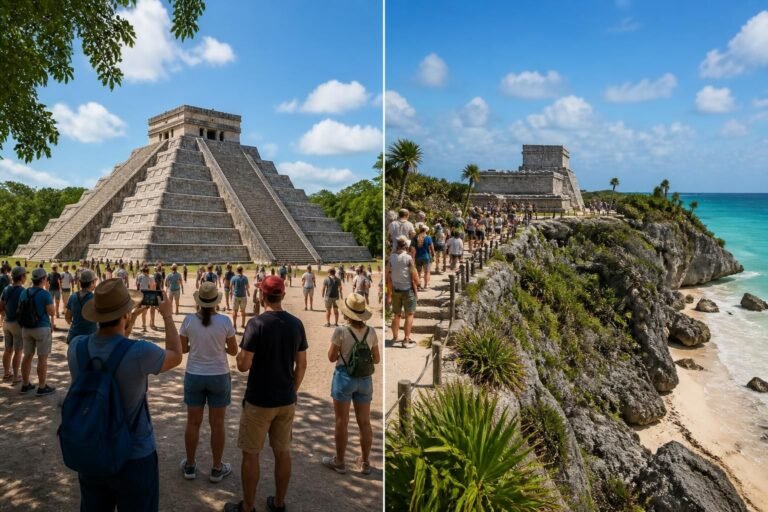
The Mayan Civilization stands as one of the most illustrious and enduring chapters in ancient history. Flourishing for over three millennia in Mesoamerica, the Maya crafted a unique system of city-states marked by monumental architecture, sophisticated calendrical systems, and a rich tapestry of mythology and ritual. Their achievements in writing, mathematics, astronomy, and art have left an indelible mark on history, distinguishing their culture from many contemporaneous civilizations. Unearthing the secrets buried beneath dense jungles and exploring the vast network of Mayan ruins, from the iconic pyramids of Chichen Itza to the sprawling cities of Tikal, invites a captivating journey into a realm where science intertwined with spirituality, and where time itself was perceived as a cyclical, living essence.
In today’s 2026 context, contemporary descendants of the Maya community continue to uphold their linguistic, cultural, and ceremonial heritage, breathing life into ancient traditions within modern borders across southeastern Mexico, Guatemala, Belize, Honduras, and El Salvador. Understanding the Mayan legacy is far more than archaeology or anthropological curiosity—it is a window into a civilization that mastered its environment, overcame profound challenges, and influenced worldwide cultural narratives. This guide delves deeply into the complexities of Mayan history and explores the multifaceted aspects that make this civilization’s story compelling and relevant.
Geographical Foundations and Environmental Adaptations in the Mayan Civilization
The Mayan civilization flourished across a geographic area known as the Mayan zone, encompassing the present-day Mexican states of Campeche, Chiapas, Quintana Roo, Tabasco, and Yucatán, plus Guatemala, Belize, and parts of western Honduras and El Salvador. This large expanse provided a fascinating diversity of ecological niches that significantly shaped the Maya’s cultural and architectural development. From tropical lowlands and limestone plains peppered with cenotes to volcanic highlands rich in fertile valleys and Pacific coastal plains, each region demanded innovative adaptive strategies.
The challenging natural environment did not merely constrain the Maya; it propelled them to pioneer remarkable agricultural and water management techniques. For example, the scarcity of surface water in the northern Yucatán made the exploitation of natural sinkholes or cenotes a vital method for securing potable water, leading to sacred associations with these natural features. In Petén’s dense jungles, seasonal lakes and rugged limestone plains fostered a society that mastered forest gardens, terraces, and raised fields—engineering feats allowing sustained agriculture over generations. These diverse ecosystems fostered staple crop cultivation of corn, beans, and squash, supplemented by cacao, chili peppers, and cotton, utilized for both subsistence and ritual significance.
This complex environmental scenario also influenced architectural styles and settlement distribution. Sites like the enormous megacity of El Mirador in the basin of northern Petén exhibited vast ceremonial platforms and triadic pyramidal structures designed to align with astronomical events. Conversely, Puuc-style architecture in the dry regions of Yucatán showcased intricate stone mosaics and masks, highlighting adaptations to the specific regional materials and climate.
Here is a summary table clarifying key ecological regions and their contributions to Mayan practices:
| Region | Environmental Features | Agricultural & Architectural Adaptations |
|---|---|---|
| Petén Lowlands | Limestone plains, dense jungles, seasonal lakes | Raised fields, forest gardens, triadic pyramids, monumental stelae |
| Northern Yucatán | Dry, stony soils, scarce rivers, cenotes | Cenote water management, Puuc style facades with stone mosaics |
| Guatemalan Highlands | Fertile volcanic valleys, cooler climate | Agricultural terraces, dense urban settlements, stone vaulted palaces |
| Pacific Coastal Plains | Coastal lowlands, river valleys | Settlement around river ports, obsidian tool production, cacao cultivation |
The intimate relationship between environment and human ingenuity underscores the resilience of the Mayan Civilization. Their ability to convert diverse landscapes into thriving centers of culture and science exemplifies the ingenuity of ancient Mesoamerica. For travelers intrigued by archaeological treasures, exploring the Mayan ruins of Chichen Itza offers a firsthand experience of how geography influenced construction and ritual.
Chronology and Sociopolitical Structures of the Mayan Civilization
Examining the history of the Maya requires navigating a timescale that stretches over 3,000 years, from the early development of agriculture to the rise and fall of grand city-states. Researchers frequently categorize this vast era into four main periods: Archaic (8000–2000 BC), Preclassic (2000 BC–250 AD), Classic (250–950 AD), and Postclassic (950–1524 AD). Each period reflects a transformation in societal complexity, political organization, and cultural achievements.
The Archaic period witnessed the gradual domestication of plants such as corn, beans, and squash, marking a transition from nomadic lifestyles to settled agriculture. The Preclassic era saw the emergence of early ceremonial centers like Nakbé and El Mirador, where monumental architecture expanded, demonstrating the growing influence of hierarchical societies. Notably, El Mirador became an immense urban center with triadic pyramids, underscoring the increasing significance of religious and political power.
The Classic period marked the zenith of Mayan civilization with dozens of city-states like Tikal, Calakmul, Copán, and Palenque dominating the landscape. These city-states operated independently without a singular empire, governed by divine kings known as k’uhul ajaw, each commanding military, religious, and political authority within their territories. Complex alliances, vassalage systems, and ritualized warfare were characteristic, reflecting a dynamic and often turbulent political environment.
This intricate political fabric was interwoven with continuous warfare, often fought over trade routes, tribute, and dynastic prestige. Campaigns varied in scale, from raids to large-scale battles that could lead to the abandonment of entire cities, such as the destruction of Aguateca around 810 AD. Monarchs, immortalized on stelae, are often depicted triumphantly over their adversaries, emphasizing the importance of military prowess in asserting legitimacy.
The decisive disruption known as the Classic Collapse occurred towards the late 9th century, affecting chiefly the southern lowlands. Theories regarding this widespread decline point to a combination of factors: severe droughts documented by cave stalagmite records, environmental degradation from overexploitation, and relentless warfare that fractured alliances. Populations migrated northward or to higher elevations, where water resources were more abundant, signaling a fundamental shift in the Mayan world.
The Postclassic period encapsulates a reconfiguration rather than total extinction. Cities such as Chichen Itza, Uxmal, and Mayapán rose in the northern Yucatán, adopting new architectural styles, expanding trade networks, and integrating composite political structures like councils of lineage rulers. Even approaching the era of Spanish conquest, independent polities such as the Itzá kingdom in the Petén resisted colonization until 1697.
To comprehend the organizational complexity, here is a hierarchical outline of Mayan sociopolitical roles:
- K’uhul Ajaw: Sacred king wielding ultimate political, military, and religious authority.
- Nobility and Officials: Including local chiefs (sajal), scribes (aj tz’ib), priests, and ministers.
- Commoners: Peasants, artisans, merchants, warriors, and laborers forming the bulk of the population.
- Slaves and Prisoners of War: Sometimes used in ritual sacrifice or forced labor.
These political and social dynamics manifest through the legacy that continues to attract historians and tourists alike, as seen in the enduring fascination with sites chronicled at Chichen Itza’s historical significance.
Mayan Science, Writing Systems, and Calendrical Innovations
The intellectual legacy of the Mayan Civilization is monumental, spanning mathematics, astronomy, and a sophisticated hieroglyphic writing system. The Maya were pioneers in developing a vigesimal (base-20) number system incorporating one of the earliest known concepts of zero as a placeholder—central to their calendrical calculations and record keeping.
Their astronomical knowledge rivals that of the ancient Greco-Roman world. Meticulous observations of celestial bodies such as the sun, moon, and planets like Venus allowed the Maya to produce detailed eclipse tables and planetary cycles, largely for ritual purposes. The Dresden Codex, one of only three surviving Mayan codices, includes a remarkable Venus table predicting its 584-day cycle to within hours, underscoring their accuracy and scientific rigor.
Mayan writing, a logosyllabic system combining logograms and phonetic symbols, enabled the recording of histories, genealogies, mythologies, and complex calendrical information. Unlike other indigenous American scripts, Mayan glyphs allowed expression of nuance, puns, and metaphor, revealing an elegant blend of art and linguistics. Although many codices were lost during the colonial period, ongoing decipherment efforts since the mid-20th century have unlocked substantial portions of monumental inscriptions, shedding light on rulers’ biographies and political events.
The Mayan calendar system integrated two main cycles: the 260-day sacred Tzolk’in and the 365-day solar Haab’. These combined in a 52-year Calendar Round that structured both ritual and civil life. The Long Count, a continuous count of days from a mythical origin in 3114 BC, allowed the recording of precise historical dates. Contrary to popular myths, the conclusion of calendar cycles symbolized cosmic renewal rather than catastrophic ends.
Their scientific prowess makes the Mayan Civilization a focal point for understanding ancient knowledge systems. This blend of science and spirituality is observable today for visitors who appreciate the symbolic design of structures like El Castillo pyramid.
Mayan Religion, Mythology, and Ritual Practices
Religion was the cornerstone of Mayan life, structuring worldviews and governance through a polytheistic pantheon and intricate cosmology. The Maya envisioned the universe as composed of three vertical layers: the thirteen levels of the sky inhabited by deities, the earthly realm shared with humans and animals, and the nine-tiered underworld or Xibalba, home to gods of death and chaos.
Colors and directions held deep symbolic weight—each cardinal point associated with specific gods and colors such as red, black, white, and yellow. This spatial and symbolic order permeated town planning, ceremonial architecture, and ritual practices.
Central deities shaped major aspects of existence: Itzamna as the creator and sky god, K’inich Ajaw as the solar deity embodying kingship, Chaac governing rain, and Kukulkán—the feathered serpent—linked to fertility and cosmic renewal. Ancestral veneration intertwined with these beliefs, with burials beneath homes and palaces reinforcing family status and connection to the sacred.
Ritual bloodletting and human sacrifice were crucial to Mayan cosmology, believed to nourish gods and maintain cosmic balance. Elite captives were often sacrificed during pivotal ceremonies such as temple dedications and royal accessions. Some rituals reenacted mythic narratives, including ballgame ceremonies reflecting the Hero Twins’ myth of defeating underworld powers.
The Postclassic era saw the intensification of heart extraction sacrifices under Mexica influence, though archaeological evidence suggests these rituals existed earlier. Many myths are preserved in texts like the Popol Vuh, which offers profound insights into creation stories, ancestral heroes, and legitimization of ruling lineages.
This religious framework was not merely devotional but intensely intertwined with daily life, politics, and cultural identity—a vibrant legacy that captivates visitors today looking to grasp the essence of Mayan Mythology and its manifestations.
Mayan Legacy: Impact, Preservation, and Modern Continuity
Far from an extinct civilization, the Mayan Legacy persists powerfully through language, traditions, and cultural expressions. Modern Mayan communities across Central America continue to speak over thirty distinct Mayan languages and celebrate ancestral rites that echo ancient practices. Maya scholars and indigenous groups have been at the forefront of cultural resurgence and efforts to protect archaeological sites.
Mayan architecture, long rediscovered beneath the canopy of tropical forests, has become a beacon for tourism and cultural education. From the stepped pyramids of Chichen Itza to the vaulted palaces of Palenque, these structures tell stories of artistic excellence and scientific sophistication. Special tours dedicated to exploring these ruins not only offer insights into their construction but also reveal the cosmological principles embedded within their orientation and decoration, as highlighted in detailed guides such as ancient secrets of Chichen Itza.
Archaeological advances, especially through LiDAR technology, have revolutionized understanding by unveiling hidden cities and complex rural networks, challenging long-held assumptions about population density and urban planning in ancient Mesoamerica.
The following points encapsulate key aspects of the Mayan Civilization’s enduring influence:
- Continuity of Mayan Languages: Vital living languages spoken by millions, sustaining oral traditions and knowledge systems.
- Archaeological Discoveries: Ongoing excavations continue to reveal insights about society, technology, and culture.
- Cultural Tourism: Guided tours contribute to economic sustainability while educating the global public.
- Artistic Inspiration: Modern artists draw from Mayan motifs and mythology.
- Academic Research: Decipherment of glyphs and interdisciplinary studies further illuminate historical understanding.
The resilience and adaptability demonstrated by the Maya serve as a poignant reminder of how deeply rooted and dynamically evolving civilizations can shape human history. Today’s travelers and scholars alike benefit from embracing this legacy, as it links ancient wisdom with contemporary cultural vitality.
What is unique about Mayan hieroglyphic writing?
Mayan hieroglyphs combine phonetic syllables and logograms, allowing for complex and nuanced expression, including historical records, calendar dates, and mythological texts, making it the most sophisticated writing system developed in pre-Columbian America.
Why did the Classic Maya collapse mainly in the southern lowlands?
The Classic Collapse likely resulted from multiple causes including prolonged droughts documented by geological records, environmental degradation from overpopulation, and intensified warfare that destabilized political alliances, leading to city abandonment.
Are there still Maya people living today?
Yes, millions of Maya descendants live throughout Central America and Mexico, preserving languages, traditions, and rituals, contributing actively to maintaining their cultural heritage.
What are the main architectural styles found in Mayan cities?
Key styles include the Petén with towering pyramids and roof combs, Puuc characterized by stone mosaic facades and Chaac masks, Chenes noted for zoomorphic portals, and the stylized towers of the Bec region, reflecting regional adaptations and symbolic expressions.
How did the Mayan calendar function?
The Mayan calendar integrated several cycles: the 260-day Tzolk’in, the 365-day Haab’, the 52-year Calendar Round, and the Long Count, which tracked continuous days from a mythological beginning; these systems structured ritual life, agriculture, and historical record-keeping.