Exploring Uxmal opens a gateway to a mesmerizing chapter of Mayan heritage that unfolds across the lush Yucatan Peninsula. This ancient city, with its intricate architecture and vast pyramids, stands as a testament to the sophisticated civilization that once dominated this region. Uxmal captivates visitors with an aura of mystery, while revealing rich layers of history embedded in its stone carvings and ceremonial structures. The archaeological significance of this site goes far beyond its picturesque ruins; it weaves stories of cultural achievements, astronomical knowledge, and artistic mastery. Diving into the depths of Uxmal’s ancient wonders offers a unique opportunity to understand the grandeur of Mayan society from a perspective obscured by time yet illuminated by well-preserved monuments and scholarly research.
Briefly, Uxmal’s main highlights include:
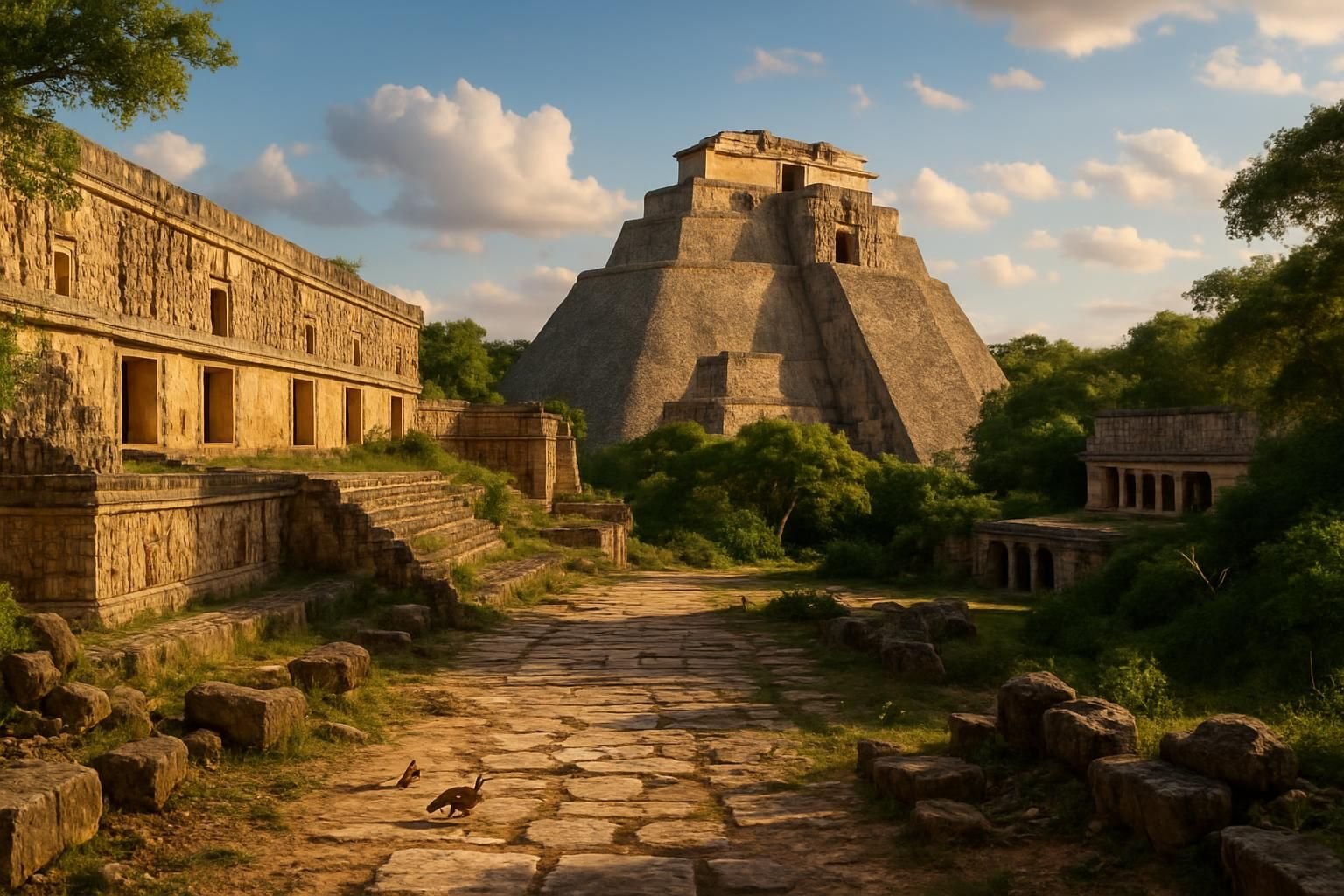
- Pyramid of the Magician – the tallest and most enigmatic pyramid with its unique oval base and steep staircases.
- The Nunnery Quadrangle – a complex famed for its elaborate mosaics and intricate facades symbolizing Mayan mythology.
- The Governor’s Palace – an architectural marvel renowned for its length and detailed stonework depicting the Puuc style.
- An array of well-preserved pyramids and temples nestled in a landscape that echoes with ancient cosmology and urban planning.
- An immersive archaeological experience reflecting ancient Mayan advancements in art, engineering, and astronomy.
These treasures, combined with the serene natural surroundings, make Uxmal a destination where history enthusiasts and curious travelers alike can experience the echoes of an ancient civilization in harmony with nature.
Architectural Marvels of Uxmal: A Testament to Ancient Mayan Ingenuity
The architectural landscape of Uxmal is dominated by some of the most exquisite examples of Mayan construction techniques, reflecting a blend of spiritual symbolism and urban sophistication. Central to these marvels is the Pyramid of the Magician, standing nearly 40 meters tall, distinguished by its unusual elliptical base—a rarity among Mayan pyramids that typically have square bases. According to local legend, this pyramid was magically constructed overnight by a dwarf magician, symbolic of the mysterious aura surrounding the city’s origins.
The site’s most intricate complex, the Nunnery Quadrangle, exemplifies meticulous stone carving and the lavish decoration typical of the Puuc architectural style. The facades here convey stories of rain god Chaac, geometric patterns, and elaborate masks that served both aesthetic and ceremonial functions. The precision in these carvings reflects advanced masonry skills and a deep appreciation for cosmology, as many patterns align with celestial events.
Another cornerstone of Mayan architecture at Uxmal is the Governor’s Palace. Stretching over 100 meters, this long building rests on an elevated platform and boasts a horizontal alignment of finely etched stonework detailing serpents, grids, and other mythological symbols. It stands as a clear statement of power and governance amidst the city’s layout, which itself was carefully designed along astronomical lines to correspond with solar and lunar cycles.
Examining Uxmal’s urban structure reveals a city advanced in planning and adaptation to its environment. Buildings are interconnected by broad pathways, with water management systems cleverly integrated to accommodate the region’s seasonal rains. This urban design not only facilitated religious processions and governance but also highlighted the Mayans’ respect for nature’s rhythms and their architectural prowess to harmonize functional needs with spiritual beliefs.
The Historical and Cultural Significance Embedded in Uxmal’s Ruins
Beyond its stunning architecture, Uxmal holds a crucial place in the historical narrative of the ancient Maya civilization. Serving as a center of political and economic power in the western Yucatan, it rivaled well-known cities such as Chichen Itza during its peak in the Late Classic period (roughly 600-900 AD). The site’s extensive ruins illustrate a thriving city that organized complex social structures, religious rites, and commercial networks.
This city offers valuable insights into Mayan society’s spiritual and administrative life. The iconography etched on the walls and temples often depicts tales of gods, rulers, and cosmic cycles, providing clues to the Mayan worldview and their sophisticated calendar systems. Religious festivals, astronomy, and rulership were intricately tied, as evidenced by archaeological finds and symbolic architecture aligning with solstices and eclipses. The cultural legacy of Uxmal is a vibrant tapestry that scholars and visitors continue to unravel through ongoing research and preservation efforts.
Delving into the Mayan language inscriptions found throughout Uxmal adds another dimension to understanding their way of life. These hieroglyphs narrate historical events, dynastic successions, and trade relations, making the site a living archive of Mayan heritage. Recognizing this, UNESCO designated Uxmal as a World Heritage Site, ensuring the protection of its archaeological treasures and the continuation of its historical tale well into the future.
For those interested in extending their explorations, nearby Mérida offers a complementary experience, blending colonial history with Mayan roots. Exploring the unique charm and history of Mérida enriches a journey through Yucatan’s past and present, connecting the ancient wonders of Uxmal with the region’s vibrant cultural landscape.
How to Plan a Memorable Visit to the Mayan Ruins of Uxmal
Visitors aiming to experience the ancient wonders of Uxmal should prepare with a strategic plan to fully appreciate the archaeological site’s grandeur. Located approximately an hour and a half drive from Mérida, Uxmal is accessible by rental car, guided tours, and local buses. Travel agencies specializing in Mayan ruins often provide well-structured tours including transportation, expert guides, and combined visits to other nearby sites.
It’s advisable to start early in the morning to avoid the midday heat common to the Yucatan Peninsula. Wearing comfortable clothing, sun protection, and carrying water are essential for navigating the expansive ruins. Guided tours often enrich the visit by providing historical context and explaining architectural features that may otherwise go unnoticed by casual observers.
A visit to Uxmal can be complemented by exploring the Puuc Route, a circuit featuring other archaeological sites that showcase similar architectural styles and Mayan legacies. This broader itinerary enhances understanding of the socio-political and cultural dynamics that shaped the region over centuries.
To help visitors plan effectively, the following table highlights critical information about Uxmal:
| Aspect | Details |
|---|---|
| Location | Yucatán Peninsula, Mexico |
| Entry Fee | Approximately $15 USD per person |
| Opening Hours | 8:00 AM – 5:00 PM daily |
| Best Time to Visit | Early mornings or late afternoons to avoid crowds and heat |
| Guided Tours | Available through local agencies specializing in Mayan archaeology |
For travelers intrigued by the architectural nuances and archaeological significance, in-depth guides such as this detailed exploration of Uxmal’s architectural wonders help to prepare for the visit by highlighting must-see structures and their symbolism.
Unraveling the Mysteries of Mayan Astronomy and Rituals in Uxmal
UXMAL, apart from being a political and commercial hub, was also a center for astronomical observation and ritual practices. The layout of its pyramids and temples reveals a sophisticated understanding of celestial movements. For example, the Governor’s Palace aligns precisely with the setting sun during the summer solstice, suggesting that rulers used architecture as a way to link earthly power with cosmic forces.
Religious ceremonies played an essential role at Uxmal, with many structures believed to have been sites for rituals involving offerings, dances, and prayers meant to appease gods like Chaac, the rain deity critical to the region’s agriculture. The prominent depiction of masks and serpent motifs throughout the site signals a deep connection to mythology and shamanic traditions.
Archaeologists have uncovered symbolic murals and artifacts that depict key moments in Mayan cosmology, such as the creation myths and the cycles of time governed by their complex calendar systems. This rich ceremonial heritage reflects how the ancient Maya integrated scientific knowledge with spiritual life to maintain societal harmony.
For those fascinated by these ritualistic and cosmic aspects, resources explaining the broader context of Mayan astronomy and calendar systems, such as studies on nearby Chichen Itza’s mysteries, provide comparative insights that deepen appreciation of the Yucatan’s ancient civilizations.
Preserving Uxmal: Efforts to Safeguard the Mayan Heritage for Future Generations
Preservation of Uxmal’s archaeological site is critical for maintaining the legacy of Mayan civilization. Various restoration projects have focused on stabilizing unrestored pyramids and refurbishing ornamental facades using techniques that respect the original construction methods. These efforts aim to prevent deterioration caused by weather, vegetation growth, and tourist impact.
Many organizations, including Mexican cultural institutes and international bodies, collaborate to protect Uxmal through sustainable tourism management and education programs encouraging respectful visitation. The balance between accessibility and conservation is delicate, and strategies such as limiting visitor numbers during peak times are implemented to reduce wear on the fragile ruins.
The local communities around Uxmal actively engage in preserving their cultural identity by sharing traditions, myths, and crafts linked to the ancient city. This integration of heritage with contemporary life promotes a living culture that honors the past while fostering economic sustenance through responsible tourism.
To expand knowledge of Mexico’s remarkable archaeological sites, visitors often pair Uxmal excursions with trips to other renowned locations like Chichen Itza, supported by comprehensive travel plans and information about the Mayan ruins available for explorers of Mayan heritage. This interconnected approach encourages a fuller understanding of the ancient Maya world.
What time of year is best to visit Uxmal?
The best time to visit Uxmal is during the dry season, from November to April, especially in early mornings or late afternoons to avoid heat and crowds.
Are guided tours necessary to understand the Mayan ruins better?
While not mandatory, guided tours significantly enhance the experience by providing context, historical facts, and explanations about the symbolism and architecture.
How accessible is Uxmal for travelers with mobility challenges?
Because Uxmal’s terrain includes uneven surfaces and stairs, accessibility can be limited. Visitors with mobility challenges should plan accordingly and consider guided tours that accommodate their needs.
Is photography allowed inside the archaeological site?
Photography is permitted throughout Uxmal, allowing travelers to capture the ancient wonders; however, using drones is generally restricted to protect the integrity of the site.
Can Uxmal be visited in combination with other Mayan sites?
Yes, Uxmal is often included as part of tours covering the Puuc Route and other archaeological sites like Chichen Itza, offering a comprehensive exploration of Mayan history.