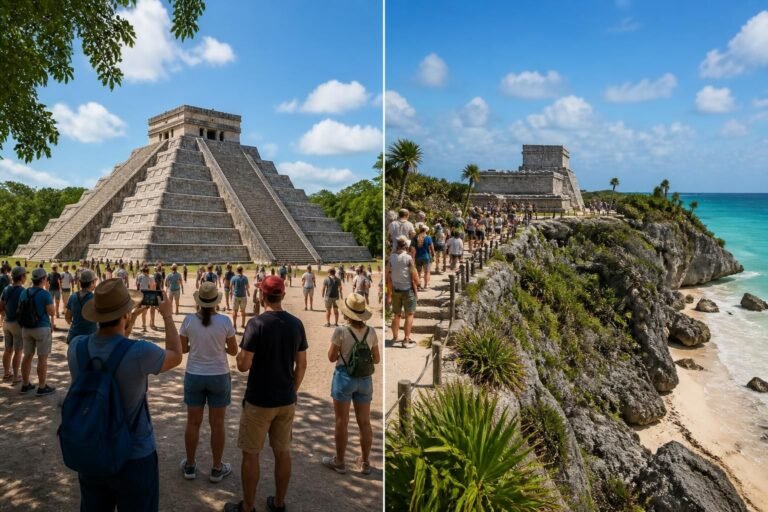
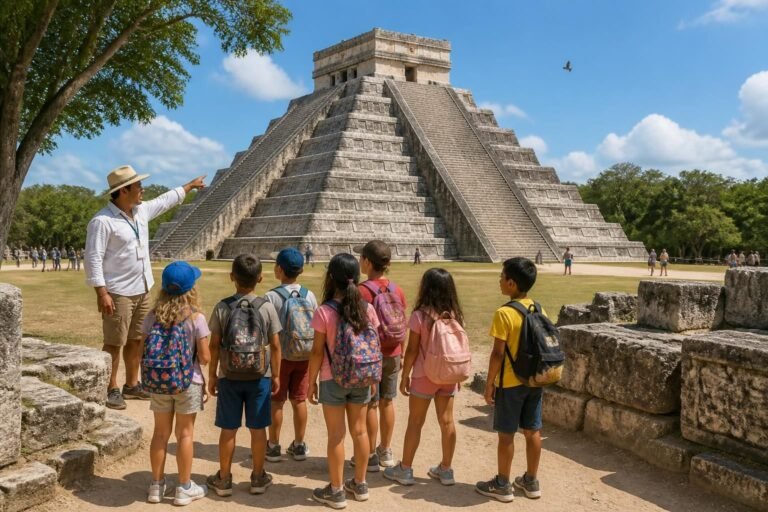
The El Castillo pyramid at Chichen Itza stands as a monumental testament to the ingenuity of the ancient Maya civilization, captivating scholars and travelers alike with its intricate design and astronomical significance. Located in the Yucatan Peninsula, this iconic pyramid is far more than just an impressive ancient ruin; it serves as a sophisticated calendrical instrument, narrating cosmic events encoded in its very architecture. Recent archaeological and archaeoastronomical research reveals that the spectacular “descent of Kukulcán” serpent shadow, traditionally associated only with equinoxes, is now understood to be a year-round celestial phenomenon, aligning with solar cycles that marked important ceremonial dates and agricultural timings for the Maya. This discovery adds layers of depth to the site’s cultural heritage and has increasingly influenced how guided tours and visitor experiences are crafted today, particularly for those seeking to delve into the secrets embedded in every stone of El Castillo.
Understanding the history behind El Castillo and the broader context of Chichen Itza enriches any visit to this ancient archaeological site. As the central pyramid in one of the region’s most important Mayan cities, El Castillo embodies centuries of knowledge, artistry, and spiritual symbolism. Its presence dominates the archaeological landscape, offering visitors not only a visual spectacle but also a tangible connection to the cosmic worldview of the Maya civilization. Contemporary tourists exploring Chichen Itza, whether arriving from Cancun or Playa del Carmen, are offered a range of tours tailored to reveal these hidden narratives, emphasizing the pyramid’s architectural details, its role in astronomy, and its broader historical implications. This culturally rich site remains a pivotal draw for those wishing to explore the Yucatan Peninsula’s ancient ruins and understand the sophisticated legacy left by the Maya.
Architectural Genius of El Castillo: Design Reflecting the Maya Calendar and Cosmology
El Castillo, also recognized as the Temple of Kukulcán, is a step pyramid rising approximately 30 meters (98 feet) above the Chichen Itza plaza. Its structure is deeply symbolic: each of the pyramid’s four stairways contains 91 steps, summing to 364, and when adding the temple platform at the top, the total steps number 365, mirroring the number of days in the solar calendar. This reflects the Maya’s impressive comprehension of timekeeping and their ability to weave cosmological beliefs into architectural form. The pyramid’s nine terraced levels further represent significant sacred numerals within the Mayan belief system, encapsulating their connection between the earthly realm and the supernatural.
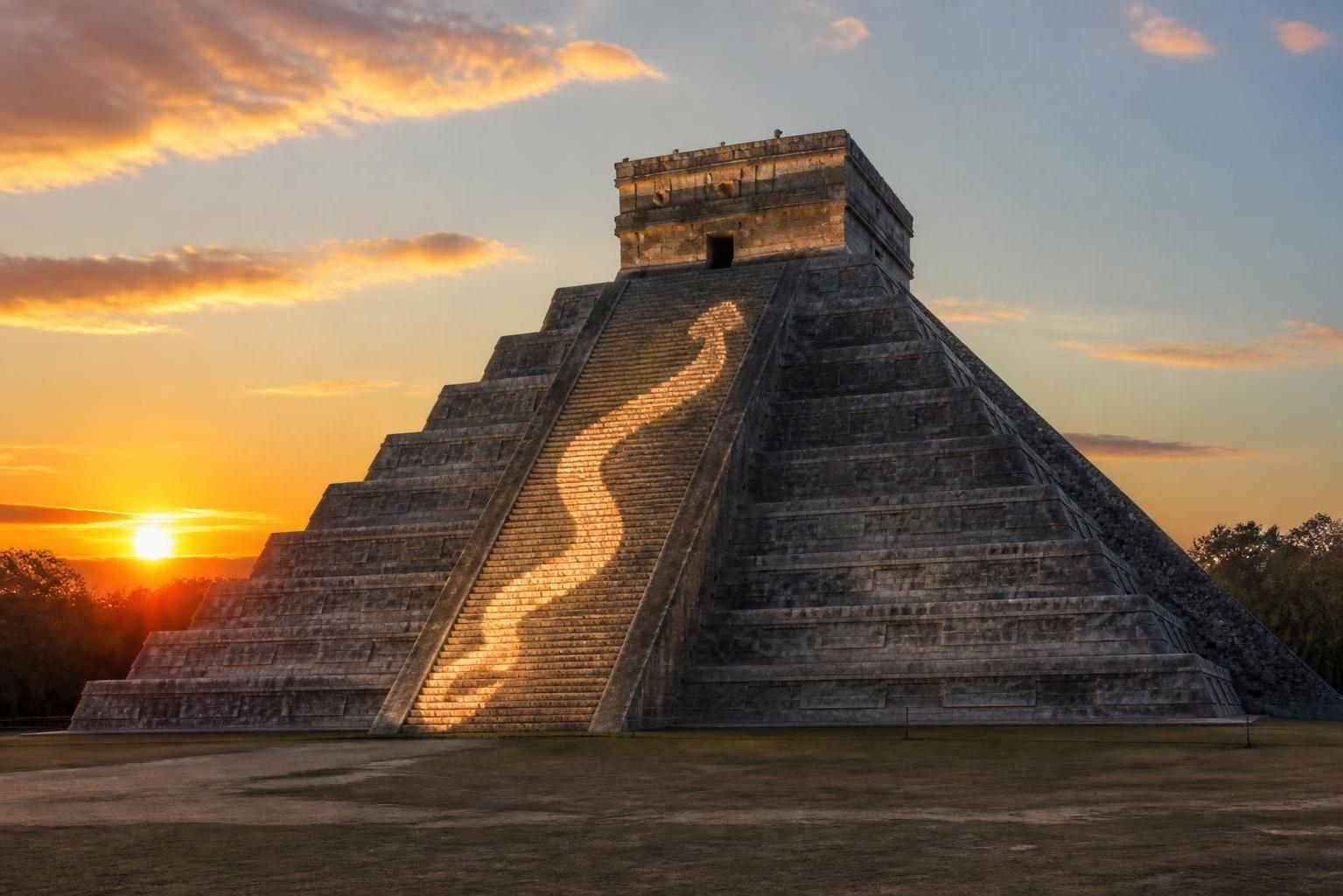
What sets El Castillo apart architecturally is not only its precise dimensions but its intended function as an astronomical instrument. The pyramid’s alignment allows the play of light and shadow to create the illusion of a serpent slithering down the staircase during certain times of the year. For decades, this phenomenon was thought to happen exclusively on the equinoxes. However, recent studies by Mexican archaeoastronomers in 2026 have repositioned this event as a year-round manifestation that marks not only equinoxes but also solstices and zenith passages—a complex solar calendar encoded in stone.
The mechanism of the “descent of Kukulcán” begins as early as mid-February, with the formation of faint triangular patterns on the northwest balustrade, gradually unfolding into a sequence of nine triangles by April—one for each terraced level of the pyramid. These shadows trace the form of a serpent descending the staircase, culminating in the full illumination of the balustrade at the first zenith passage in late May. By understanding these sophisticated interactions of architecture and solar movement, visitors can appreciate El Castillo not simply as a relic but as a dynamic instrument that reflected the Maya’s advanced astronomical knowledge.
An appreciation of El Castillo’s architectural brilliance enhances the experience when touring Chichen Itza. Guided tours can provide detailed explanations of the pyramid’s measurements and celestial alignments, making these aspects accessible to travelers. For instance, the relationship of the numbers 7, 9, and 13—holding special significance in Maya numerology—is evident throughout the pyramid’s structure. Notably, 63 (7 × 9) corresponds to the interval between solar zenith passages and equinoxes, while 91 (7 × 13) relates to the number of steps on the pyramid, further embedding the calendar into its form.
El Castillo’s Astronomical Role: Decoding Maya Timekeeping from the Shadows
The archaeological revelation that El Castillo functions as a year-round astronomical calendar reshapes how the ancient Maya civilization’s relationship with the cosmos is understood. This pyramid was carefully designed to track the sun’s position throughout the entire year, marking not only the well-known equinoxes but also solstices and zenith passages with precision. The shadows cast on the pyramid’s staircases encode a sophisticated system that allowed Maya priest-astronomers to maintain an accurate understanding of celestial cycles vital for agricultural and ceremonial scheduling.
The newly documented cycle begins on February 12, when the first light triangles appear fleetingly on the pyramid’s northwest ramp, gradually intensifying in number and prominence until the equinoxes. The seven-triangle pattern visible in mid-March is of particular importance, providing a practical and observable marker that likely helped Maya astronomers pinpoint the equinox with extraordinary accuracy. This is significant because some scholars have questioned whether the Maya formally recognized equinoxes; this evidences their deliberate observation of these celestial occasions.
Extending beyond the equinoxes, the play of light continues with the formation of nine complete triangles by early April, aligning perfectly with the pyramid’s nine terraced bodies. These alignments culminate in the solar zenith passages on May 24 and July 19, when at Chichen Itza the sun passes directly overhead, casting minimal shadow—an event of immense cultural and agricultural importance. Between these zenith dates, the pyramid’s balustrade remains illuminated, signifying the summer months leading to the solstice on June 21, another critical date in the Maya calendar.
Months after the second zenith passage, the pattern reverses as the light triangles diminish in number approaching the autumnal equinox, and by October 29, the ramp is shadowed for 52 days—a figure that echoes the revered 52-year Calendar Round from Maya timekeeping. This half-year period of shadow encodes the sacred cycle linking the solar calendar with the 260-day ritual calendar, showcasing an exceptional architectural embodiment of Maya cosmology and time.
| Key Celestial Events | Date(s) and Description | Relevance to El Castillo |
|---|---|---|
| First appearance of serpent light triangles | February 12 | Start of the “descent of Kukulcán” light phenomenon; partial triangular shadows |
| Equinox seven-triangle pattern | March 15 (peak) | Serves as practical marker for equinox with impressive precision |
| Full nine triangles illumination | April 9 | Complete illumination, one triangle per pyramid terrace |
| First solar zenith passage | May 24 | Sun directly overhead; begins full balustrade illumination |
| Summer solstice | June 21 | Longest day of the year; pyramid fully illuminated |
| Second solar zenith passage | July 19 | Marks end of full balustrade illumination phase |
| Shadowed period before winter solstice | October 29 – December 21 | 52 days of shadow encoding the Calendar Round cycle |
Historical and Cultural Significance of El Castillo in the Maya Civilization
El Castillo served a role far beyond being a monumental structure; it was a central axis mundi—connecting the physical world with the celestial realm and the underworld, concepts deeply embedded in Maya cosmology. The Maya regarded the serpent Kukulcán as both a deity and a celestial force, symbolized in the pyramid’s serpent shadow during solar events. These moments were not only ritualistically significant but also practical for scheduling agricultural activities essential for the region’s sustenance.
Constructed between approximately 1050 and 1300 CE by the Toltec-Maya following the conquest of the original Maya city, El Castillo reflects cultural fusion, seen in its architectural styling and symbolic elements. The pyramid’s towering presence in the Yucatan Peninsula embodies the Maya’s blend of scientific, religious, and political aspirations. It became a focal point for public ceremonies and astronomical observations crucial to the Maya’s understanding of time and space.
The importance of El Castillo in cultural heritage has continued into modern times, shaping educational narratives and tourism. Visitors participating in structured tours can engage with the pyramid’s history and gain insights into Maya rituals, the significance of its temple sanctuary, and the broader archaeological findings within Chichen Itza. Traveling from various gateways, including Cancun and Playa del Carmen, tourists today find opportunities not only to admire the ancient ruins but to experience curated cultural activities that bring the Maya past to life—in particular through storytelling, guided explanations of the pyramid’s secret features, and visits timed with astronomical events.
Those interested in an immersive experience are encouraged to explore resources such as best Chichen Itza tours from Tulum, offering expert insights into the archaeological context and unearthing the hidden tales of El Castillo. These services ensure travelers appreciate not only the physical grandeur of the pyramid but also its role within the rich tapestry of Maya civilization.
Planning Your Visit: Tips for the Best Experience at El Castillo and Chichen Itza
Touring El Castillo and the wider Chichen Itza archaeological site requires some planning to maximize the cultural and educational value of the visit. The best times to witness the “descent of Kukulcán” phenomenon are well documented, with the spring and autumn equinoxes traditionally drawing large crowds, though the newly recognized year-round light events provide opportunities in other months as well. Advanced knowledge of these cycles can greatly enhance visitor experience, particularly for photography enthusiasts and history buffs alike.
Booking guided tours that include transportation from major hubs such as Playa del Carmen or Cancun is highly recommended. Transfers with pick-up services offer convenience and allow travelers to focus on understanding the site’s complex history without the concerns of navigating local transport. The best Chichen Itza tours with Playa del Carmen pickup have become incredibly popular in 2026 for this reason.
Since climbing El Castillo has been prohibited since 2006 to conserve the pyramid, the full experience involves walking around the four sides while mentally mapping the astronomical phenomena encoded in the structure. Visitors should also allocate time to explore other nearby ruins and attractions within the vast Chichen Itza complex, including the Great Ball Court and the ancient observatory El Caracol, which further highlight the site’s sophisticated knowledge of astronomy and rituals.
For those considering a self-driven tour across the Yucatan Peninsula, resources that detail driving distances and travel tips, such as the guide on the distance from Cancun to Chichen Itza, can help optimize itinerary planning. Understanding these logistics ensures that visitors can responsibly allocate time, allowing for an immersive and rewarding cultural exploration without the rush or stress often associated with popular destinations.
Unveiling Hidden Secrets and Recent Discoveries Surrounding El Castillo
Recent archaeological investigations at Chichen Itza have uncovered surprises beneath El Castillo’s grandeur. Below the visible pyramid, researchers discovered an older pyramid structure, indicating successive construction phases and complex planning. Moreover, beneath El Castillo lies a hidden cenote, discovered in 2015, adding another layer to the site’s intrigue. These subterranean features suggest ritualistic purposes and may further illuminate the pyramid’s role as a mediator between earthly and spiritual domains.
Advancements in technology and archaeological methods continue to unlock mysteries about El Castillo and its surroundings. The detailed archaeoastronomical study published in Arqueología Mexicana has broadened understanding of the spatial and temporal precision encoded in the pyramid. These revelations emphasize the Maya civilization’s extraordinary mastery of astronomy, architecture, and calendar systems, reinforcing the pyramid’s reputation as one of the most ingenious ancient monuments worldwide.
Visitors eager to probe these secrets can enrich their experience through guided tours focusing on new interpretations and recent findings. Tailored itineraries that include visits to the independent visit guides for 2026 offer in-depth knowledge, enabling travelers to connect the visible grandeur with its invisible, symbolic underpinnings.
- El Castillo encodes the entire Maya solar calendar within its steps and terraces.
- The “descent of Kukulcán” light phenomenon occurs beyond just equinoxes, marking the full solar year.
- The pyramid aligns with solstices, zenith passages, and incorporates key sacred numbers (7, 9, and 13).
- Archaeological discoveries reveal hidden structures beneath El Castillo, including an older pyramid and cenote.
- Modern tours leverage recent research to provide visitors with enriched cultural and astronomical insights.
Why is El Castillo considered a masterpiece of Maya architecture?
El Castillo harmoniously combines symbolic numbers, astronomical alignment, and calendrical functionality, illustrating the Maya’s advanced knowledge of time, cosmology, and architectural design.
Can visitors climb El Castillo in 2026?
Climbing El Castillo has been prohibited since 2006 to preserve the structure. Visitors can fully experience the pyramid by walking around its base and observing its features.
How does the ‘descent of Kukulcán’ shadow phenomenon work?
This effect involves sunlight casting shadows forming triangular patterns along the pyramid’s northwest balustrade, creating the illusion of a serpent descending during the solar year at key dates.
What should travelers expect on a Chichen Itza day trip from Playa del Carmen?
Visitors can expect guided insights into the site’s history, architecture, and celestial phenomena, with convenient transportation options and opportunities to explore nearby ruins.
What is the best time to visit El Castillo for astronomical events?
While the equinoxes remain popular for observing the serpent shadow, recent findings show effective viewing opportunities occur year-round, particularly from February to October.